

Search Results for: health information

Health consumer stories driving positive change

COVID, consenting to medical research, cancer information, and promoting health

The first few weeks of 2022 have been a busy time in health in WA…

Preparing for and living with COVID

Those weeks have been a time for everyone at Health Consumers’ Council of intense listening to, sharing and advocating for more consumer voices in the planning and preparing the health system’s response to preparing to live with COVID.

In that time we’ve held three discussions with consumer leaders and representatives across WA to hear what was on people’s minds as they were preparing themselves, their families and their communities for living with COVID.

Key messages we heard were that there was a sense of fear in some parts of the community as people navigate the shift from “COVID is to be avoided at all costs” to “we are living with COVID”. We also heard that there was a lack of information for health consumers who have underlying conditions, or who are immunocompromised, and need to make additional preparations. And the third strong message was people’s concerns were not just for their health, but the social implications of COVID. For example, who can people rely on if they’re a carer and they get sick? How do people get access to care if they’re unable to leave the house? What should they be doing to make sure they can get access to the healthcare they need – and stay safe?

And finally, we heard a strong message from health consumers about the opportunity to help people feel more empowered and confident in their ability to prepare.

We’ve shared these concerns with health leaders including the Minister for Health, health service Chief Executives and the teams leading the COVID response at the WA Health Department and the WA Primary Health Alliance.

By the end of last week, we’d seen a couple of significant changes – South Metropolitan Health Service had published information on their websites for people who are immunocompromised, and some patients who are at a higher risk of developing severe disease if they contract COVID are receiving calls from their specialists to help them work out how they can prepare themselves and their families.

We also were able to get information about the new COVID Care At Home program out to over 110 people who registered for a community conversation with Dr Robyn Lawrence from the Health Department, as well as getting into out to the broader community via a mention in Renee Gardiner’s column in The West.

The next focus will be to keep getting the message out into the community – particularly to those groups where mainstream communication methods like websites and news media in English are not widely used.

The other focus will be on encouraging other people in the community to play their part in getting information out to the people who need it and to look out for their neighbours or family members who might value a bit of support. As one consumer who was quoted in the article in The West said “We are all in the same storm but the boats are so different it’s hard to hang out in the tinny with a hole in when others are in their yacht.”

www.hconc.org.au/issues/covid-19

https://www.healthywa.wa.gov.au/Articles/A_E/Coronavirus/Managing-COVID19-at-home-and-in-the-community/WA-COVID-Care-at-Home

And it’s not all about COVID… have your say!

As we finalise our preparations for living with COVID it’s important to remember it’s not the only health issue that’s important for the WA community. There are a couple of key consultations that are looking for consumer input:

  • What are your views about the issue of giving consent to treatment – particularly if you’re incapacitated?
    • The Guardianship and Administration Act Part 9E came into existence on 7 April 2020 “to enable medical research to be carried out in respect of persons who do not have the ability to consent  to it.” While it might seem a bit dry, it could make the difference between someone accessing cutting edge treatment that is part of a research program or not.
    • Find out more and complete the short survey by 25 February at https://www.surveymonkey.com/r/GuardianshipAdmin9E
  • Have you or someone you know had cancer? What information was, or would have been, most helpful?
    • A team of researchers at UWA and WA Department of Health are researching the information needs of people who are diagnosed with cancer. This is part of the WA Cancer Plan implementation. This survey closes on 28 February. Please share it widely
    • https://mdhs-redcap.meddent.uwa.edu.au/fmdhs/surveys/?s=P9RLWRN39K

And finally – towards a healthier WA

This month we also made time to respond to the WA Department of Health’s consultation on the WA Health Promotion Strategic Framework. We called for a stronger focus on health inequities, the recognition of early childhood trauma on our longer term health, and encouraged a bold vision for a healthier WA that the whole community can buy into.

You can read our submission here https://www.hconc.org.au/wp-content/uploads/2022/02/WA_Health-Promo-Strategic-Framework-HCC-response-040222.pdf

Clare Mullen, A/Executive Director
February 2022

9. Information on your legal options

Disclaimer: HCC is a non-statutory, issue-based organisation. We are not legally or medically trained and do not have legal powers to force outcomes. If you are seeking information on legal processes or advice, please review the resources below as they will be the most appropriate pathways for you in this situation.


Find a Lawyer Tool Tips for hiring a private lawyer How to communicate with your lawyer Questions to ask your lawyer


Legal information when seeking compensation

If medical providers breach duty of care, there are pathways for medical negligence compensation claims and legal proceedings.

Common issues resulting in claims include misdiagnosis or failure to diagnose, making an existing condition significantly worse through practice, failing to provide appropriate care, treatment, referral, surgery or post-operative care resulting in significant damage or incorrectly reporting test results resulting in significant damage or mismanagement of care.  It is important to note that not all claims are valid, as the damage and impact needs to be significant, and needs to be supported with evidence.

Seeking compensation from a hospital or service can be a long and involved process.  It is important to get independent legal advice before and during an application for compensation, so you can be sure you are receiving what you are owed, and that everything is being done properly.

Western Australia’s primary public legal support

The Law Society:

https://www.lawsocietywa.asn.au/

The Law Society of Western Australia is the peak professional association for lawyers in Western Australia. The Law Society is a not-for-profit association dedicated to the representation of its members and to the enhancement of the legal profession through being a respected leader and contributor on law reform, access to justice and rule of law.

They have a tool on their website which can help find lawyers who deal in the areas you require representation in: https://www.lawsocietywa.asn.au/find-a-lawyer/

They also have lots of resources around finding a lawyer, costs and complaints: https://www.lawsocietywa.asn.au/for-the-public/


Legal Aid:

https://www.legalaid.wa.gov.au/

1300 650 579

Legal Aid is a public Western Australian service which aims to promote affordable access to legal services and information for all West Australians.  They provide representation in Civil law, Criminal law, Family law and Community legal education.  They do this online, on the phone, in person, in court and in the community.


Aboriginal Legal Service of Western Australia:

https://www.als.org.au/

08 9265 6666

ALSWA is currently the largest community based Aboriginal and Torres Strait Islander legal organization in Australia. It provides legal aid services to Aboriginal and Torres Strait Islander peoples throughout Western Australia in accordance with grant conditions imposed by the Commonwealth Department of the Attorney General. The Aboriginal Legal Service of WA Limited (ALSWA) is a not for profit organisation which provides legal representation and support services for Aboriginal and Torres Strait Islander Peoples in Western Australia.

ALSWA plays a vital role within WA’s justice system, working in collaboration and partnership with communities and key government and non-government partners to rectify legal policies and practices that impact adversely and disproportionately on the legal and human rights of WA’s First Peoples.


Mental Health Law Centre/RUAH Legal Service:

https://mhlcwa.org.au/ & https://www.ruah.org.au/services-support/specialist-legal-services/

08 9328 8012 or Freecall 1800 620 285

reception@mhlcwa.org.au

Ruah and the Mental Health Law Centre are committed to providing much-needed, integrated legal and non-legal support to families and together they’re expanding their support services under the umbrella banner of Ruah Legal Services.

They have a team of qualified lawyers, paralegals and community workers, from across the Ruah network to deliver a seamless multidisciplined approach that ranges from advice, early intervention and advocacy, to representation in court, and referral to other services for ongoing care and support.  Their priority is on criminal and mental health act cases.

They offer support in two main areas of legal support:

  • Care and Protection – legal and non-legal advocacy and support for the growing number of families facing child protection proceedings for parents experiencing a mental health illness.
  • Mental Health– WA’s centre of excellence for legal matters related to mental illness. MHLC specialises in matters related to the Mental Health Act 2014, including involuntary treatment, guardianship and administration, responding to Restraining Orders and Criminal Law matters, including court appearances and sentencing, SAT and fitness hearings.
  • They also provide support to clients with legal matters related to housing and homelessness, and family and domestic violence.

Community Legal Services:

Circle Green

https://circlegreen.org.au/ – Circle Green is a community legal centre in Western Australia providing state-wide specialist legal services in employment, residential tenancy law, family and domestic violence, and migration services aimed at assisting people who are otherwise disadvantaged in their access to legal services.

Women’s Legal Service

https://www.wlswa.org.au/ – Women’s Legal Service is a not for profit community legal centre who provide free legal services to WA women.  They practice in family law, family violence, protection and care matters and criminal injuries compensation relating to family violence or assault.

Northern Suburbs Community Legal Centre

https://www.nsclegal.org.au/ – Northern Suburbs Community Legal Centre aims to provide clients in WA’s northern corridor with a service that is specific to their needs, within the areas of tenancy, immigration issues, restraining orders, older people’s rights, women’s engagement and financial counselling.

Sussex Street Community Legal Service

http://www.sscls.asn.au/ – Sussex Street Community Legal Service is a ‘non-profit’ non-government community based organisation that provides access to accountable, non-judgemental and effective legal services to low income people in the community in areas of family law, civil law, minor criminal law, welfare rights, disability discrimination, tenancy matters and with a night legal service.  They are a geographically bound, so contact them to see if you are in their catchment area.

Fremantle Community Legal Centre

https://www.fremantle.wa.gov.au/fclc – Fremantle Community Legal Centre is a non-profit organisation which provides legal services to low income members of the community.  They offer legal advice in limited areas, document drafting, mediation, restraining order matters and have limited court representation including a duty lawyer at the Fremantle Magistrates Court for FVRO and VRO matters.

Youth Legal Service

https://youthlegalserviceinc.com.au/ – Youth Legal Service  is a not-for-profit organisation providing free legal services to children and young people across Western Australia.  They offer advice over the phone (1800 199 066 or 9202 1688) and offer representation in court for limited matters.

Gosnells Community Legal Centre

https://gosclc.com.au/ – Gosnells Community Legal Centre promote basic human rights, including housing, income, equality, freedom and dignity, by a variety of support services to resolve legal, economic or social issues.  They provide support in areas of family law, child support, domestic violence law, financial counselling, tenancy advocacy, mediation and victim compensation, and are linked with Armadale Community Legal Service (https://gosclc.com.au/contact-gclc/).


Law Access:

https://lawaccess.org.au/

Law Access is a not-for-profit organisation that coordinates the giving of pro bono (free) legal assistance by the Western Australian legal profession.

The service is targeted at not-for-profits and individuals in genuine need of legal assistance who satisfy a means and merits test. We are the last resort for those who cannot get legal assistance from community legal centres or legal aid.

Healthy Weight Resources – Consumer Insights

Health Consumers’ Council received funding from the WA Department of Health to connect and involve people impacted by overweight and obesity.

We have a number of documents available for people working within WA health services to contribute to improving health services in this area.

The information includes:

  • Consumer stories shared anonymously about people’s experience of their weight and using the health system for support
  • Consumer insights from these groups* – please email info@hconc.org.au to request a copy. In your email, please outline your intended use of this information:
    • Children, young people and families
    • People from culturally and linguistically diverse communities
    • Aboriginal people
    • People with disability
    • Men
  • Insights about how consumers would like to discuss weight with health professionals
  • Learnings from our experience engaging with consumers on this topic

* Please note these insights are not exhaustive and in some cases come from small numbers of people. We share these in the hope that they add value to the evidence-based information on this topic.

Healthier environments

Health consumers tell us that it can be challenging to find healthy options in their community. This includes what options are available in our food environment, as well as access to options where people can easily and safely enjoy physical activity.

At Health Consumers’ Council, we believe health consumers and the community can play a role in advocating for healthier environments.

Have your say

In preparation for a consultation held by the WA Department of Planning we hosted a community conversation on how to have your say on the planning environment in WA.

You can watch this presentation by Ainslie Sartori from Cancer Council WA as she outlines some of their work on this topic. Submissions closed on 31 August 2021.


Connect with others

Join over 115 people in our private moderated Facebook group, and/or join the hundreds of others on our mailing list to hear regular updates on work in this area.

You can also follow Health Consumers’ Council on Facebook for updates across all our projects.

Find out more

Here are a few resources that provide information about how a healthier environment could look, and what’s important when planning our communities.

Public health planning for local government

Many local governments advocated for public health planning and are producing public health plans in anticipation for the commencement of Part 5 of the Public Health Act 2016. 

WA Health is supportive of this initiative and encourages local governments to commence the process of developing their local public health plan.

Find out more about public planning for local government at https://ww2.health.wa.gov.au/Articles/N_R/Public-health-planning

Healthy active by design – from the Heart Foundation

You can find a whole range of great resources on this page https://healthyactivebydesign.com.au/

In particular, we find these resources very useful:

  • What do Australians want? Results of a consumer survey of over 2,800 people across Australia.
    • Find out more about the survey results here.
    • Click here to download a WA summary.
  • A list of resources about the built environment – https://healthyactivebydesign.com.au/resources/publications
  • How walkable is your suburb? Have a look at this list, then rate your suburb next time you’re out on your walk. Click here to find out more and see the list.

Obesity prevention work by Cancer Council WA

The Obesity Prevention team at Cancer Council WA publish a regular newsletter for people interested in their work aimed at changing public policy to drive healthier environments.

  • You can find out more about their work and read through materials on cancer prevention through physical activity (prevention of obesity) here: https://cancerwa.asn.au/cancer-prevention/physical-activity/
  • A summary of a research project is available through library databases: Blake, M., Bromberg, M., & Parnell, S. (2020). Analysing Law and Policy to Create an Obesity Management Policy. The University of Western Australia.

Climate change and health

You can link with other people who are taking action to address the impact of climate change on human and environmental health

This is not an exhaustive list of resources. If you know of others we could include, please send them to clare.mullen@hconc.org.au

Last updated 13/08/21

Healthy Weight Action Plan – Get Involved

Talking about overweight and obesity – consumer insights for health professionals and the health sector

For all sorts of reasons, talking about weight, overweight and health can be a sensitive and difficult subject for some people.

We recognise that some people aren’t interested in talking about weight with health professionals. But for those who are, we want to help make these conversations safe, empathetic and helpful, so that you get the right information and support for you.

We’re developing a set of consumer insights for health services on engaging with people with overweight and obesity.

The first step was to hear from people with experience of overweight and obesity about how they would like to be approached about weight by health professionals and engage in weight-related health activities. Our Weighing in on Weight Talk survey had about 150 responses. We’re using these responses and feedback from consumers to develop these insights.

Events

We would like to hear more perspectives from people living regionally, children/young people and families, people living in larger bodies, men, and Aboriginal people, to ensure the project captures a wide range of voices and experiences.

If you identify with any of these groups and want to get involved, please contact Clare Mullen at clare.mullen@hconc.org.au or 9221 3422.

Share Your Story

Your experiences matter.

We use consumer stories to advocate for consumer led initiatives and share stories, or parts of stories, with people in the health system who are working towards better health care services for weight related health issues.

We understand stigma is a big barrier to individuals sharing their stories, and have made sure we share stories in an anonymous way. We will not identify you in any way (by name, email address or anything else), unless you explicitly tell us you are happy to be identified.

We would love to hear about your experience with the health system regarding weight. Please use this template to share your story and send it to Clare Mullen at clare.mullen@hconc.org.au

Stay In Touch

You can spread the word about this important topic by sharing our posts on social media – follow HCC’s Facebook page for updates and join our private moderated Facebook group Partners in Change – Healthy Life for Longer to connect with others.


You can also join our mailing list for regular updates on the project and opportunities to be involved as the plan moves into action.

Healthy Weight Action Plan 2019-2024

Implementation and Work to Date

The Minister for Health launched the WA Healthy Weight Action Plan 2019-2024 on Tuesday 26 November 2019.


Since 2018, Health Consumers’ Council (HCC) has been working in partnership with the Department of Health and the WA Primary Health Alliance (WAPHA) to ensure the consumer voice is front and centre of policy and service planning in this area.

Obesity is also identified in the WA Sustainable Health Review as a priority. In this short video (11m) we give an overview of what we know about that work as of early August 2021.


Projects


The WELL Collaborative (formerly WA Obesity Collaborative) (Action 1.1)


One of the key action points under the Healthy Weight Action Plan is to formalise the WA Obesity Collaborative, to connect agendas and drive, facilitate, and coordinate action within in the scope of the WA Healthy Weight Action Plan.

The collaborative approach will provide a platform for people with lived experience, health professionals, and policy makers to work together to take positive action.

Feedback since the launch of the Action Plan has shown that this name didn’t resonate with consumers, nor did it fully encompass what the initiative stands for. Through the feedback with consumers and key stakeholders, the initiative has developed a new name and a new look that considers the full spectrum of experiences of people living with overweight and obesity.

This project, currently under development, is now known as The Weight Education and Lifestyle Leadership Collaborative aka The WELL Collaborative.


Quality Criteria and Outcomes based framework – Curtin University (Action 5.1)


A set of quality indicators and an outcomes framework is being developed to assess what quality health service looks like in the area of overweight and obesity. HCC has been involved in the development of this project, sharing insights from consumers and holding targeted discussions to find out what is important to consumers when it comes to healthy weight services and programs.


Total Meal Replacement trial – Diabetes WA


A pilot of an innovative approach trialing the use of total meal replacement products and telehealth support from allied health staff is being led by Diabetes WA. HCC organised a consumer workshop in 2020 and is involved in the project steering committee.


Shift. A guide for media and communications professionals


East Metropolitan Health Service developed a guide to support media and communications professionals to change the narrative around obesity. HCC had input into the draft document and has been promoting this widely.


Workforce development – East Metropolitan Health Service


East Metropolitan Health Service is developing training for health professionals on how to talk about weight and what support services are available. HCC is providing feedback on the draft course.


GP Healthy Weight Project – WA Primary Health Alliance


The WA Primary Health Alliance is working to improve the capability of general practices to engage in weight management quality improvement activities and deliver suitable weight management assessment and intervention services. HCC is working closely to provide consumer perspectives on this project.

Consumer Advisory Group


HCC’s Healthy Weight Action Plan Consumer Advisory Group provides a consumer perspective on a range of activities related to the implementation of the Health Weight Action Plan.

How consumer feedback shaped the Action Plan


HCC believes it is important that conversations around the Healthy Weight Action Plan are informed by people with lived experience of overweight and obesity.


We gathered consumer perspectives via a survey, workshops, and an online invitation for people to share their stories. You can read a summary of the consumer engagement activities that informed the first phase of this project.

The Action Plan is not “business as usual” for the health system. We are particularly interested in the inclusion of the actions that recognise a new way of working is needed to really impact on this complex health issue.


2020 video update


Helen Mitchell from the Department of Health spoke at a virtual consumer representative drop-in session on how the Action Plan was developed with consumer input, and how the Action Plan is starting to be implemented.

https://youtu.be/jihBv_QeoTU

Previous community events


World Obesity Day virtual event


The Obesity Collective hosted a 90-minute virtual event on World Obesity Day 2021 with speakers from across the country.

This session explored many aspects of obesity through a series of ‘rapid talks’ from consumer organisations and health professionals. HCC’s Deputy Director Clare Mullen presented on involving people with lived experience in planning services. The recording of this event can be accessed here.


Community Information Sessions


We regularly hold community information sessions to provide updates on the implementation of the Action Plan and opportunities for conversation around healthy weight.

In February 2021 we held a session with Weight Issues Network and The Obesity Collective, exploring how to speak up for better services for treating overweight and obesity and the importance of sharing our stories to influence change. The recording of the session can be accessed here.

In December 2020 we provided an update on how consumer perspectives were influencing the implementation of the Healthy Weight Action Plan. You can view the slides here and a recording of the session can be accessed here.

In October 2020 we held a community morning tea that explored three key themes in this space: costs and accessibility of services; clarity of information; links around overweight and obesity with mental health and stigma.

6. Advocacy Information & Resources

This page provides key resources and links to websites to help you navigate your way around the health system.

Charter of Healthcare Rights  

Mental Health Rights

Mental Health Act Consumer Handbook

Guardianship and Administration  

Goals of Patient Care

  • Goals of Patient Care is a clinical care planning process used during an admission to hospital or other care facility.
  • It helps to determine which treatments would be useful for you, if there was deterioration in your condition.
  • You can watch a video on Goals of Patient Care for consumers or visit this website for more information.

Questions to ask your doctor 

  • You can use this Question Builder to prepare for a medical appointment by creating a list of questions for your doctor.
  • There are Questions to ask your doctor before you have any test or procedure
  • The 5 Questions to ask your doctor are available in 12 languages.

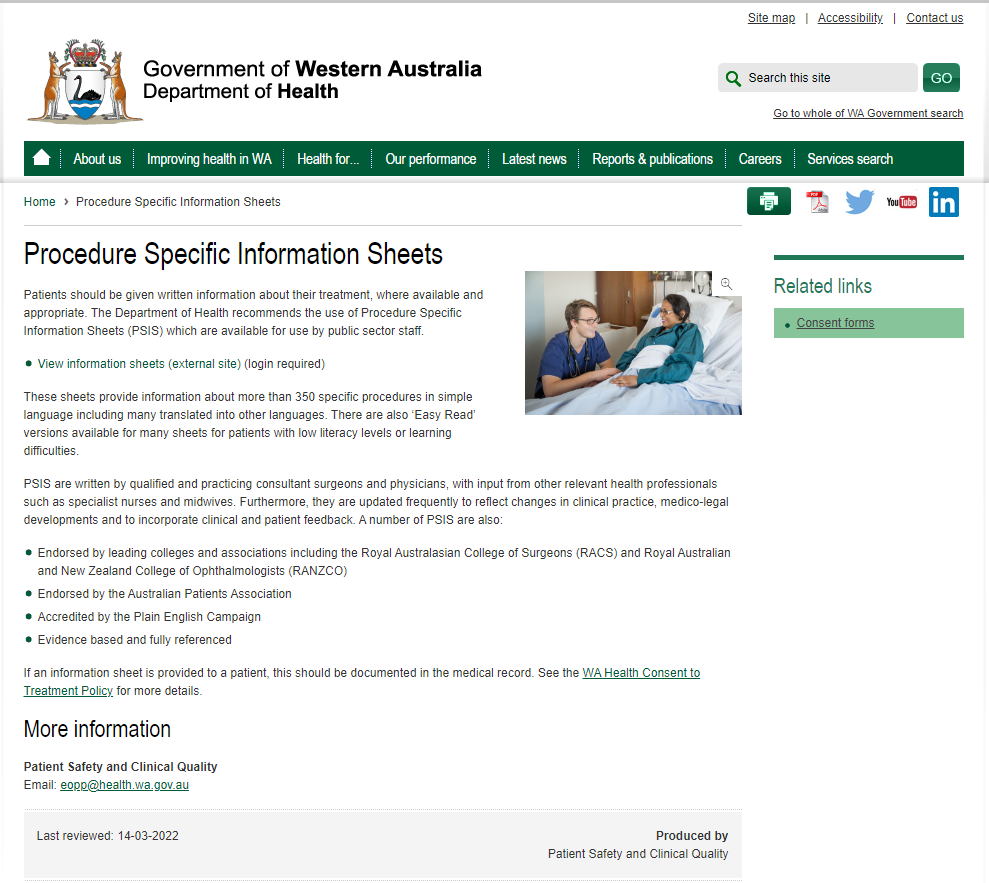
Procedure Information Sheets 

Written information about treatments and procedures  

Understand your pathology tests 

Information about pathology to help you manage your health.

Going to Hospital 

Manage My Care

Manage My Care gives you access to outpatient appointment and referral information. 

You can:

  • Easily see your outpatient appointments and referrals 24/7
  • Update contact details for patients over 16 years old (e.g. address and phone numbers)
  • Request to reschedule, confirm or cancel upcoming outpatient appointments for select specialties
  • Access information about your appointment and hospital visit.

The app is available on Apple and Android.

Private Health  


Experts by experience – mental health peer support

In our previous Health Matters focused on self-advocacy and peer support, Rhianwen Beresford, Convenor of the WA Peer Supporters’ Network, spoke about a vision for peer support where every Western Australian knows what peer support is and can access it if they want to.

Peer support happens across all sectors and walks of life. If you’re using your own experience to help someone through a similar experience, that’s peer support. Mental health peer support offers a whole range of benefits – friendship, empowerment, lessening of stigma, increased acceptance, and shared insights about life with mental health experiences.

On a larger scale, mental health peer support can have a positive impact on the way society views and treats mental health, leading to improvements in service and more person-centred, trauma-informed responses.

Carli Sheers is an active consumer representative and mental health advocate, and we spoke to her about the importance of peer support.

Why is mental health important to you and what made you want to become active in this space?

I recovered from mental health issues through accessing peer support many years ago, and have worked in the mental health sector in various roles for 13 years. My experience and skills as a Consumer Consultant have grown through active participation in the sector and Membership of Mental Health Australia’s National Register. With intention, I developed an extensive network of mutually beneficial collegial relationships and can speak from beyond my own personal experience with their consent. I am lucky to have access to a peer mentor who I admire, respect and value. I became active in the mental health sector to raise the expectation of recovery, reduce stigma and discrimination, and increase my employability as employment is an indicator of health. I also invested in my education and founded a mental health education and training consultancy business last year.

What are the major benefits of mental health peer support, and why does it play such an important role alongside clinical treatment options?

Peer workers undertake a variety of functions in diverse settings, from service delivery to policy making to funding of services. Personal lived experience is an essential job criterion, and other competencies include a person’s overall life experience, employment and education history, emotional maturity and ability to engage and communicate. Peer workers provide an effective and high-quality intervention that can be either complementary to clinical service or, in some situations, effective as a stand-alone intervention. They see challenges as growth and learning opportunities, not as crises.

Mental health peer support workers are experts by experience and provide a specialist knowledge base that can transform individual lives and systems of care. They are recognised for using their insights and expertise from their personal expertise to inform their work, and can walk alongside people who have experienced similar distress and support them without trying to ‘fix’ their situation.  It is about engaging people with mental health issues as the central actors in their management of their mental wellbeing, helping them to find meaning in their life experiences, and guiding people’s journeys towards a contributing life. This was my experience when I accessed Grow*, a national consumer mental health organisation.

Major benefits of mental health peer support include helping people to believe in themselves and re-build their lives, discover their own solutions and develop a sense of control, master their emotional strengths, work towards self-agency and self-advocacy, enhance the quality of lifestyle and personal choices, and finding their strengths, capabilities and possibilities. Peer workers influence much needed cultural change in services and workplaces, decrease people’s need for costly acute services, and are effective in engaging people who have been difficult to reach and not benefited from traditional services.

(Source: Peer Work in Australia. A New Future for Mental Health. 2018)

In the wake of COVID-19, many people are finding themselves on a new mental health journey. As someone who advocates in this space, what advice would you give?

Navigating the mental health system can be complex, as there are many pathways for care and support. It is important to ask for help, and I encourage people to see their GP (or access a Telehealth appointment) if they are not coping due to COVID-19.

I also refer people to the WA Mental Health Commission’s website as a reliable source of information about supports and services. Consider joining a support group via ConnectGroups (https://connectgroups.org.au/), who are the peak body for support groups in WA.

Do you have any advice for those interested in becoming a mental health consumer advocate?

Life-long learning is important to being an effective mental health consumer advocate.  I encourage people to access Consumer Representative training via Health Consumers’ Council and Consumers of Mental Health WA+.


*Grow is a community-based organisation that has helped tens of thousands of Australians recover from mental illness through a unique program of mutual support and personal development. To find out more, visit https://www.grow.org.au/

+CoMHWA currently hosts the WA Peer Supporters’ Network (WAPSN), a network for and by peer supporters in Western Australia. You can join or find out more by contacting info@peersupportwa.org.au or contact (08) 9258 8911.

This article was originally published in Health Matters

The art of compassion in healthcare

By Dr Andrew Leech FRACGP MBBS BSc DCH

In 2019, Dr Andrew Leech was recognised for his commitment to patient-centred care as winner of the Health Consumer Excellence Award for Compassionate Care. Dr Leech is passionate about family health and the integral role of a GP, and believes GPs are in a unique position to offer support to patients. Here, he talks about the art of compassion in healthcare.

How do patients like to be understood and treated when they see a medical professional?

We are generally taught, as doctors, that taking a good history about symptoms, performing a physical examination, and offering evidence based, relevant treatment, makes a good doctor.

I now realise that medicine is a true blend of art amongst all the science. The balancing act between really understanding the patient as well as treating them is not an easy one. Medical schools are trying harder to teach this concept, but it comes with time, experience and feedback from your peers and from patients themselves.

The skill of understanding the person as a whole, and not just for their presenting complaint, probably takes a lifetime to master. We are complicated beings with many facets to what drives us. We depend on countless external and internal stimuli to function and thrive.

Despite all this, I have learnt that there are some beneficial skills that give patients hope, even when it may appear that all hope is lost. Active listening is a good start, but listening with empathy, understanding and compassion helps us to not only grasp the problem and build a therapeutic relationship, it helps guide treatment.

Patients definitely open up more when they are faced with some level of kindness. These may not seem like skills as much as a core human emotion that we all have the ability to possess. But the problem is we are busy, and amongst chaotic days filled with challenges it can be mentally fatiguing being a doctor, and therefore the emotional side of medicine can be stripped away.

I often feel we owe more than just our attention to patients. The Latin origin of the word doctor is ‘to teach’, and this rings true as we try to help educate our patients on the human body and why something might be changing for them. I think doctors can get caught up using quite funny language. We forget that this makes little sense. I am often caught out with this, only the other day the patient looked puzzled when I said they had a ‘carotid stenosis’. Part of the art of medicine is in the communication and wording of how we educate, therefore it may take different words to get a point across, diagrams, handouts, even seminars or workshops, online resources and social media.

Patients are becoming increasingly ‘educated’ in this era of information technology. I feel my role in this is to weave through the information and present the most logical, evidence-based solution. Adding compassion to this discussion means patients often feel ‘you get them’, or at least that you’re listening. We may not have all the answers, but if we walk this journey together then life might be just a little bit easier.


*This article was originally published in Health Matters 

Sexual Health and Blood Borne Viruses

Consumers’ Experience of Sexual Health and Blood-Borne Virus (SHaBBV) Services
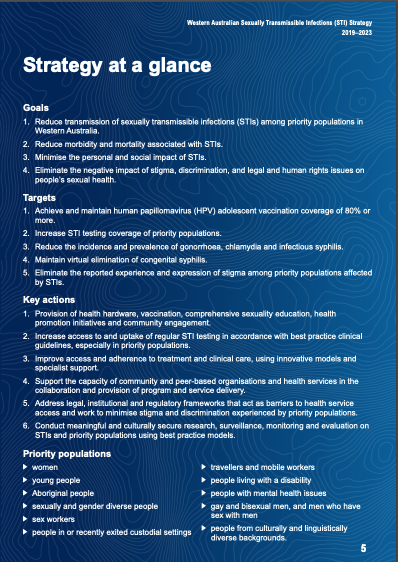
Over 2020-2021 we convened a consumer committee to focus on developing a consumer-led evaluation process of our state’s SHaBBV services.  As part of these conversations we asked for help from SiREN researchers who undertook a rapid review of evidence they had undertaken in relation to:
1. Consumer evaluation of current SHABBV services in Western Australia (either NGO or government/hospital)
2. Consumer insights as to why they do not access SHABBV services.

A summary of the Rapid Review paper is included here.

We met again in April 2021 – minutes of that meeting are here and the key next step was to meet with WA Health to talk about funding for consumer led evaluation initiatives. We are excited to announce we have been invited to submit a joint project proposal with Health Consumers’ Council and SIREN to co-design evaluation of services funded by WA Health. In other words, if they are being funded by WA Health, they will provide a report back on outcomes important to consumers. We will post updates on this page when they are available.  We summarised the whole of these series of conversations in this one pager.

Stigma e-learning module

Meanwhile we are also very excited to announce that WA Health have committed to creating an e-learning module on stigma. This project is starting immediately – we will post updates here when available.

Background

The WA Sexual Health and Blood-borne Viruses Advisory Committee (WA SHaBBVAC) assists the WA Department of Health’s Chief Health Officer under Part 2, s.33 of the Public Health Act 2016. The WA SHaBBVAC includes members from non-government organisations, health service providers, researchers, policy-makers and three consumer representatives. You can read more about this Committee here. There is a consumer portal you can check out here.

HCC is working collaboratively with the three consumer members to develop a strategy to ensure a wider consumer voice is brought into the SHaBBVAC meetings.

  • We met in December 2019 and again in February 2020 and agreed that the most effective next step is to ensure that outcomes for consumers are captured as part of the process of reporting on the Department of Health’s suite of Sexual Health and Blood Borne Virus strategies.
  • We convened a meeting on 31st March 2020 to create a Consumer Alliance of non profit organisations and grass roots consumers.
  • An identified next step from this session was to convene a grassroots SHABBV consumer session to gather together people in the community, reaching out beyond the services to those who may not access current SHABBV services. The session explored how to engage with a wider group of people, and what kind of services they might like to see. This 1.5 hour session was facilitated by HCC and a summary of the session will be posted here soon.
  • A second meeting was held with the Sexual Health and Blood Borne Viruses Consumer Alliance on 5th May which noted as a key action that the membership of the group needs to be consumer only, to meet monthly and progress the consumer evaluation of services. Quarterly meetings will be held with consumers and NGOs together. This is all being established currently (July 2020)

Staying in touch with the project


Consumers’ Experience of Sexual Health and Blood-Borne Virus (SHaBBV) Services


Since 2018 the Health Consumers Council has co-chaired the newly formed Sexual Health and Blood Borne Viruses Advisory Committee, convened after the new Health Services Act was established.

You can read more about this Advisory Committee here.

From 2019, there are consumers also sitting on this Committee, and this page is designed to provide relevant updates.

You can contact us on info@hconc.org.au if you require any further information.