



“Older people from multicultural communities and their access to and experience of healthcare”
Report: 4 June 2026
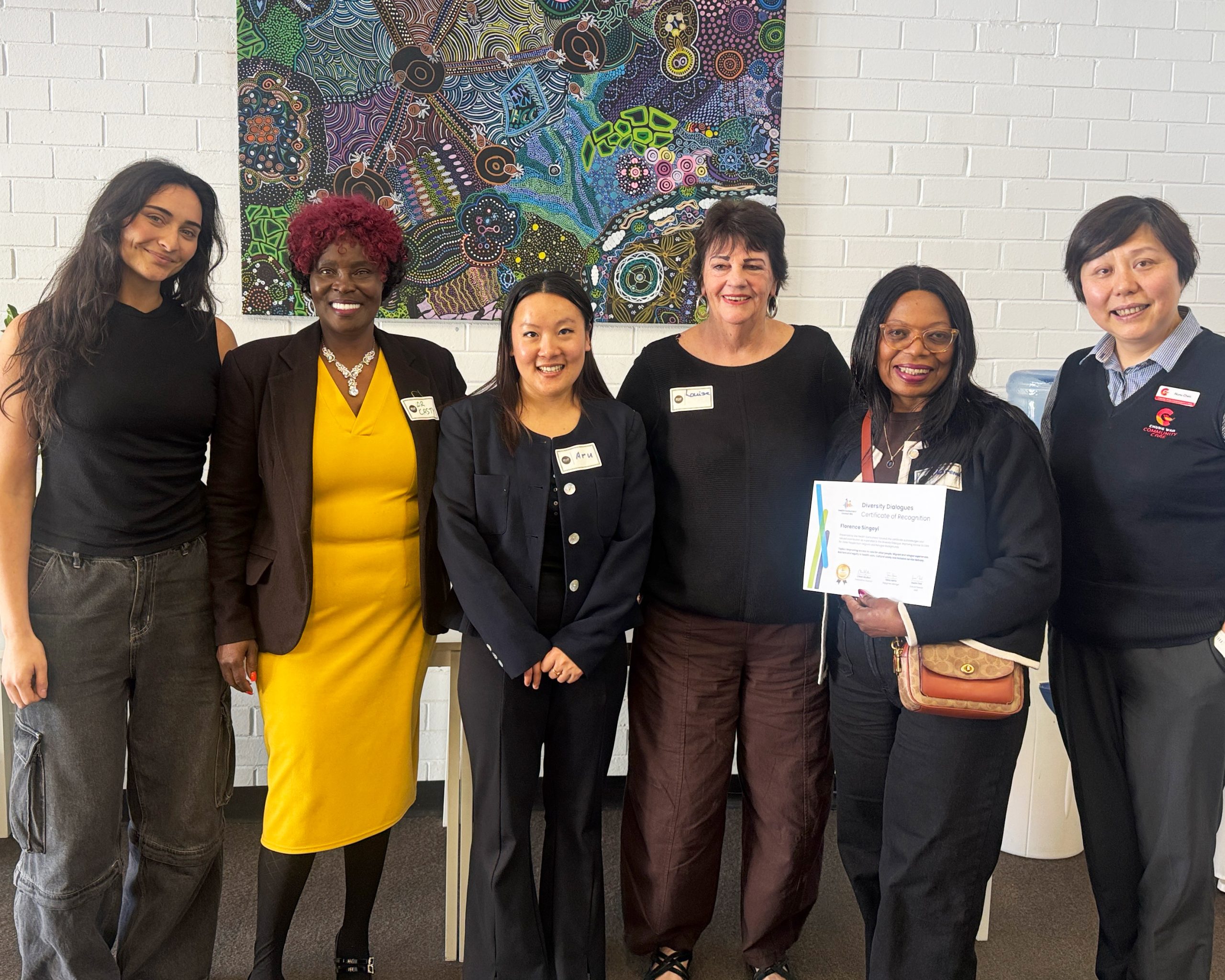
The HCCWA would like to extend its warmest thanks and appreciation to Panel Members for their participation in and contributions to the forum. They were:
Nunu Chen – Senior Manager – Community Engagement / Quality Enhancement – Chung Wah Association
Florence Singoyi – Mental Health Nurse – North Metropolitan Health Service
Dr Casty Nyaga Hughes CPA – Executive President – Organisation of African Communities in WA
Fiorda Kule – Multicultural Manager – Umbrella Multicultural Community Care Services Inc.
Aru –Social Work student – representing the Bhutanese community
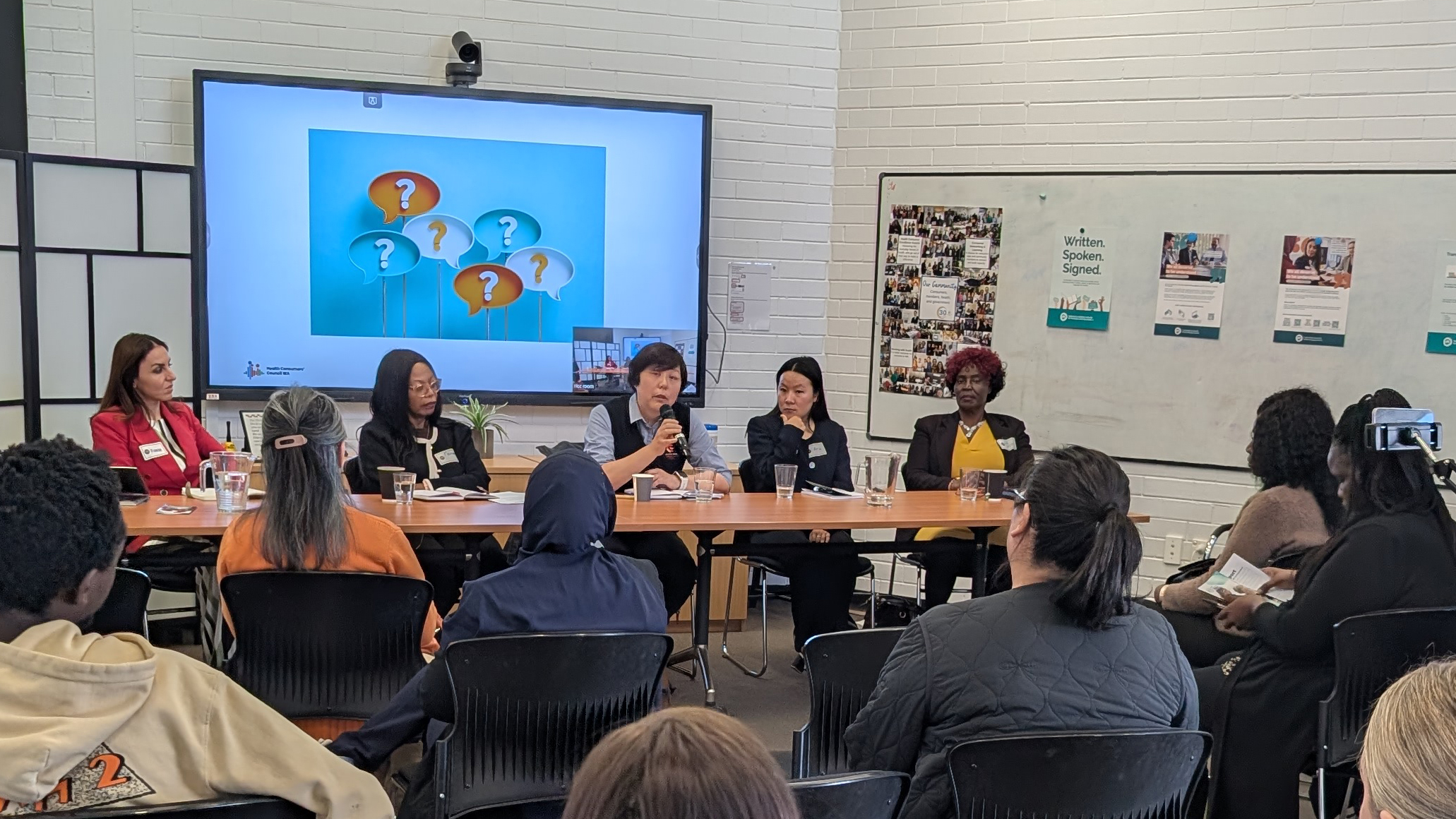
The Forum commenced with an Acknowledgement to Country provided by HCCWA’s Engagement Manager, Tania Harris. Panel members introduced themselves and gave examples of aspects of healthcare issues their communities and clients/patients experienced. These included:
Structural and systemic barriers e.g.
- Boards and committees are predominantly mainstream with little input/influence from others to encourage/support change. The ‘system’ has not been developed with multicultural communities in mind
- Policies and services are often designed for a “generic Australian senior”, not multicultural seniors, leading to a systemic misfit
- A repeated point from African community leadership: the current health and aged-care system was not designed around migrant life courses, humanitarian histories, or multi-generational migration patterns.
Transport
- Older people often don’t have others who can accompany and take them to appointments or health related programs – family members are often working long hours
- A lack of affordable, appropriated and trusted transport
Culturally competent health care
- A need for better education of health care workers in terms of working with culturally diverse communities
- A lack of cross-cultural understanding/knowledge e.g. a patient washing her clothes while showering was seen as a worsening of her condition however it is normal practice in her country of origin · this demonstrates how lack of cultural understanding can pathologize normal behaviour.
Social isolation
Has lead to deaths in the Sierra Leonian community – people have fallen and died in their home and remained undiscovered until neighbours noticed a smell. One woman fell and survived but is now a paraplegic.
Language, Literacy, and Digital Barriers
- One agency (Chung Wah) is developing its own digital learning and translated material as a strategy to help support its clients/members
- Form filling is complex and there are often literacy and language barriers
- Many people are not literate in any language, making navigation of complex forms (e.g. MyGov, bowel cancer screening kits, income-tested fee forms) extremely difficult.
- Even well-educated native English speakers struggle with My Aged Care and Centrelink forms; the impact is magnified for CALD seniors
- Seniors struggle with online portals, SMS codes, email, and MyGov, including the three-ID requirement to set up accounts.
- Digitalisation without support further locks out already-marginalized groups
- Literal translations can miss context or concepts that don’t exist in the person’s language or culture (e.g. “home care packages”, “aged care providers” in languages where family is expected to provide all care)
- Interpreters may:
- Lack specific health/aged-care knowledge,
- Not understand community sub-cultures or dialects
- Be distrusted by clients who fear breaches of privacy within small communities
- Impacts on access and trust
- Combined effects lead to misdiagnosis, under-diagnosis, misunderstanding of treatment, and avoidance of services.
Trust, Fear, and Trauma
- Deep mistrust of systems· many community members believe professionals are “just ticking boxes” rather than caring about their wellbeing
- Past experiences in origin countries—torture, trauma, abuse by medical
- personnel or authorities—make hospital environments and procedures frightening.
Expectations shaped by different systems
- In many countries people expect longer, more relational consultations; the Australian model of short appointments and time-limited interactions can feel dismissive or unsafe
- Seniors can feel that healthcare is “not for them” when interactions are rushed and culturally insensitive
Shame and stigma
- Mental health often interpreted as weakness, madness, or even demonic possession, particularly in some African communities.
- Family and domestic violence is taboo; reporting it can be seen as bringing shame on the family or community.
- For men, acknowledging victim-hood in domestic violence can be seen as “not being a real man”, creating a strong barrier to help-seeking.
Cultural Roles, Expectations, and Culturally Appropriate Care
- Role of family and duty:
- In many cultures, older adults expect that children will care for them; accepting external services can feel like failure or abandonment.
- Community leaders are working to reframe external supports as complementary to family care, not a replacement
Food as care and identity
- Seniors often struggle with hospital or facility food that feels foreign—e.g. being served a sandwich as a “meal” when that would only ever be a snack in their home culture.
- Inadequate or inappropriate food leads to poor intake and deterioration.
- There is a strong call for culturally appropriate meals to be recognized as part of quality care, not an “extra.
As conversations continued it became clear there are common threads:
- A lack of cultural awareness in healthcare staff
- The difficulties community members encounter completing complex forms e.g. limited understanding of English both spoken and written as well as terminologies used
- Language barriers, little or no literacy at times
- Limited access to transport and support
- Communities and their members being unaware of available services
- Lack of trust in service providers/people outside their own communities
The Forum was opened to questions and comments to panel members from the audience. The following areas were discussed, in some instances representatives were able to offer support to each other e.g. Fiorda noted Umbrella offers a free Care Finder Service for Seniors. (https://umbrellacommunitycare.com.au/service/care-finder-services/}
Social isolation and falls – there have been deaths and severe physical consequences as the result of falls for people living alone. Community members do not always trust government and other service providers.
Time constraints and GP appointments – people often need to develop a rapport with a doctor however 10 minute appointments do not allow for that. For people who have come as refugees the brevity of the appointment and the inability to develop a rapport with a GP can trigger a trauma response. People need to be able to develop a relationship which helps to build trust. If an interpreter is required to assist with understanding and following medical instructions, extra time needs to be factored in to accommodate this.
Interpreters and translated material – there can be issues with these due to dialects and the lack of specialist knowledge amongst interpreters re medical issues and aged care.
Services – many services are available but people don’t know how to access them, the “how” is missing. There is also a need to build trust in services within communities. Lack of trust is a major barrier to service access.
Cultural factors – OACWA has started a Seniors Program to support people to understand differences in life here and ‘back home’ e.g. here there are care providers to assist with care giving for elders rather than people’s own children. There is a focus on supporting people to understand it is OK for service providers to come to the home if their children are unable to provide adequate support. Many older people also trust traditional medicine (not available here) and may be reluctant to fully commit to western medicine. Food is important, people may not eat well if the food isn’t what they are used to. Men very reluctant to discuss sexual health matters.
Mental health – an issue across all communities. It can be difficult to access and interpreters must be utilised which means sessions need to be for two hours rather than one. Young people are beginning to access mental health services more but older people are reluctant, neither do they easily talk about it. In some communities it can be seen as ‘demonic’ and people should cure themselves via prayer. There is much stigma attached to the concept of ‘mental health’.
Domestic violence – was raised during the Forum and is related here as it links to mental health care. It was suggested that when DV or elder abuse is suspected or made known, one approach is to mediate with the whole family. Men in particular can be reluctant to talk about DV whether the perpetuator or the victim.
Recommendations, solutions and suggestions
- Communities can work together to create solutions – get people to the table to create systemic changes
- Chung Wah is assisting older people to develop digital literacy skills to help them access information and support
- Encourage community members to utilise services beyond their own communities in order to access more services
- Community organisations working with their community to encourage a greater understanding of mental health in a western context
- Raise awareness of available services and resources to communities and how to access these services
- Much information is aimed at mainstream not multicultural communities – there needs to be a bridge to bring service providers and communities together
- More networking opportunities for multicultural communities so we can help each other
- Care Finder services doing outreach and trust-building visits.
- Use of personal alarms/fall detectors configured to call trusted contacts (family, community leaders) rather than only emergency services
- The need for staff to consult people from the same or similar backgrounds before labelling behaviours as symptoms
- Increase representation of CALD seniors and community leaders in health and aged-care decision-making structure
- Invest in and expand navigator and Care Finder programs, with explicit multicultural and community-led models
- Strengthen cultural competence in health and aged-care services
- Address digital exclusion by funding face-to-face support for MyGov/My Aged Care
- Embed culturally appropriate food and environments in hospitals and residential care as part of quality standards.
In addition, people discussed:
Balancing culturally specific and cross-cultural services
- Some argued strongly for culturally matched supports (e.g. Africans supporting Africans) to build trust and engagement, especially at the start.
- Others raise the risk of over-reliance on one’s own community, which can:
- Limit integration
- Increase shame if problems (such as domestic violence) become widely known within that community
- Leave people unprepared when they must interact with a broader service system
- A layered approach was discussed:
- First, build trust through own-community workers,
Then gradually introduce mainstream and other-culture providers, supporting seniors to navigate a broader system.
Children, Youth, and Intergenerational Dimensions
Concern from a child health researcher: multicultural families are not always accessing early child development screening and support services, despite high importance in the first five years.
This mirrors the adult pattern: services exist but are not well-connected to families who could benefit.
Intergenerational programs
OAC is planning intergenerational round tables bringing together grandmothers, mothers, and daughters to:
- Share stories and expectations,
- Discuss health, domestic violence, mental health, and settlement challenges across generations,
- Build understanding and collective strategies
Strategies and Services Highlighted
1. Care Finder and Navigator Services
Umbrella Community Care (Fiona) and Chung Wah Community Care (Nnun) both operate Care Finder and navigation-style services funded by the Department of Health and PHNs.
Key functions:
- Outreach to multicultural seniors, often via community leaders and networks.
- Building trust through repeated visits, informal chats (“just here for a cup of tea”), and practical assistance.
- Supporting entry into My Aged Care, arranging assessments, linking to CHSP and home care services.
- Identifying and mitigating environmental risks (e.g. steps at showers, lack of rails, unsafe bathrooms) to prevent falls and crises.
2. Community-Led Programs (OAC and Others)
OAC seniors’ program (running ~7+ months, meeting fortnightly):
- Needs-assessment conversations with seniors to discover what they want and need.
- Education on differences between normal ageing vs illness, clarifying symptoms that do require medical attention.
- Addressing beliefs around traditional medicine, hospital care, and patterns of help seeking
OAC Men’s Department
- Created in response to suicides of men in domestic-violence contexts.
- Provides safe spaces for men to talk about domestic violence, mental health, and social pressures.
Women’s programs and youth programs
- Focus on leadership, empowerment, and education.
- Intention is a holistic, “whole family” approach, recognizing that seniors, adults, and youth are interlinked.
3. Advocacy, Training, and Capacity-Building
Advocare (Alessandra):
- Observes major challenges in cultural understanding, interpreter appropriateness, and digital literacy.
- Notes the new Aged Care Act has more person-centred, rights-based language, but structures still lack strong cultural intelligence.
- Emphasizes training and empowering community members now, as “we are the future seniors”.
Carers WA / university partnership (QUEST program)
- Government-funded consumer-led research education to upskill consumers and carers so they can engage with hospitals on more equal footing (“hospital evidence base” vs “consumer seeing-is-believing”)
- Aims to improve trust by helping consumers speak the system’s language without losing lived experience perspectives
Perth Multicultural Health Link & Multicultural Futures
- Role in developing and sharing resources, plus research into shame, stigma, and barriers in mental health and domestic violence
Feedback
Overall feedback from the forum was positive with 100% agreeing the information shared would assist them in their roles. The audience consisted of health care providers, carers, a researcher and health professionals. Comments included:
- Being able to ask questions and getting answers from the different panelists as it gave diverse perspectives.
- Continue discussions on how to improve accessibility to our services for CaLD communities
- More dialogue with multicultural communities
- Discussed insights from event with team (who attended online) Kudos on a dynamic event
- Prepare and develop a network of service providers for seniors
- Approach to inclusive consumer engagement
- Very informative session
- Understanding current issues for our CALD community,
As a footnote, one of the main purposes of Diversity Dialogues forums is to bring members of diverse cultural backgrounds together with health service providers to increase understanding and knowledge. Also to foster communication between providers and communities beyond the forums, with the aim of creating improved experiences for CaLD community members. Events like Diversity Dialogues help forge ongoing relationships, share models (e.g. health passports, Care Finder, seniors’ programs), and avoid “reinventing the wheel” community by community.
We would also like to thank Louise Ford for welcoming those attending in person and online, and Emma Grant who managed the online participants and relayed their questions and comments.
Conclusion
The discussions which took place during this forum clearly demonstrated the need for a sustained approach to incorporating voices from diverse cultural backgrounds in the planning and execution of health care services in WA. It can be clearly seen that:
- Equity in healthcare for older multicultural communities is both a systemic and relational issue
- Isolation, language and digital exclusion create life-and-death risks
- Cultural misunderstanding can directly harm care quality
- Partnerships and networks are essential
- Support community-led mental health and family-violence initiatives
- Promote simple tools like health passports that make it easier for seniors to communicate needs quickly in unfamiliar settings
Again, the Health Consumers’ Council WA would like to thank panel members for their valuable input and to attendees for their interest and participation. As an organisation the Health Consumers Council will continue to provide opportunities for voices from diverse cultural backgrounds to be heard as a means of supporting equity in health service provision in Western Australia. It is also clear that many health professionals want to hear those voices as a means of assisting them to provide the quality care their professions require. To accommodate both diverse voices and health professionals achieve their goals it is apparent systemic change needs to be encouraged to take place; there are recommendations and suggestions in this report to encourage this.