
Category: Reports

Report: Diversity Dialogues Forum May 2026

“Older people from multicultural communities and their access to and experience of healthcare”

Report: 4 June 2026

The HCCWA would like to extend its warmest thanks and appreciation to Panel Members for their participation in and contributions to the forum. They were:

Nunu Chen – Senior Manager – Community Engagement / Quality Enhancement – Chung Wah Association

Florence Singoyi – Mental Health Nurse – North Metropolitan Health Service

Dr Casty Nyaga Hughes CPA – Executive President – Organisation of African Communities in WA

Fiorda Kule – Multicultural Manager – Umbrella Multicultural Community Care Services Inc.

Aru –Social Work student – representing the Bhutanese community
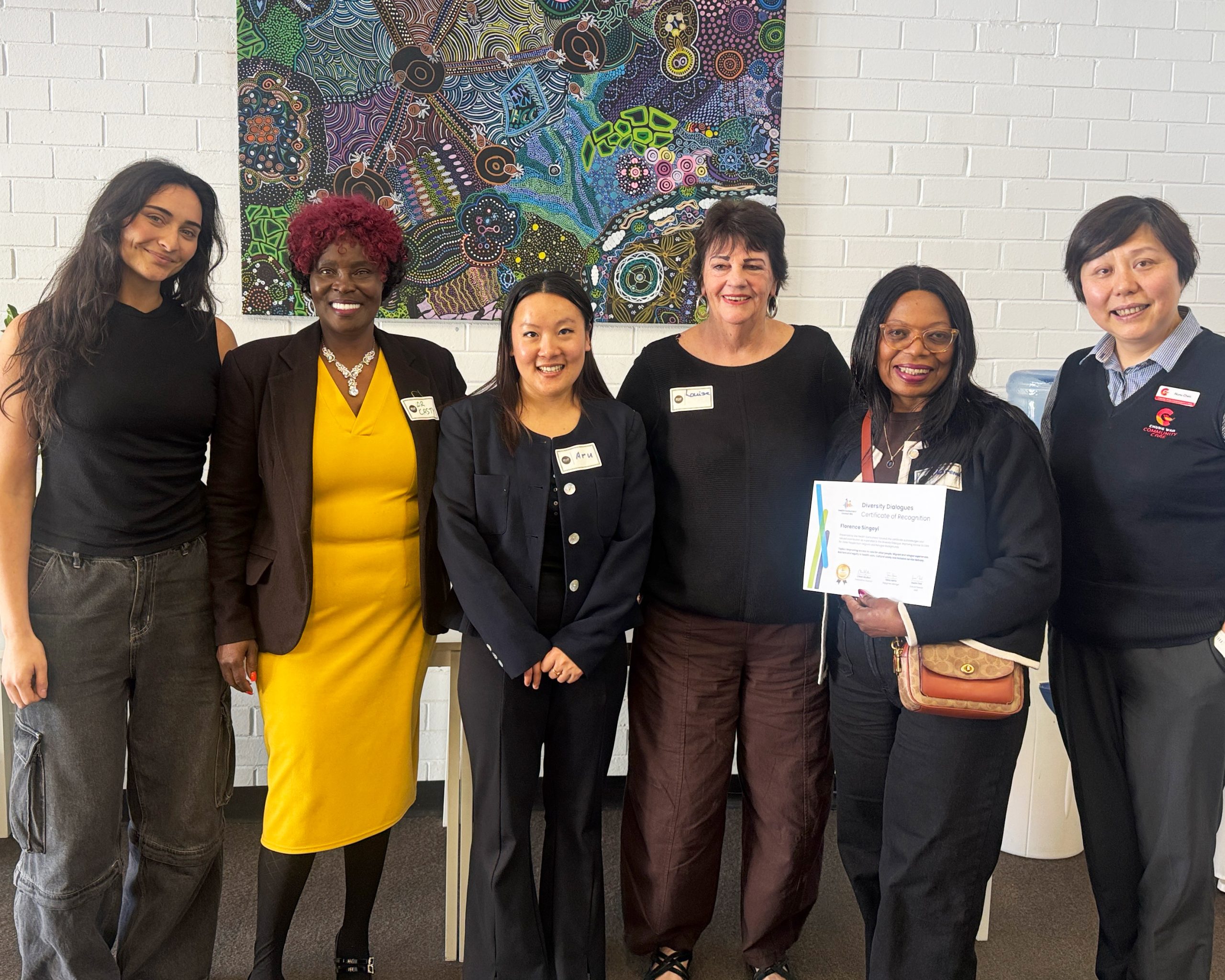
photo Left to right: Dr Casty Nyaga Hughes CPA: Executive President – OACWA, Aru: Edmond Rice Centre representing the Bhutanese community, Florence Singoyi: Mental Health Nurse – North Metropolitan Health Service and Nunu Chen: Coordinator at Chung Wah Community & Aged Care
Left to right: Emma Grant: HCCWA Project and Program Officer, Dr Casty Nyaga Hughes CPA: Executive President – OACWA, Aru: Edmond Rice Centre representing the Bhutanese community, Louise Ford: HCCWA Cultural Diversity Coordinator, Florence Singoyi: Mental Health Nurse – North Metropolitan Health Service and Nunu Chen: Coordinator at Chung Wah Community & Aged Care

The Forum commenced with an Acknowledgement to Country provided by HCCWA’s Engagement Manager, Tania Harris. Panel members introduced themselves and gave examples of aspects of healthcare issues their communities and clients/patients experienced. These included:

Structural and systemic barriers e.g.

  • Boards and committees are predominantly mainstream with little input/influence from others to encourage/support change. The ‘system’ has not been developed with multicultural communities in mind
  • Policies and services are often designed for a “generic Australian senior”, not multicultural seniors, leading to a systemic misfit
  • A repeated point from African community leadership: the current health and aged-care system was not designed around migrant life courses, humanitarian histories, or multi-generational migration patterns.

Transport

  • Older people often don’t have others who can accompany and take them to appointments or health related programs – family members are often working long hours
  • A lack of affordable, appropriated and trusted transport

Culturally competent health care

  • A need for better education of health care workers in terms of working with culturally diverse communities
  • A lack of cross-cultural understanding/knowledge e.g. a patient washing her clothes while showering was seen as a worsening of her condition however it is normal practice in her country of origin · this demonstrates how lack of cultural understanding can pathologize normal behaviour.

Social isolation

Has lead to deaths in the Sierra Leonian community – people have fallen and died in their home and remained undiscovered until neighbours noticed a smell. One woman fell and survived but is now a paraplegic.

Language, Literacy, and Digital Barriers

  • One agency (Chung Wah) is developing its own digital learning and translated material as a strategy to help support its clients/members
  • Form filling is complex and there are often literacy and language barriers
  • Many people are not literate in any language, making navigation of complex forms (e.g. MyGov, bowel cancer screening kits, income-tested fee forms) extremely difficult.
  • Even well-educated native English speakers struggle with My Aged Care and Centrelink forms; the impact is magnified for CALD seniors
  • Seniors struggle with online portals, SMS codes, email, and MyGov, including the three-ID requirement to set up accounts.
  • Digitalisation without support further locks out already-marginalized groups
  • Literal translations can miss context or concepts that don’t exist in the person’s language or culture (e.g. “home care packages”, “aged care providers” in languages where family is expected to provide all care)
  • Interpreters may:
    • Lack specific health/aged-care knowledge,
    • Not understand community sub-cultures or dialects
    • Be distrusted by clients who fear breaches of privacy within small communities
  • Impacts on access and trust
  • Combined effects lead to misdiagnosis, under-diagnosis, misunderstanding of treatment, and avoidance of services.

 Trust, Fear, and Trauma

  • Deep mistrust of systems· many community members believe professionals are “just ticking boxes” rather than caring about their wellbeing
  • Past experiences in origin countries—torture, trauma, abuse by medical
  • personnel or authorities—make hospital environments and procedures frightening.

Expectations shaped by different systems

  • In many countries people expect longer, more relational consultations; the Australian model of short appointments and time-limited interactions can feel dismissive or unsafe
  • Seniors can feel that healthcare is “not for them” when interactions are rushed and culturally insensitive

Shame and stigma

  • Mental health often interpreted as weakness, madness, or even demonic possession, particularly in some African communities.
  • Family and domestic violence is taboo; reporting it can be seen as bringing shame on the family or community.
  • For men, acknowledging victim-hood in domestic violence can be seen as “not being a real man”, creating a strong barrier to help-seeking.

Cultural Roles, Expectations, and Culturally Appropriate Care

  • Role of family and duty:
  • In many cultures, older adults expect that children will care for them; accepting external services can feel like failure or abandonment.
  • Community leaders are working to reframe external supports as complementary to family care, not a replacement

Food as care and identity

  • Seniors often struggle with hospital or facility food that feels foreign—e.g. being served a sandwich as a “meal” when that would only ever be a snack in their home culture.
  • Inadequate or inappropriate food leads to poor intake and deterioration.
  • There is a strong call for culturally appropriate meals to be recognized as part of quality care, not an “extra.

As conversations continued it became clear there are common threads:

  • A lack of cultural awareness in healthcare staff
  • The difficulties community members encounter completing complex forms e.g. limited understanding of English both spoken and written as well as terminologies used
  • Language barriers, little or no literacy at times
  • Limited access to transport and support
  • Communities and their members being unaware of available services
  • Lack of trust in service providers/people outside their own communities

The Forum was opened to questions and comments to panel members from the audience. The following areas were discussed, in some instances representatives were able to offer support to each other e.g. Fiorda noted Umbrella offers a free Care Finder Service for Seniors. (https://umbrellacommunitycare.com.au/service/care-finder-services/}

Social isolation and falls – there have been deaths and severe physical consequences as the result of falls for people living alone. Community members do not always trust government and other service providers.

Time constraints and GP appointments – people often need to develop a rapport with a doctor however 10 minute appointments do not allow for that. For people who have come as refugees the brevity of the appointment and the inability to develop a rapport with a GP can trigger a trauma response. People need to be able to develop a relationship which helps to build trust. If an interpreter is required to assist with understanding and following medical instructions, extra time needs to be factored in to accommodate this.

Interpreters and translated material – there can be issues with these due to dialects and the lack of specialist knowledge amongst interpreters re medical issues and aged care.

Services – many services are available but people don’t know how to access them, the “how” is missing. There is also a need to build trust in services within communities. Lack of trust is a major barrier to service access.

Cultural factors – OACWA has started a Seniors Program to support people to understand differences in life here and ‘back home’ e.g. here there are care providers to assist with care giving for elders rather than people’s own children. There is a focus on supporting people to understand it is OK for service providers to come to the home if their children are unable to provide adequate support. Many older people also trust traditional medicine (not available here) and may be reluctant to fully commit to western medicine. Food is important, people may not eat well if the food isn’t what they are used to. Men very reluctant to discuss sexual health matters.

Mental health – an issue across all communities. It can be difficult to access and interpreters must be utilised which means sessions need to be for two hours rather than one. Young people are beginning to access mental health services more but older people are reluctant, neither do they easily talk about it. In some communities it can be seen as ‘demonic’ and people should cure themselves via prayer. There is much stigma attached to the concept of ‘mental health’.

Domestic violence – was raised during the Forum and is related here as it links to mental health care. It was suggested that when DV or elder abuse is suspected or made known, one approach is to mediate with the whole family. Men in particular can be reluctant to talk about DV whether the perpetuator or the victim.
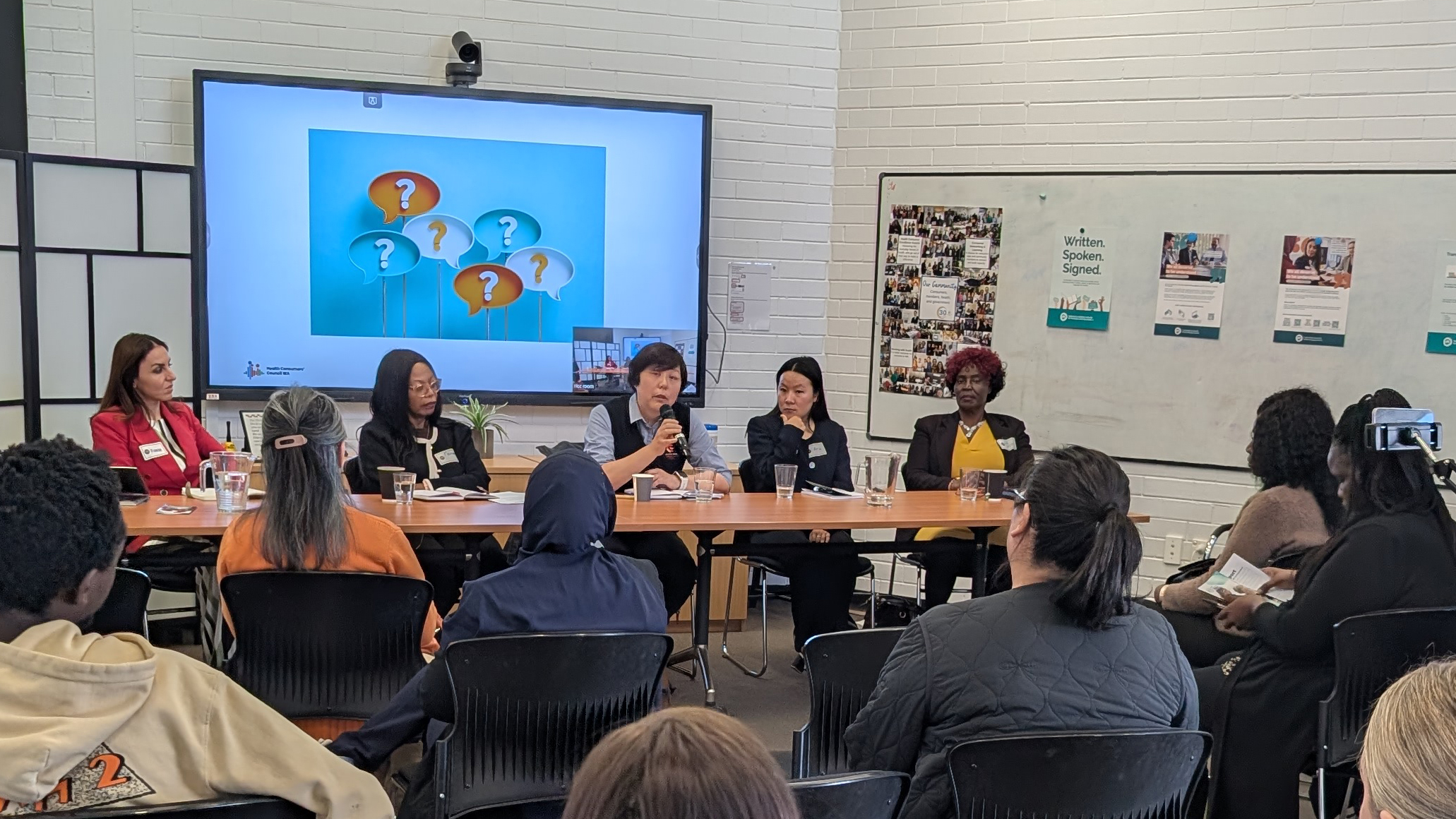
HCCWA’s Diversity Dialogues panel discussion on improving access to care for older people from migrant and refugee backgrounds.

Recommendations, solutions and suggestions

  • Communities can work together to create solutions – get people to the table to create systemic changes
  • Chung Wah is assisting older people to develop digital literacy skills to help them access information and support
  • Encourage community members to utilise services beyond their own communities in order to access more services
  • Community organisations working with their community to encourage a greater understanding of mental health in a western context
  • Raise awareness of available services and resources to communities and how to access these services
  • Much information is aimed at mainstream not multicultural communities – there needs to be a bridge to bring service providers and communities together
  • More networking opportunities for multicultural communities so we can help each other
  • Care Finder services doing outreach and trust-building visits.
  • Use of personal alarms/fall detectors configured to call trusted contacts (family, community leaders) rather than only emergency services
  • The need for staff to consult people from the same or similar backgrounds before labelling behaviours as symptoms
  • Increase representation of CALD seniors and community leaders in health and aged-care decision-making structure
  • Invest in and expand navigator and Care Finder programs, with explicit multicultural and community-led models
  • Strengthen cultural competence in health and aged-care services
  • Address digital exclusion by funding face-to-face support for MyGov/My Aged Care
  • Embed culturally appropriate food and environments in hospitals and residential care as part of quality standards.

In addition, people discussed:

Balancing culturally specific and cross-cultural services

  • Some argued strongly for culturally matched supports (e.g. Africans supporting Africans) to build trust and engagement, especially at the start.
  • Others raise the risk of over-reliance on one’s own community, which can:
    • Limit integration
    • Increase shame if problems (such as domestic violence) become widely      known within that community
    • Leave people unprepared when they must interact with a broader service system
  • A layered approach was discussed:
  • First, build trust through own-community workers,

Then gradually introduce mainstream and other-culture providers, supporting seniors to navigate a broader system.

Children, Youth, and Intergenerational Dimensions

Concern from a child health researcher: multicultural families are not always accessing early child development screening and support services, despite high importance in the first five years.

This mirrors the adult pattern: services exist but are not well-connected to families who could benefit.

Intergenerational programs

OAC is planning intergenerational round tables bringing together grandmothers, mothers, and daughters to:

  • Share stories and expectations,
  • Discuss health, domestic violence, mental health, and settlement challenges across generations,
  • Build understanding and collective strategies

Strategies and Services Highlighted

1. Care Finder and Navigator Services

Umbrella Community Care (Fiona) and Chung Wah Community Care (Nnun) both operate Care Finder and navigation-style services funded by the Department of Health and PHNs.

Key functions:

  • Outreach to multicultural seniors, often via community leaders and networks.
  • Building trust through repeated visits, informal chats (“just here for a cup of tea”), and practical assistance.
  • Supporting entry into My Aged Care, arranging assessments, linking to CHSP and home care services.
  • Identifying and mitigating environmental risks (e.g. steps at showers, lack of rails, unsafe bathrooms) to prevent falls and crises.

2. Community-Led Programs (OAC and Others)

OAC seniors’ program (running ~7+ months, meeting fortnightly):

  • Needs-assessment conversations with seniors to discover what they want and need.
  • Education on differences between normal ageing vs illness, clarifying symptoms that do require medical attention.
  • Addressing beliefs around traditional medicine, hospital care, and patterns of help seeking

OAC Men’s Department

  • Created in response to suicides of men in domestic-violence contexts.
  • Provides safe spaces for men to talk about domestic violence, mental health, and social pressures.

Women’s programs and youth programs

  • Focus on leadership, empowerment, and education.
  • Intention is a holistic, “whole family” approach, recognizing that seniors, adults, and youth are interlinked.

3. Advocacy, Training, and Capacity-Building

Advocare (Alessandra):

  • Observes major challenges in cultural understanding, interpreter appropriateness, and digital literacy.
  • Notes the new Aged Care Act has more person-centred, rights-based language, but structures still lack strong cultural intelligence.
  • Emphasizes training and empowering community members now, as “we are the future seniors”.

Carers WA / university partnership (QUEST program)

  • Government-funded consumer-led research education to upskill consumers and carers so they can engage with hospitals on more equal footing (“hospital evidence base” vs “consumer seeing-is-believing”)
  • Aims to improve trust by helping consumers speak the system’s language without losing lived experience perspectives

Perth Multicultural Health Link & Multicultural Futures

  • Role in developing and sharing resources, plus research into shame, stigma, and barriers in mental health and domestic violence

Feedback

Overall feedback from the forum was positive with 100% agreeing the information shared would assist them in their roles. The audience consisted of health care providers, carers, a researcher and health professionals. Comments included:

  • Being able to ask questions and getting answers from the different panelists as it gave diverse perspectives.
  • Continue discussions on how to improve accessibility to our services for CaLD communities
  • More dialogue with multicultural communities
  • Discussed insights from event with team (who attended online) Kudos on a dynamic event
  • Prepare and develop a network of service providers for seniors
  • Approach to inclusive consumer engagement
  • Very informative session
  • Understanding current issues for our CALD community,

As a footnote, one of the main purposes of Diversity Dialogues forums is to bring members of diverse cultural backgrounds together with health service providers to increase understanding and knowledge.  Also to foster communication between providers and communities beyond the forums, with the aim of creating improved experiences for CaLD community members. Events like Diversity Dialogues help forge ongoing relationships, share models (e.g. health passports, Care Finder, seniors’ programs), and avoid “reinventing the wheel” community by community.

We would also like to thank Louise Ford for welcoming those attending in person and online, and Emma Grant who managed the online participants and relayed their questions and comments.

Conclusion

The discussions which took place during this forum clearly demonstrated the need for a sustained approach to incorporating voices from diverse cultural backgrounds in the planning and execution of health care services in WA. It can be clearly seen that:

  • Equity in healthcare for older multicultural communities is both a systemic and relational issue
  • Isolation, language and digital exclusion create life-and-death risks
  • Cultural misunderstanding can directly harm care quality
  • Partnerships and networks are essential
  • Support community-led mental health and family-violence initiatives
  • Promote simple tools like health passports that make it easier for seniors to communicate needs quickly in unfamiliar settings

Again, the Health Consumers’ Council WA would like to thank panel members for their valuable input and to attendees for their interest and participation. As an organisation the Health Consumers Council will continue to provide opportunities for voices from diverse cultural backgrounds to be heard as a means of supporting equity in health service provision in Western Australia. It is also clear that many health professionals want to hear those voices as a means of assisting them to provide the quality care their professions require. To accommodate both diverse voices and health professionals achieve their goals it is apparent systemic change needs to be encouraged to take place; there are recommendations and suggestions in this report to encourage this.
WA Winter Readiness Insights

Clare Mullen | Executive Director

 Winter is coming here!

While I never watched a full episode of Game of Thrones, I’m familiar with the ominous warning that “winter is coming…”

If you’re involved in the health system as a consumer or community representative, then you’ll know that health services in the south of the state are battening down the hatches to prepare for the increase in people who get sick at this time of year.

But we know from our discussions with WA community members that people don’t want to get sick if they can help it. Getting sick during winter isn’t inevitable and we know that every time you get a group of health consumers in a room, people sharing their knowledge is powerful.

So while we couldn’t easily get almost 200 people together in a room, we’ve gathered views from 200 of you about how you stay well and if you’re stepping up your efforts as winter approaches. Here’s what you told us…

First up – you care about your health

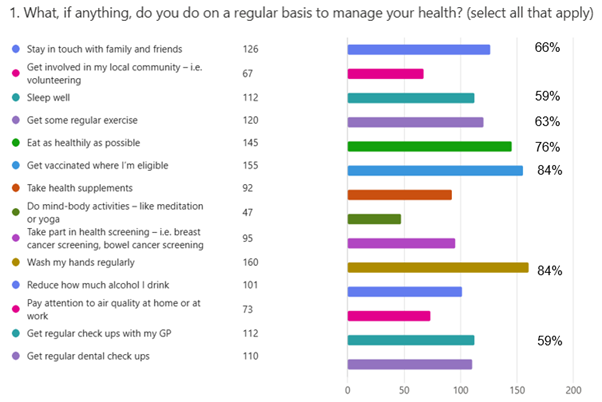
Everyone does something to protect their health usually. With the most selected options being:

  • Wash hands
  • Get vaccinated
  • Eat as healthily as possible
  • Stay in touch with family and friends
  • Get some regular exercise

Getting regular check ups with your GP and sleeping well scored highly too.

Next – most of us are doing something extra to prep to avoid winter bugs

More than three quarters of respondents think about taking extra measures – including:

  • Getting vaccinated
  • Maintaining strong hygiene like hand-washing and using masks
  • Avoiding higher-risk environments during peak season
  • Staying home and keeping your distancewhen unwell
  • Building overall health and immunity
  • Paying attention to air quality and ventilation

Most of our respondents plan to get vaccinated if they’re eligible

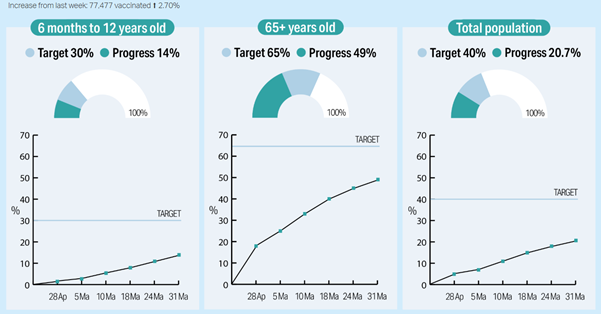
More than 80% of respondents plan to get vaccinated and know where to go to get it done, with about 7% of respondents unsure. Among the people who say they’re not planning to get vaccinated, about 5 people express concern about the risks of vaccination, with another 7 people commenting on how they’ve experienced cold/flu-like illnesses after previous vaccinations.

We can all play our part in reaching the community target which gives us all the best chance of staying safe. At the time of writing we’re already over half way towards these targets – but there’s still a way to go. You can check out progress at the WA Health site here: https://access.health.wa.gov.au/immunisation

Finally, we want clear, accessible public health information in places where we already go

Many people who responded to our survey shared it would be helpful if getting vaccinated was as easy as possible. So it’s great to see the WA Government rolling out flu vax clinics across community settings including at the footy – check out this link to see the upcoming dates: https://www.wa.gov.au/government/media-statements/Cook%20Labor%20Government/-More-WA-footy-fans-to-roll-up-their-sleeves-as-flu-clinics-extended-20260521

People also said they want strong public health messaging and transparency – if you haven’t already, check out the WA Health website which has links to your nearest place to get vaccinated, as well as more information about what to expect.

Survey information

We shared a link to a MS Forms survey between 06/03/26 and 09/06/26. The link was shared with HCCWA networks via email and social media. It was also shared on Reddit in r/Perth. There were 191 respondents. Over three quarters of respondents belong to a group that is known to experience health inequities. Almost a quarter of respondents were between 35-44, and over one tenth of respondents were 75 or over.

Report: Healthcare Consumer Representation Training

A summary of our March and April 2026 workshops

Prepared for participants, our consumer community and health system partners

A warm welcome back, and a thank you

These workshops belong to everyone who showed up: those who came in person on a Saturday morning, those who joined online on a Tuesday evening, and those who registered and couldn’t make it this time. Your interest matters, and there will always be a door open for you.

This report is our way of sharing what happened in those rooms and online spaces, and what we heard. It’s written for the people who attended, for our wider consumer community across WA, and for the health system partners and consumer engagement teams who are part of this work with us.

We hope it reflects not just what was covered, but the spirit of how it was covered: honestly, warmly, and grounded in the belief that the experiences of people who use, care for others in, and move through health services are a form of knowledge the system cannot afford to ignore.

“taking the time out of our weekend to come along” – Workshop facilitator, opening the in-person session

What we heard: key themes

Across both sessions, a number of strong themes emerged. These weren’t just talking points; they were things people felt and named from their own lives.

1. Lived experience is a form of knowledge

People who use health services, care for others, navigate aged care, mental health, disability or hospital systems hold knowledge the system cannot get from data alone. This came through clearly in both workshops.

“as consumers moving through it, you then start seeing the gaps”
“our perspectives and experiences are so valuable and give services and systems the information they can’t get anywhere else”

This is one of the core reasons consumer representation matters. Participants told us the most useful parts of the workshop included gaining “in-depth knowledge of health WA,” “understanding the value” of consumer representation, and learning “what consumer reps can expect, skills required, barriers, challenges and benefits.” Together, these responses suggest the workshops helped people see that their experience is not secondary to professional knowledge. It is different knowledge. And it is essential.

2. Consumer representation is contribution, not just a position

Many participants described consumer representation as a way of using their hard-won experience to improve services for others. For some, that came from personal health experiences. For others, it came from watching a parent, child, partner or family member struggle to navigate a system that wasn’t designed with them in mind.

“sharing what I’ve been through to help make the system better for other people”
“have a say and be a voice for people who don’t necessarily have the strength to do that”

People are not coming to consumer representation only because they want a seat at a table. They are coming because they want what they have been through, or what someone they love has been through, to mean something.

“To get to know that consumer representation work can really make consumers’ life easier.”

That comment captures a practical hope that ran through both workshops. Consumer representation is not abstract. It is about improving real people’s real experiences of care.

3. Representation is relational and collective

Consumer representation is not only about telling our own story. Our stories matter; they often bring us into this work. But participants also reflected on how the work asks us to listen, stay curious, seek out other perspectives and hold space for voices that are different from our own.

“Everyone around the table is human, not just the specialists, and your voice is just as important.”

This speaks to both confidence and connection. Consumer representation is not about creating an “us and them” divide. It’s about bringing lived experience into shared spaces, while being honest about power, accountability and the need for change.

4. Diversity is central, not optional

Both workshops gave real attention to diversity. Participants across the two sessions brought a wide range of identities and experiences: carers, people living with chronic illness, people from culturally and linguistically diverse backgrounds, healthcare staff, community members and people new to the work.

“If someone has experienced racism or discrimination in the health system, asking them to sit on a committee can feel impossible.”

This is a powerful reminder. Inviting people is not enough. If people have been harmed, dismissed or treated unfairly by systems, participation needs to be built with care, trust and safety. The workshops consistently encouraged participants to ask: Who has been involved? Who hasn’t? What might we be missing? What do we need to do differently?

5. The work is practical and values-based

Participants valued both the practical and the human dimensions of the workshops. People discussed what consumer representatives can expect, including payment, orientation, preparation time, support from coordinators and respect in meetings. They also discussed skills: listening, asking good questions, being prepared, managing power dynamics, seeking information and sharing experience safely.

“we put names to these numbers”

That comment captures something important. Consumer representatives help ensure that systems don’t lose sight of the people affected by their decisions. Evaluation responses described the most useful elements as the “interactive nature,” the “honest and open and authentic account of the role,” and the practical detail about what the work involves.

6. Tokenism, accountability and closing the loop

Participants were honest about the risk of consumer involvement becoming a tick-box exercise. This included concerns about not being heard, being the only person with a different view, feeling spoken over, having too little preparation time, or being invited into decisions too late to make a real difference.

The workshops were clear: meaningful partnership is not just about inviting people in. It is about creating the conditions for people to contribute well, taking that contribution seriously, and coming back to people with what happened as a result. People want to know: What did you do with what we said? What changed? What couldn’t change, and why? That feedback loop is a form of respect.

7. The work can be meaningful and hard, sometimes at the same time

The workshops were honest about the emotional dimensions of consumer representation. People often come to this work because something difficult or harmful happened to them or to someone they care about. That motivation can be powerful. It can also make the work emotionally demanding.

“Knowing when you can share the raw emotion, and when you can’t, is a really fine balance.”

Participants discussed bureaucracy, slow change, power imbalances, vicarious trauma and the challenge of knowing how to bring personal experience into formal spaces without being asked to carry more than is fair. The training was clear: consumer representative roles are not therapy. People need support, boundaries and care to do this work sustainably over time.

Self-care was framed as a collective as well as an individual responsibility: knowing our limits, debriefing, finding allies, seeking mentoring, choosing the right opportunities, and remembering that this work should also bring something to us.

About these workshops

In March and April 2026, Health Consumers’ Council WA held two Introduction to Consumer Representation workshops. One was an in-person Saturday session; the other was an online Tuesday evening session. Together, they brought people into conversation, people at different stages of their journeys with consumer representation, and from different corners of WA.

These sessions are part of HCCWA’s core training and engagement work. They are designed for people with lived and learned experience, for carers, family members and community members who want to understand what consumer representation can look like, why it matters, and how they might contribute to making health services work better for everyone.

The timing and format of both sessions were deliberate. The Saturday workshop came out of feedback that people needed options outside standard working hours. The Tuesday evening online session recognised that many people are fitting this kind of engagement around employment, caring responsibilities, health needs, study and family life. Accessibility is not an afterthought at HCCWA. It is central to how we think about participation.

Consumer representation is not separate from the communities we’re part of. It’s one way that people who live with and through health systems can bring their knowledge into places where decisions are made, and help those decisions be better.

Who took part

Across the two workshops, 35 people registered. Thirteen people attended: five at the in-person session and eight online. A number of people sent apologies and couldn’t make it on the day.

Importantly, two people who had registered for the in-person Saturday session and were unable to attend came back and joined the online Tuesday evening session instead. Because a second option existed, they were able to find a time that worked for them and still participate. This is exactly why offering different formats matters: not as a logistical convenience, but because the right opportunity at the right time is what makes participation genuinely accessible.

We want to say something directly here: lower attendance than registrations is not a failure, by anyone. It’s a reality of community participation. People register because they want to come. Work, health, caring, transport, unexpected demands: sometimes life gets in the way. This is one of the reasons we follow up with everyone who couldn’t attend and personally invite them to the next available session. Missing one workshop does not mean missing the opportunity. You are always still welcome.

“It really wasn’t until I had to help my elderly mother and uncle navigate aged care and health that I realised how complicated it all is, especially if you don’t have IT skills or English as a first language.” – Workshop participant

This quote captures something we heard throughout both sessions: people often come to consumer representation because they have seen, very personally, how hard systems can be to navigate. And they want that to change for the next person.

A snapshot of who responded to our evaluation

Six people completed anonymous evaluation forms across the two sessions. While this isn’t a full picture of everyone who attended, it gives us a useful snapshot of who provided feedback.

People who responded included:

  • Consumer representatives and people new to consumer representation
  • A consumer who is part of a systemic advisory group
  • A healthcare staff member
  • A community member
  • People who identified as carers, people living with chronic health conditions, and people from culturally and linguistically diverse backgrounds

Respondents came from postcodes across metropolitan Perth and regional WA, a reminder that this work matters from Fremantle to the south-west and beyond. For every single one of them, this was their first time attending an HCCWA training or event.

What the workshops covered

The sessions worked through a lot of ground, but always with people at the centre. Topics included:

  • How the WA health system is structured, and where its connections and gaps tend to be
  • What we mean when we talk about consumers, carers, family, lived experience and learned experience
  • What consumer representative roles can actually involve in practice
  • Partnering with consumers, including Standard 2 of the National Safety and Quality Health Service Standards
  • What people can expect when they step into a consumer representative role
  • The skills and qualities that support effective representation
  • The importance of diversity, and of noticing whose voices are still missing
  • Honest conversation about the challenges: tokenism, power dynamics, emotional labour and feeling unheard
  • Self-care, boundaries and sustainability in the work
  • Where to find further support, training and opportunities through HCCWA and beyond

What made these workshops more than a list of topics, though, was the way they were held. Consumer representation was never framed as a technical task or a formal position only. It was framed as relational, values-based work, grounded in lived experience, shared responsibility and connection to community.

What participants told us

Feedback on the day, and through the evaluation forms, was positive and thoughtful.

Everyone who gave feedback after the workshops said:

  • The workshop was a good use of their time
  • The length was just right
  • They would recommend an HCCWA event to a friend, colleague or network
  • Their knowledge of the importance of consumer representation improved: four said it had greatly improved, two said it had improved

Most respondents also reported increased interest in getting involved. Four said their interest had greatly increased, one said it had increased, and one said it had stayed the same, which may simply mean they were already keen.

In their own words: what was most useful

“In-depth knowledge of health WA”
“Understanding the value”
“What consumer reps can expect, skills required, barriers, challenges and benefits”
“Interactive nature”
“Honest and open and authentic account of the role”
“To get to know that consumer representation work can really make consumers’ life easier.”

What participants suggested we could do better

When asked what was least useful, most people said nothing, or that all parts were useful. One person noted the health system overview was complex and acknowledged openly that the system itself is complex and convoluted. This is useful feedback: the overview is important, and we can keep working on how we present it clearly.

One participant suggested we explore ways of managing discussion so that each person has a chance to contribute without any one topic taking over. That’s something we will consider for future sessions.

What worked well, and what we’re thinking about next

These workshops did several things well.

They created welcoming spaces where people could bring their experience, questions and uncertainty without needing to already have system knowledge. They affirmed lived and learned experience as valuable knowledge, not a nice addition but something central. They were practical and honest about what consumer representation involves, including the challenges. They supported people to see themselves as capable contributors to change.

The smaller in-person group allowed for deeper conversation and relationship-building. The online evening format broadened access for people who could not attend in person or during the day. Across both formats, participants responded to authenticity: not just being told what consumer representation is but being invited into an honest conversation about what it feels like and what helps.

For future sessions, we are thinking about:

  • Making the WA health system overview easier to navigate, with clearer visuals and plain-language pathways
  • Continuing to offer flexible formats, in person and online, on weekends and evenings, so that more people can participate around their lives
  • Protecting space for genuine discussion while supporting a good session flow
  • Keeping diversity, equity and missing voices as core content throughout, not a separate topic
  • Continuing to name emotional labour, boundaries and self-care as genuine parts of the work

In closing

These two workshops were a small, meaningful piece of the work. Thirteen people came together, bringing curiosity, experience and care, and explored what it might look like to contribute to a health system that works better for everyone.

The strongest message across both sessions was consistent: people who use services, care for others and navigate health systems hold knowledge that matters. This knowledge helps services see what is working, what is confusing, what is missing and what needs to change.

“Consumer representatives help put names to these numbers.”
“sharing experience to help make the system better for other people”

Together, those two reflections capture the heart of this work.

Consumer representation is not separate from community. It is grounded in relationships, accountability and shared responsibility. It asks us to bring our own experience, listen for the experiences of others, notice who is missing, and keep working towards systems that better reflect the needs and realities of the people they serve.

For HCCWA, these sessions are part of strengthening the pathways for people to contribute to health system improvement across WA. They are also a model of the kind of engagement we want to see more broadly: accessible, honest, relational, inclusive and grounded in the belief that our experiences can create change.

Thank you to everyone who came, who tried to come, and who continues to believe that their experience belongs in the room.

Health Consumers’ Council WA

www.hccwa.org.au

Individual Healthcare Advocacy Service (IHAS) Impact Update January to March 2026

Independent patient advocacy

An essential building block of clinical governance working under the radar.

Individual health advocacy places the person at the centre of care and decision-making about their healthcare. In a busy and highly fragmented health system, independent health advocacy is a critical part of the safety and quality landscape. Health systems are stronger and safer when people are heard, respected and supported in decision-making. The ability to access independent individual advocacy support can help to restore people’s trust in the health system and rebuild their confidence to speak up in future.


Unprecedented increase in need

We are experiencing unprecedented levels of IHAS need for specifically ‘in-the-moment’ advocacy cases from Western Australians.

Category 1 cases aim to be attended to within 24 to 48 hours due to crisis or life altering impact.

January to March 2026 saw an 111% increase in Category 1 cases compared to January to March 2025.

111%

 category 1 cases


Our impact by the numbers

Enquiries to our free Individual Advocacy Service

357

Enquiries received from Western Australians Jan to Mar 2026

Increase in enquiries to our service

23%

Percent increase in enquiries Jan to Mar 2025 v.s. Jan to Mar 2026

Voluntary mental health advocacy need

63%

Increase in mental health cases Jan to Mar 2025 v.s. Jan to Mar 2026

CaLD Cases

36%

Increase in cases for CaLD cases Jan to Mar 2025 v.s. Jan to Mar 2026

Referrals from MHAS and HaDSCO Jan to Mar 2026

31%

Referrals from the the Mental HaDSCO and MHAS

Individual Advocate funding

4.8

We can currently fund only 4.8 F.T.E. Individual Healthcare Advocates.


WA leads Australia

Since the 1990s, the WA Government has demonstrated strong leadership by funding Health Consumers’ Council WA (HCCWA) to deliver a free, person-centred and rights-based service across all areas of health and healthcare. This longstanding investment reflects commitment to a community-led model that restores hope, confidence and power to consumers navigating a complex health.

What is independent individual health advocacy in WA?

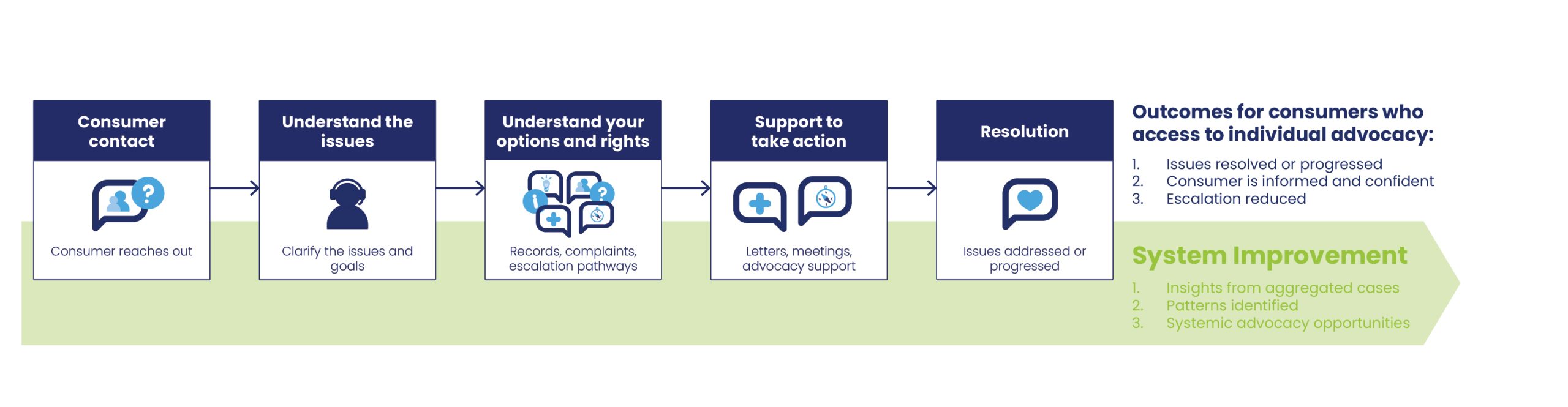
Skilled independent patient advocates at HCCWA provide one to one support to a wide range of consumers who need support to have their voices heard, or to get answers when things have gone wrong.

HCCWA provides this support

  • across the state
  • across all areas of health and healthcare (including voluntary mental health patients)
  • across all healthcare settings (public, private, primary, hospital, community)

Individual advocacy impact

  • Upholds people’s health rights
  • Enables dialogue between patients and clinicians
  • Helps to repairs relationships between patients and caregivers where they’ve ruptured
  • Provides solidarity and encouragement
  • Restores power and confidence that has been diminished by a large and complex system
  • Enables redress where things have gone wrong
  • Saves lives

Independent advocacy provides hope to people at their most vulnerable moments.


HCCWA’s Individual Healthcare Advocacy Service Case Studies

Challenging an unjust $1 million medical bill for a family in distress and holding powerful companies to account

A family coming to Australia to live took out the appropriate level of private health insurance for their visa. Unfortunately, the family needed to access a high level of healthcare. While receiving treatment, the family received a call from their insurance company offering them a different policy with a lower premium, to which they agreed. English is not their first language, and no interpreter was offered. This new policy did not cover the care they were receiving, and so the family became liable for a very significant healthcare bill (over $1m). Our Advocate worked with the family and represented them to the insurance company with the result being that the insurance company agreed to pay the healthcare bill.

Advocate intervention addresses a case of unjust billing

An overseas student was billed for a long GP consultation after a brief visit that lasted around 10 to 12 minutes and included a same day referral to a specialist. The higher charge was more than $100 above a standard consultation and could not be claimed through Medicare due to the patient’s visa status, with private health cover already exhausted. After the patient’s attempts to dispute the charge were unsuccessful, our advocate intervened, referencing the correct billing item requirements. Following several communications, the practice acknowledged the error and rectified the account.

End-of-life choice upheld during fast changing circumstances

“HCCWA was contacted by a family who were concerned that their relative’s rapid health decline was not being adequately recognised and responded to during a hospital admission for abdominal pain. The consumer was subsequently diagnosed with a terminal illness. The consumer decided to access Voluntary Assisted Dying (VAD). Given the conditions that need to be met to remain eligible for VAD, and the consumer’s rapidly declining condition, this case was instantly escalated within our advocacy service. The advocate supported the consumer to seek appropriate and timely clinical reviews, clarify decision-making pathways, and uphold their right to seek and receive clear information. HCCWA’s ability to act quickly ensured the consumer’s preferences, rights, and capacity were prioritised at a critical time.

Restoring quality of life after insisting on surgery review and redress

young man in his early 20s with significant and lifelong disability contacted HCCWA after experiencing escalating pain from a complication following surgery. The procedure differed from what had been discussed and consented to, and post-operative follow up outpatient appointment was not provided. Several GP visits, 2 ED visits and four months later, he still had not received post operative follow up and so remained in severe pain; struggling to access appropriate pain management and unable to resume university study or daily life. HCCWA supported him to understand his rights, be heard within the system, and access urgent post operative review by the surgeon and consider complaint or redress pathways if he chooses. He was admitted for surgery 1 working day after our Advocate spoke with the surgeon.


Western Australians who have used Health Consumer’ Council WA’s FREE Individual Healthcare Advocacy Service (IHAS) say:

“She honestly went above and beyond to help me and make sure I understood everything. Also beautiful and caring as well. ”

“Thank you so much for talking with [clinical specialist] and for helping me prep for my consultation with my doctor and attending with me and writing and sending out the notes. I keep referring back to them as I am trying to fill out the paperwork and pay the fees as I get little blips of panic and they are calming and grounding me massively and that’s allowing me room to actually feel excitement about being on the other side of surgery.“

“Thank you so much for all your help and support in this matter. You truly are amazing and very helpful. It is not often these days you find people that go above and beyond to help you and you truly have so thank you so very much from the bottom of my heart.”

“My advocate was excellent in all areas from knowledge, communication and care to me at all times.”

“Thankyou so much for your time today, I called the right person and I appreciate your help and compassion in a free service too, makes me very grateful I’ve got you and your organisation to lean on for support if I need.”

“Many thanks for all of your support – It has been such a help for me as I was truly so overwhelmed I was unable to do anything and it was impacting my wellbeing tremendously. I cannot thank you enough!!”

“Not only did she guide me in the right direction, she also gave me words of moral support and definitely gave me the confidence to continue the tasks at hand.”


Community led, government funded

A powerful partnership that established Australia’s first independent health advocacy service
In 1993, the then Minister for Health offered health consumer leaders the opportunity to set up a non-profit organisation to act as an independent voice for health consumers on all aspects of health and healthcare. The intent had been to advocate at a systemic level for the rights and interests of health consumers, patients and families. Yet when this new organisation was featured in the media, the small team were inundated with requests for help from people who needed answers from the health system about individual issues. And so, those staff started to deliver individual health advocacy “because they couldn’t not”.

Increased investment is now required to ensure this “under the radar” service can continue to be there for every day West Aussies

We are in discussions with WA Health about the future of this ground-breaking initiative. After 3 decades, the investment in this service has not kept pace with demand, or with the increased complexity of people’s experiences in healthcare.

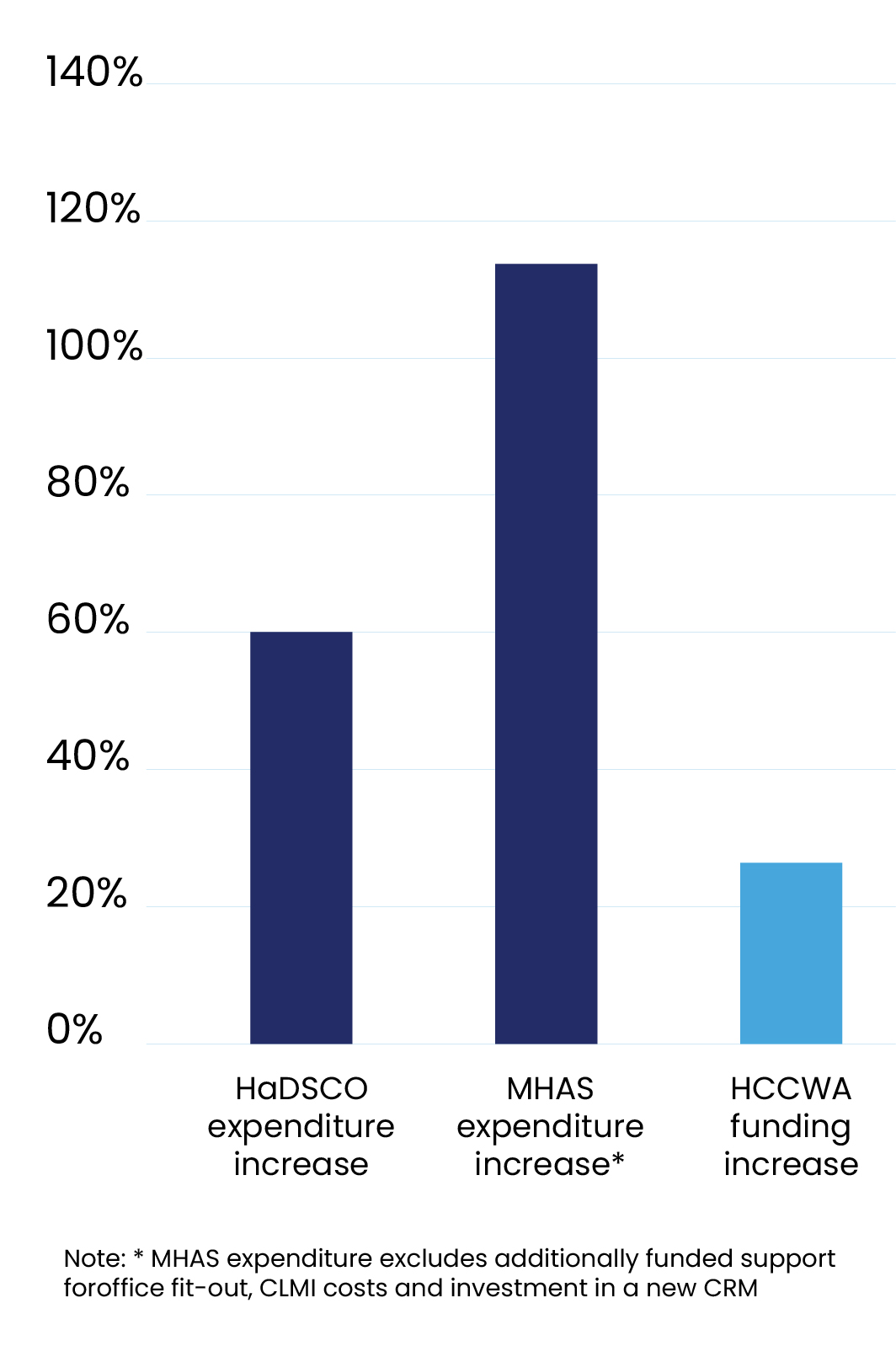
Since the HCCWA budget was last reviewed in 2014, WA Health’s budget has increased by 74%, MHAS expenditure has increased by over 110%, but investment in HCCWA’s capacity has only increased by CPI (27%).

We will be seeking support for a budget business case to ensure that this Australia-first program can continue to play its part in the continuous improvement of the health system, and ensure that Western Australians can continue to be heard, respected and supported.

As a minimum, we want to be able to be there for anyone who is involved in a serious clinical incident WA. We estimate that this requires an increased annual investment of $1.9m.

Shifting the dial on patient safety – on-site patient advocates, strengthening consumer voices

Internationally, evidence suggests that approximately 10% of healthcare causes harm. One contributor to this is patients and families being dismissed when raising concerns in a clinical setting.
In a busy healthcare setting, patient concerns can go unheard. We believe on-site patient advocates – independent of the WA Health system – would significantly strengthen patient and family voices, enabling their voices to be heard alongside the clinical experts.

This would require a significant phased investment and we would welcome the opportunity to be involved in shaping how this might look for WA.


For further information about this report please contact Health Consumers Council WA on 08 9221 3422 or info@hconc.og.au

To discuss any of the content, please contact Clare Mullen, Executive Director at CEO@hconc.org.au