



Systemic Update January to March 2026
Health Consumers’ Council WA’s latest Systemic Advocacy Report highlights how consumer and community voices are helping shape health policy, services, and system reform across Western Australia. Covering January to March 2026, the report outlines HCCWA’s work across preventative health, referral pathways, consumer engagement, rural access, Aboriginal health, mental health, and informed decision making.
During this period, HCCWA contributed to policy submissions, Ministerial roundtables, committee governance reviews, and national reform discussions, while continuing to bring lived experience perspectives into high level decision making. The report also highlights advocacy on outpatient access, informed financial consent, consumer rights, and the need for more inclusive and community-led approaches across the health system.
The report reflects HCCWA’s ongoing commitment to ensuring healthcare policy and reform are shaped by the experiences of patients, carers, families, and communities across WA.
Acknowledgements
We acknowledge Aboriginal and Torres Strait Islander peoples and communities as the Traditional Custodians of the land we work on, specifically the Whadjuk people of the Noongar nation, and pay our respects to Elders past, present, and emerging. Australia always was and always will be Aboriginal land.
Health Consumers’ Council acknowledges the unique insights and strength of those who navigate the complexities of the health system as consumers and thank them for sharing their lived experience and wisdom to help make healthcare fair for everyone.
Contents
- Systemic advocacy at a glance – Q1 2026
- How systemic advocacy is organised at HCCWA
- Do you find this information valuable?
- Department of Health Agency Capability Review
- Dental Board of Australia – Specialist titles
- Palliative Care WA Budget Submission
- Modernising Referral Pathways
- Update on the review of the Mental Health Act 2014 (WA)
- Review of WA Health committee governance guidelines
- WA Country Health Service Leadership Discussion Circle
- Community Relief and Resilience Network
- Translating diabetes innovation into equitable care
- Ministerial Roundtables on Preventative Health
- Aboriginal Elders advocate for healthy lifestyle initiatives
Introduction
In this report we provide our members, friends and stakeholders with an update on how we’re amplifying and championing diverse consumer and community interests to help drive positive change across the health and social care sectors in WA.
Systemic advocacy at a glance – Q1 2026
During this period, HCCWA continued to influence policy, strengthen partnerships, and elevate consumer and community voices across the health system.
Our reach and engagement
- Contributed to 5+ policy submissions and strategic consultations
- Engaged with state and national government agencies, Ministers and MPs
- Participated in 10+ committees, advisory groups, and sector forums
- Delivered 3 sector presentations and panel contributions
- Contributed to media coverage on key consumer health issues
Key areas of influence
- Preventative health policy and whole-of-government approaches
- Access to care, including referral pathways and rural primary care
- Consumer engagement and lived experience in system design and governance
- Equity in health care, including Aboriginal health and community-led approaches
- Transparency and informed decision making for consumers
Highlights from this period
- Provided strategic input to the WA Department of Health Capability Review, strengthening the focus on consumer and community partnership
- Contributed to national policy discussions on modernising referral pathways, advocating for improved access, transparency, and informed choice
- Supported Ministerial roundtables on preventative health, bringing forward consumer priorities including early years, social determinants, and community-led approaches
- Facilitated engagement between Aboriginal Elders and the Minister for Health and Mental Health, elevating community perspectives on research and program design
- Shared insights across sectors, including presentations to the WA Country Health Service and the Community Relief and Resilience Network
This work reflects HCCWA’s ongoing role in ensuring that consumer and community voices inform policy, shape services and contribute to a more equitable and responsive health system.
How systemic advocacy is organised at HCCWA
This period we said farewell to Bronwyn Ife, HCCWA’s Systemic Advocacy Lead, who returned to a role in local government. As the fixed term funding that covered the Systemic Advocacy Lead role is not ongoing we will not be replacing that role. Due to funding constraints, HCCWA’s systemic advocacy work is undertaken by members of the Leadership team alongside their other responsibilities.
Do you find this information valuable?
This is a new publication for us, and we’d welcome feedback – what is helpful/interesting? What is not?! Let us know by emailing us at engagement@hconc.org.au
Key meetings and engagements this period
This period we took part in 75 meetings and engagement activities promoting health consumer interests.
System influence and policy engagement
- Provided advice to WA Health on consumer engagement in women’s health service commissioning
- Attended five preventative health Ministerial roundtables
- Engaged with MPs and Ministers and their teams to contribute to policy discussions
Partnerships and sector collaboration
- Met with Healthway’s new Executive Director
- Connected with national health consumer peak organisations to share insights and approaches
- Met with Health Consumers Queensland to inform advocacy on prison health
Community engagement
- Supported consultation with Aboriginal families on the Thriving Kids initiative
Priority advocacy areas
- Worked with sector partners to address rural access to affordable primary care
- Participated in the AHPRA Community Advisory Council visit to WA
Submissions and strategic policy advice
Department of Health Agency Capability Review
Public Sector Commission
HCCWA was approached as a key stakeholder to provide input to inform the Capability Review of the WA Department of Health. These reviews are carried out by the WA Public Sector Commission as “a permanent, ongoing mechanism to lift the capability of the public sector and drive performance improvement”. HCCWA’s feedback covered WA Health’s approach to partnering with consumers and the community.
Dental Board of Australia – Specialist titles
Dental Board of Australia (Ahpra)
HCCWA was approached for preliminary feedback about proposals to review specialist titles in dentistry. HCCWA’s feedback was:
- The language and formatting of these consultation materials is very complicated and likely to be challenging for most consumers/community members – unless they’re very experienced consumer representatives, or work for a consumer organisation.
- This is a very important topic – we know that some of the harm that’s been experienced by consumers in recent high profile cases is due to the lack of clarity about the different abilities of general dentists and prosthodontists
- Ahpra and the Dental Board should seek targeted input from consumers across the country
- Attention should also be paid to how consumers are informed about these distinctions, how consumers can be sure they’re being treated by someone with the appropriate skill level and qualifications, and how they can make informed choices about which health professional they choose to be treated by.
Palliative Care WA Budget Submission
- We highlighted the benefits of hospices and the important role they can play in supporting patients and families both in the community as people live with life-limiting conditions, and at end of life.
- We highlighted the importance and value of the Compassionate Communities approach, including the evidence about their value in reducing hospital use from the South West: research from 2023 showed lower hospitalisations, less hospital days/month, and less emergency presentations https://journals.sagepub.com/doi/epub/10.1177/26323524231205323)
Modernising Referral Pathways
Australian Department of Health, Disability and Ageing
This consultation sought the views of patients, medical providers and other interested parties on whether current Medicare referral arrangements are effectively supporting access to specialist care. It also seeks views on suggestions for reform.
HCCWA provided this feedback:
- The current referral process does not make it easy for patients to access specialist care
- Including cost information and links to Medical Costs Finder on referrals would help patients make more informed financial decisions
- Patients should be able to switch specialists under the same referral without needing a new referral
- Our GPs should be kept informed about our treatment with the specialist throughout the duration of the referral – if that is what we want
- The lack of information available to consumers to make truly informed decisions about their preferred referral options could be a barrier to the take up of an Australia-wide digital referral process.
- There is almost no information consumers can use to determine the quality of care they might receive for any particular clinicians. For communities who are often served by overseas trained doctors, their treating doctor may not have any knowledge or pre-existing relationships with other clinicians to inform their recommendation.
- This could be addressed by requiring clinicians to publish information about any complaints they receive (noting that not all consumers have the emotional energy to go through the administratively heavy Ahpra notification process). Or to strengthen the Ahpra annual registration process to require evidence of consumer feedback in some way. While google reviews may be inadequate, they are sometimes the only publicly available information for consumers to use as they try to make an informed decision.
- It is important that consumers are able to access neutral information about things to consider when looking for a specialist. The “service” is highly technical, and the “market” is diffuse and confusing to navigate. There’s a risk that “good bedside manner” could become the standard for decision making in the absence of consumers being able to access other information about other quality measures they could consider.
- That any policy should be supported by significant investment in ensuring consumers are supported to make fully informed decisions. For example, all referrals could be required to include mandatory wording directing consumers to online information about how to make a decision, and what questions to ask about their options.
- Information about making informed decisions should be co-designed by consumers, and could be included in consumer-led training delivered by consumer organisations.
- Recent media accounts – Four Corners – have made it very clear that our healthcare system cannot be based on doctors policing themselves. While many are trustworthy people who deliver high quality care, it is clear that where this is not the case, the consumer has little hope of receiving honest feedback about colleagues from their own doctors.
- Mandating the provision of information in plain language that has been written by consumers for consumers that outlines the process, their rights, and what they can expect – i.e. informed financial consent – and where to go if they have questions could improve patient understanding of referral arrangements. This could be on a website – similar to the Choosing Wisely program.
- The ability for patients to seek a second opinion from a new specialist under the same referral would be enormously beneficial for patients. In the current “market” consumers are significantly disadvantaged and disempowered by limited access to information on which to base their decisions. Being able to access a second opinion is likely to have a significantly positive impact.
- If were to be coupled with powerful AI-powered consumer healthcare decision tools, this will be a game-changer in terms of re-empowering consumers.
Update on the review of the Mental Health Act 2014 (WA)
Minister for Health and Mental Health
HCCWA was one of the signatories to a letter seeking an update on the implementation of the recommendations from the Statutory Review of the Mental Health Act 2014 (WA) that was completed in 2024.
As background, HCCWA contributed to the Review in 2021 by hosting consumer consultations on the experiences of people accessing mental health services on a voluntary basis. We look forward to being able to share how these recommendations are being implemented with our community.
Review of WA Health committee governance guidelines
WA Health
HCCWA was asked to review draft guidelines for WA Health staff on establishing and running committees.
Our feedback related to how to ensure that including consumer, community and lived experience voices in WA Health committees was a valuable experience for everyone.
Presentations
WA Country Health Service Leadership Discussion Circle
HCCWA’s Executive Director, Clare Mullen, took part in a Leadership Discussion Circle with a group of WA Country Health Service leaders, sharing HCCWA perspectives on partnering with consumers at all levels of decision making.
Community Relief and Resilience Network
WA Council of Social Services
Clare Mullen presented to the Community Relief and Resilience Network on key health consumer issues, contributing a consumer perspective to discussions across the emergency relief sector.
The Community Relief and Resilience Program provides policy representation and sector support to Western Australia’s emergency relief sector. These services support individuals and families experiencing poverty or financial stress through food and material aid, financial assistance and referrals to other support services.
There are more than 300 agencies across WA delivering community relief, ranging from small volunteer-run services to large multi-program organisations.
Translating diabetes innovation into equitable care
Diabetes Australia Summit
Tania Harris, HCCWA’s Engagement Manager, Aboriginal and Torres Strait Islander Lead and Disability Lead, took part in a panel discussion that brought together perspectives from research, consumer advocacy, clinical practice, innovation and policy.
The panel explored whether current policy, funding and service delivery frameworks are fit for purpose and effective in translating diabetes innovation into equitable care with HCCWA contributing a consumer and lived experience perspective to support more inclusive and responsive approaches.
Committees and forums attended
- State Oral Health Advisory Group
- Collaborative Commissioning Project – looking at opportunities to connect commissioning between Federal and State Governments
- Implementation Oversight Committee
- Working Group 1: Planning, Funding and Governance
- Electronic Medical Record Clinical Council
- Participated in the Clinical Senate Debate on Innovation
- Clinical Senate Executive
- Patient Related Outcome Measures (PROMs) and Patient Related Experience Measures (PREMs) working group
- Participated in the Department of Health, Disability and Ageing WA Branch Aged Care Collaborative
- Presented insights from HCC’s individual advocacy program to the Mental Health Commission
- Co-Chaired the Sustainable Health Review Recommendation 4 Steering Committee
Media
HCCWA contributed to media coverage on key consumer health issues, supporting public awareness and informed discussion:
- The West Australian – contributed a comment to an article about patients with chronic pain and complex MH needs being dismissed by doctors
- The Age – contributed background information for a story on medical devices
- The Western Independent – approached for a comment about Victoria’s decision to allow the purchase of the contraceptive pill from a pharmacy
Political engagement highlights
Ministerial Roundtables on Preventative Health
The Hon Sabine Winton MLA, Minister for Preventative Health
HCCWA attended four preventative health roundtables at the start of 2026:
- Mental Health and Early Years Wellbeing
- Health Promotion
- Screening and Genomics
- Immunisation
Across all of these sessions we shared what we hear from consumers, carers, family and community members:
- Need to address the social determinants of health, particularly poverty/low-income
- A focus on first 1,000 days and healthy families is essential – particularly preventing and addressing early childhood trauma
- A lot of prevention takes place outside the “health system”; Government needs to be joined up in its approach
- There is a need for more community-driven/community-led health promotion activities at a place level
- Need much more involvement of a wide range of consumers, carers, families and people with lived experience in all scoping, planning, delivery and evaluation of initiatives
- Targeted work should be done to include the voices of people who may not engage in traditional “consultations”, including people experiencing homelessness, people with intellectual disability, and people where English is not their first language
- The value of peer-led approaches across all areas of health and mental health – including in health promotion activities within and outside clinical settings
Aboriginal Elders advocate for healthy lifestyle initiatives
The Hon Meredith Hammat MLA, Minister for Health and Mental Health
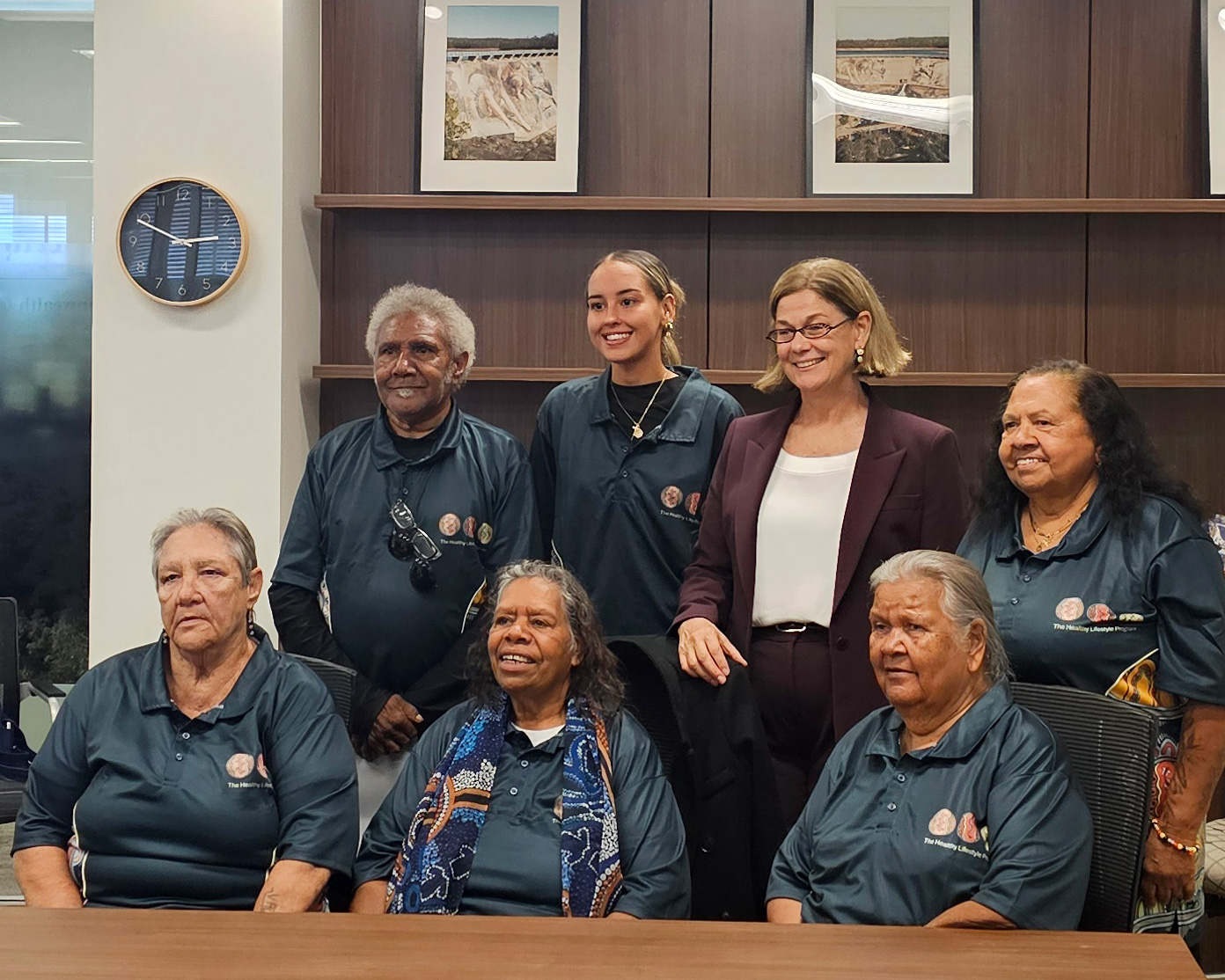
HCCWA supports the Healthy Lifestyle Program’s consumer engagement and directly supports and facilitates the Healthy Lifestyle Program Cultural Advisory Group and its members (the Elders). The group is made up of respected Aboriginal Elders who have decades of experience supporting researchers and research projects.
The Elders were concerned about the impact of short-term research pilots on their families and communities. They requested the opportunity to meet with senior decision makers to share their and their communities’ perspectives and experience with the research pilot pathways.
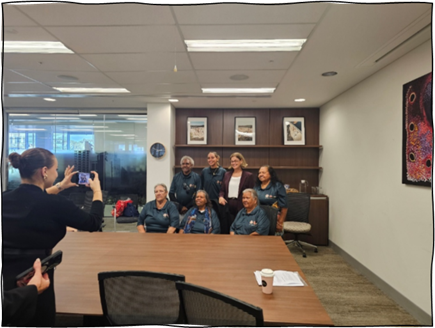
Minister Hammat and her team met with the Elders in March 2026 and welcomed the opportunity to hear about the program and their experience.
About Health Consumers’ Council WA
Since 1994, Health Consumers’ Council WA has been advocating for the interests of the WA community, health consumers, patients, carers, and families when it comes to health and healthcare.
HCCWA will continue to work across government, the health system, and the community to ensure that consumer voices shape policy, services, and system reform. This work remains critical to building a more equitable, responsive, and person-centred health system in Western Australia.
For further information about this report please contact Health Consumers Council WA on 08 9221 3422 or info@hconc.og.au
To discuss any of the content, please contact Clare Mullen, Executive Director at CEO@hconc.org.au