



Older people from multicultural communities and their access to, and experience of, healthcare
Older people from culturally and linguistically diverse communities can face significant barriers when accessing healthcare in Western Australia. These barriers extend beyond language differences and include difficulties navigating the health system, digital exclusion, transport, cultural understanding, trust, trauma, and limited awareness of available services.
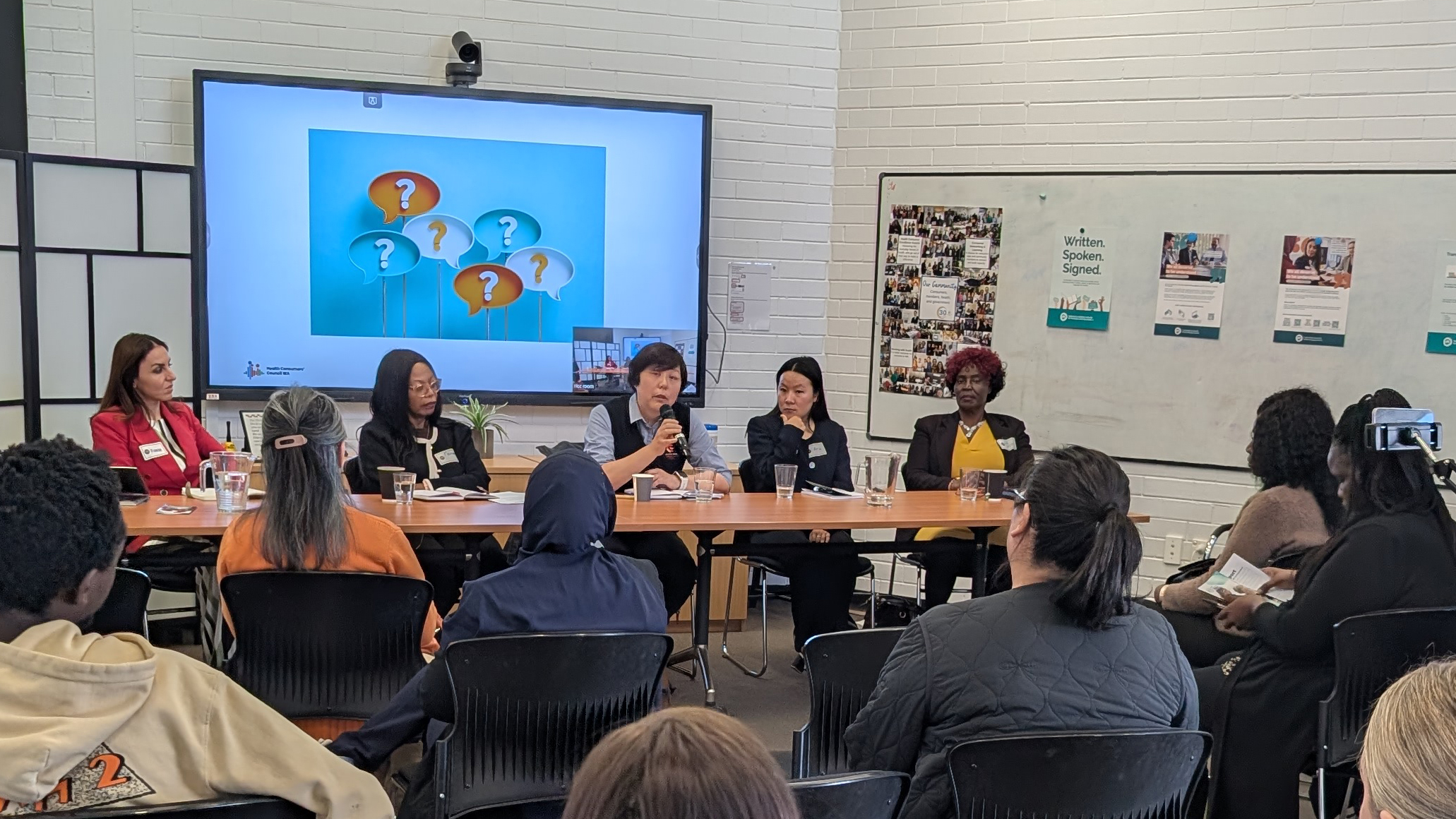
To better understand these experiences, Health Consumers’ Council WA (HCCWA) convened a Diversity Dialogues forum bringing together community leaders, healthcare professionals, researchers, service providers and consumers. Participants shared lived experience, professional insights and practical examples of the challenges older people encounter when seeking healthcare and aged care.
Across diverse communities, participants consistently identified common issues. These included difficulties accessing information and services, limited cultural responsiveness within healthcare settings, challenges using digital systems such as MyGov and My Aged Care, and the importance of building trust through long-term community relationships.
The discussion also highlighted practical solutions already being implemented across Western Australia. Community-led navigation services, culturally responsive education, Care Finder programs and stronger partnerships between community organisations and health services were identified as important approaches to improving access and health outcomes.
The findings reinforce the importance of involving multicultural communities in the planning, design and delivery of healthcare services. They also demonstrate that improving equitable access requires both system-level change and ongoing collaboration with the communities most affected.
About Diversity Dialogues
Diversity Dialogues is an ongoing initiative of Health Consumers’ Council WA that brings together consumers, community organisations, healthcare providers and policymakers to explore issues affecting culturally and linguistically diverse communities.
The forums provide an opportunity to share lived experience, identify barriers to healthcare, and develop practical recommendations that can improve health services across Western Australia.
Key Findings
Read the in-depth report here.
1. Healthcare systems are often difficult to navigate
Participants described healthcare and aged care systems that can be difficult to understand, particularly for people who migrated to Australia later in life or who have limited English proficiency.
Common barriers included:
- complex forms and eligibility processes
- difficulty using MyGov and My Aged Care
- limited awareness of available services
- uncertainty about how to access support
Many participants emphasised that services may exist, but understanding how to access them remains a significant challenge.
2. Language and communication remain significant barriers
Participants discussed how language barriers affect every stage of healthcare.
Challenges included:
- limited English proficiency
- low literacy in any language
- complex medical terminology
- translated information that does not reflect cultural context
- interpreter availability and quality
Some participants also described concerns about privacy when interpreters come from small local communities.
These communication barriers may contribute to misunderstanding, delayed care and reduced confidence in healthcare services.
3. Trust is essential for good healthcare
Many participants explained that trust strongly influences whether people seek healthcare.
Past experiences of conflict, displacement, trauma or negative interactions with institutions can influence how some older people engage with Australian healthcare services.
Participants noted that trust often develops through long-term relationships with healthcare professionals and trusted community organisations rather than through single appointments.
4. Cultural understanding influences healthcare experiences
Participants shared examples where cultural practices or expectations had been misunderstood within healthcare settings.
Examples included:
- differing expectations about family involvement in care
- culturally appropriate food during hospital stays
- differing understandings of ageing and illness
- differing expectations about consultation length
Participants suggested that greater cultural understanding could improve communication, person-centred care and consumer experience.
5. Digital exclusion is becoming a healthcare barrier
As healthcare increasingly relies on digital systems, many older consumers experience additional barriers.
Participants highlighted difficulties using:
- MyGov
- My Aged Care
- online appointment systems
- SMS verification
- email-based communication
Without practical support, digital systems may unintentionally reduce access for older people with limited digital literacy.
6. Social isolation increases health risks
Participants described social isolation as an important contributor to poorer health outcomes.
Examples included:
- delayed assistance following falls
- reduced access to appointments
- fewer opportunities to receive health information
- increased loneliness
Community organisations highlighted the importance of regular outreach and trusted relationships to reduce isolation.
Community-led solutions
The forum highlighted several initiatives already improving access for multicultural communities across Western Australia.
These included:
- Care Finder services
- community health navigation
- digital literacy programs
- culturally responsive community education
- seniors’ support programs
- intergenerational community initiatives
Participants emphasised that community-led approaches help build trust and support people to navigate complex healthcare systems.
Recommendations
The discussions identified several opportunities to improve healthcare access for older people from multicultural communities.
These include:
- Increase cultural responsiveness across health and aged care services.
- Improve representation of culturally and linguistically diverse consumers in health service planning and decision-making.
- Expand community-led navigation and Care Finder services.
- Improve access to face-to-face assistance with digital health systems.
- Increase awareness of available health and aged care services through trusted community organisations.
- Strengthen partnerships between health services and multicultural communities.
- Ensure culturally appropriate food, communication and care are recognised as components of quality healthcare.
- Continue investing in community-led mental health education and culturally appropriate support.
What this means for Western Australia
The experiences shared during this forum demonstrate that improving healthcare access for older people from multicultural communities requires more than translation services alone.
Participants described the importance of trust, culturally responsive care, accessible information, community leadership and meaningful partnerships.
Many of the barriers identified are interconnected. Addressing them will require collaboration between consumers, community organisations, healthcare providers and government.
By listening to lived experience and working alongside multicultural communities, Western Australia has an opportunity to create a more equitable, accessible and person-centred health system.
It is also worthwhile considering that improvements to help older people from multicultural communities would benefit everyone in WA, for example trust, accessible information and meaningful partnerships make healthcare fair for all.
Acknowledgements
Health Consumers’ Council WA thanks the forum panellists, participants and community organisations who generously shared their knowledge, lived experience and practical insights.
The experiences documented in this report reflect the views shared during the forum and are intended to inform ongoing discussion, collaboration and continuous improvement across Western Australia’s health system.
About Health Consumers’ Council WA
Health Consumers’ Council WA is the independent peak body representing health consumers across Western Australia. HCCWA works alongside consumers, carers, communities, clinicians and policymakers to improve access, equity, safety and person-centred care across the health system.