
Author: HCC

Health Consumers Council Welcomes New WA Ministerial Health Team

For Immediate Release

Health Consumers’ Council WA welcomes Premier Cook’s announcement today of the team of ministers who will be leading the health and well-being portfolios in the new term of government.

Clare Mullen, Executive Director of Health Consumers’ Council, said “On behalf of health consumers, patients, families and people with lived experience we congratulate the Honourable Meredith Hammat MLA on her appointment as Minister for Health and Mental Health. We are encouraged that this portfolio is being led by someone who had the opportunity to hear directly from the community about their priorities for health in her role on the Sustainable Health Review Panel.”
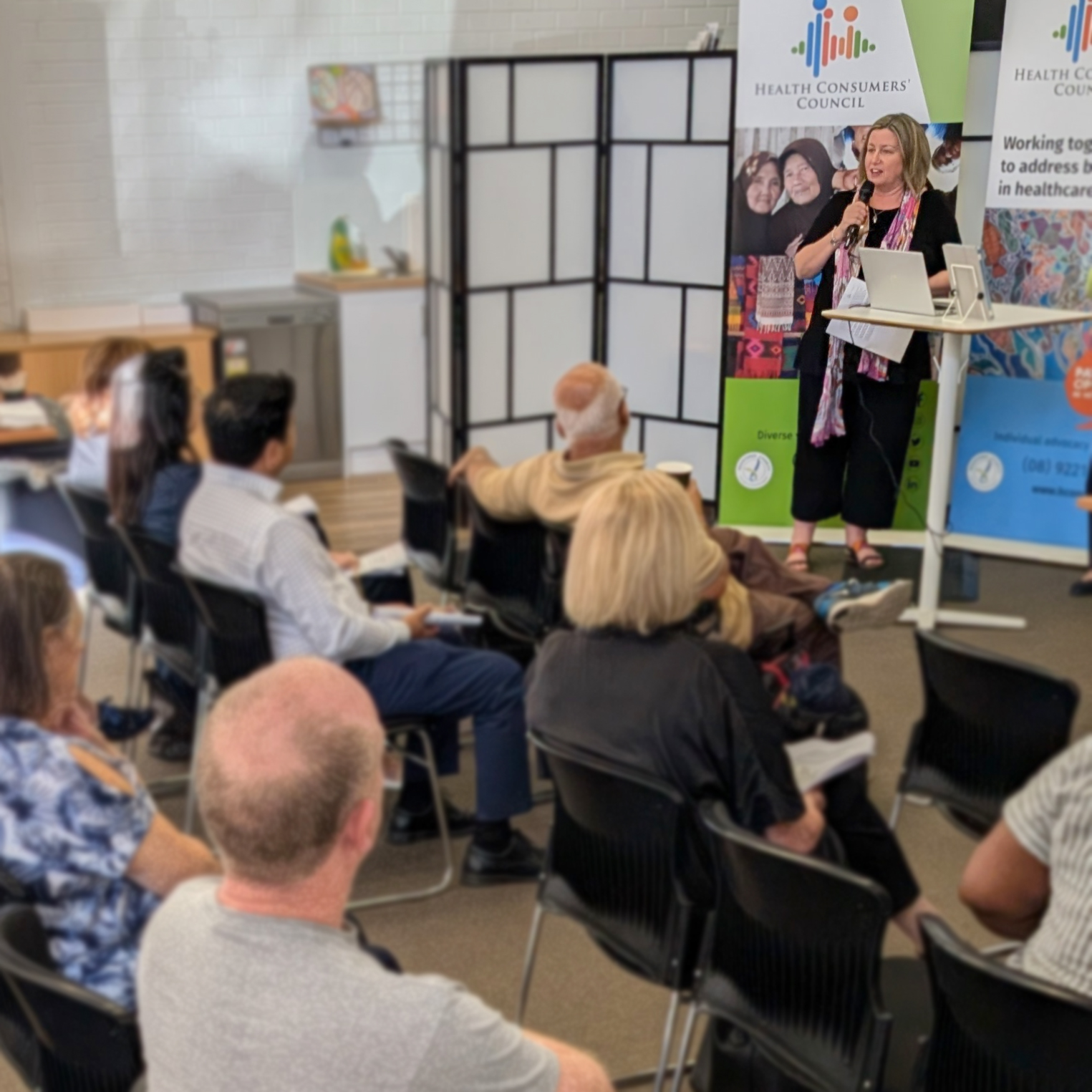
In the run up to the election, HCC outlined our ambitions for the community in relation to health:

  • increased investment in primary care
  • increased investment in preventative health measures
  • a continued focus on improving the efficiency and capacity of the hospital system
  • improved access to health care in the community.

We are delighted that these priorities have been recognised with the allocation of ministerial portfolios and extend our congratulation to the other Ministers with specific health responsibilities:

  • Minister John Carey MLA, Minister for Health Infrastructure
  • Minister Sabine Winton MLA, Minister for Preventative Health
  • Minister Simone McGurk MLA, Minister for Aged Care and Seniors
  • Minister Stephen Dawson MLC, Minister for Medical Research
  • Minister Paul Papalia MLA, Minister for Emergency Services

We are further please to see that in addition to the new health portfolios that Ministers have also been assigned regional portfolios which we hope will enable a positive focus on more place-based care and community-led health initiatives.

We look forward to working with the whole ministerial team and Premier Cook in the coming weeks and months to discuss how they might deliver a fairer more inclusive health service that meets the needs of all Western Australians. HCC has a proud history of ensuring that health consumers, patients, carers, and people with lived experience are active partners in planning and delivering health and healthcare improvements for all West Australians deserve, and we will continue our advocacy to ensure that they are involved at every level of decision-making in health.

**Ends.**

For further comment, please contact Clare Mullen, Executive Director, 0488 701 839, clare.mullen@hconc.org.au

Celebrating multiculturalism, inclusiveness and equitable participation in WA

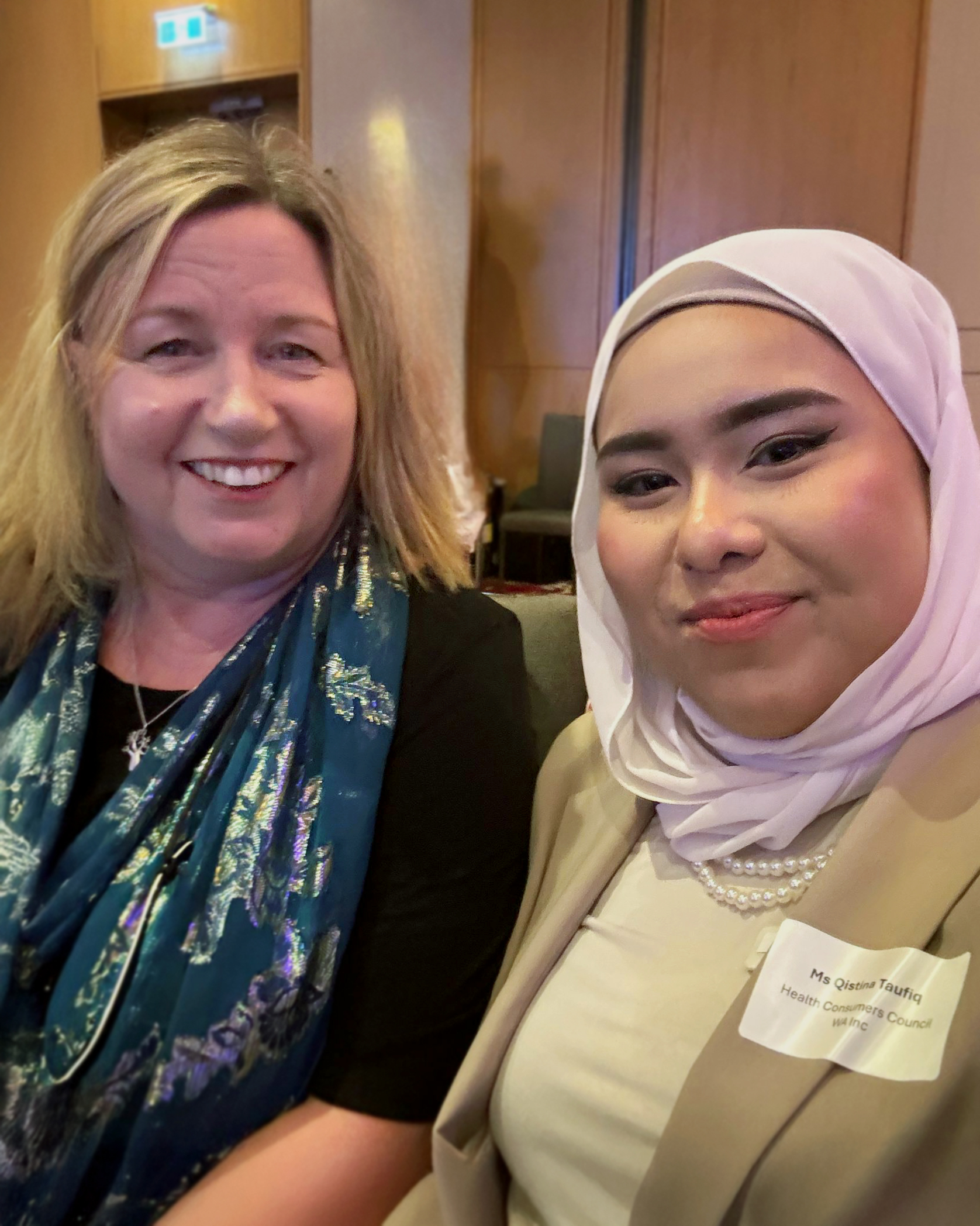
This month, Qistina Taufiq, HCC’s Cultural Diversity Engagement Officer, and Clare Mullen, Executive Director, were privileged to be invited to celebrate the WA Multicultural Awards – a program run by the WA Office of Multicultural Interests.

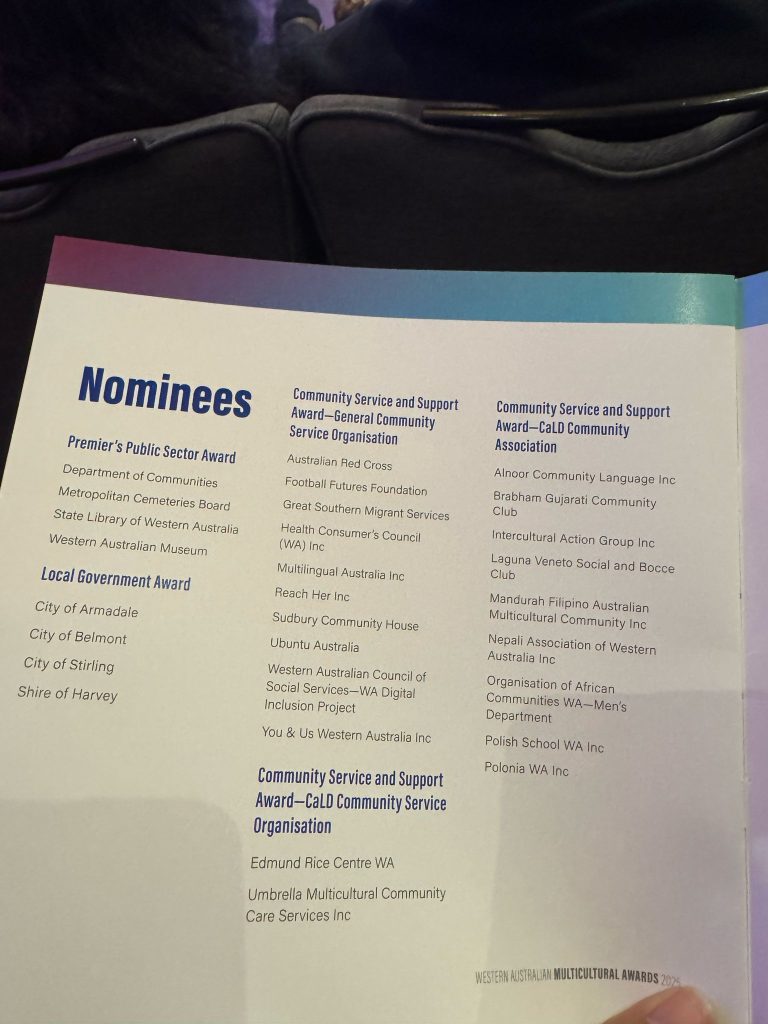
This is because Health Consumers’ Council was recognised as a nominee in the category of Community Service and Support – General Community Service organisation. The evening was a wonderful celebration of the diversity, capability, resourcefulness and strength of people from a wide range of culturally and linguistically diverse (CaLD) backgrounds and the organisations that serve them.

HCC has had a targeted program of work aiming both to ensure people coming to Australia from other countries understand the WA health system and how to navigate it – as well as ensuring the voices of people from multicultural backgrounds are sought and listened to as decisions about health and healthcare are made – since 2011. Louise Ford joined the HCC team then and pioneered a program of workshops on Health Rights and Responsibilities for CaLD communities.

The program was expanded in 2015 to include HCC’s popular workshop on Supporting Cultural Diversity in Healthcare. This workshop is aimed at health service providers who want to develop their capability in ensuring health services are inclusive of people from all cultures. HCC is funded to run this workshop twice a year – and we also deliver it on a fee for service basis to a number of healthcare organisations.

In 2025, HCC will be finishing a project we’ve been working on with Cancer Council WA and the WA Department of Health to produce a range of information leaflets about cancer treatment for people from CaLD backgrounds. HCC’s role has been to support a consumer advisory group made up of people from a range of communities and cultures to inform the development and production of these resources.

Congratulations to all the nominees and winners of these important Awards.

A picture of a page from the Multicultural Awards showing Health Consumers' Council as a nominee

A long awaited win in sight for transparency on health costs

By Clare Mullen, Executive Director
Today – 17 March 2025 – the Federal Minister for Health and Aged Care, Mark Butler – is speaking to a range of media outlets about his announcement that, if re-elected, a Federal Labor Government will be publishing the costs of specialist medical fees on the Government’s Medical Costs Finder website.

But wait – isn’t that the website that was set up in 2019 to do exactly that? Well, yes. But it wasn’t mandatory for doctors to add their information. And so only 70 of them did. Out of approximately 11,000 specialists in Australia.

As I highlighted in this blog article last May, it’s important that consumers – in this case patients – have access to cost information in order to make their decision about where to get specialist treatment.

Health Consumers’ Council WA represents the interest of consumers, and WA consumers particularly, on the Federal Government’s Out of Pocket Costs Transparency Reference Group. Through that group, we advocated that any health service provider that receives public funding should be required to publish their pricing information on the Medical Costs Finder website.

We hope that whoever is in Government after the next election will follow through on this commitment to patient and consumer power and ensure people can make informed decisions about specialist healthcare.

Opinion: It’s time for full transparency on who’s making money out of our healthcare

Consumers in the media

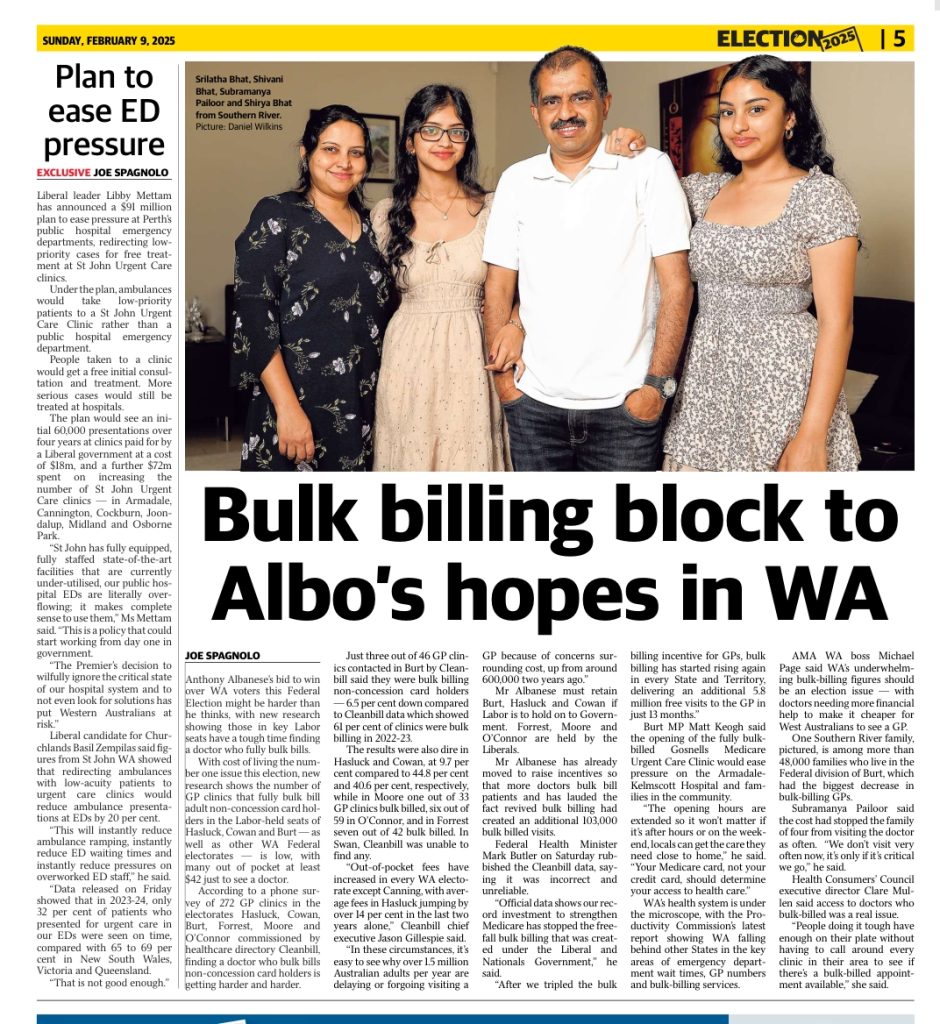
As WA’s peak body for health consumers, we are often approached for comment by news outlets. Here’s a snapshot of some recent coverage:

Health consumer priorities in the WA state election

This is a follow on from our blog post outlining our priorities and listing the election commitments from the two major parties against those priorities.

Based on our discussions with consumers HCC’s priorities for health are:

  • Increased access to affordable primary care
  • Increased investment in things that help us stay healthy (preventative measures)
  • Continued improvement in the safety, efficiency and capacity of the hospital system
  • Improved access to health care in the community and closer to home.

Many of our allies in the health consumer and lived experience sector have published their specific requests for election time.  Their answers tell an interesting story of a sector where incredible work could be done if there was adequate funding, but also where there are some excellent, innovative ideas that would not be particularly costly to implement.

Let’s have a look at what’s being asked for:

Carers WA Carers Count at the 2025 State Election | Carers WA

  • $400,000 Carer hardship and carer respite grants program for WA Carers
  • Establish a Carers card
  • A new carers strategy
  • $890 000 support for young carers in regional areas
  • Establish a service navigation system for carers

Aboriginal Health Council of WA WA State Election: AHCWA’s Key Priorities – AHCWA

  • Culturally safe short stay accommodation for pregnant women
  • Affordable and appropriate housing
  • Funding for Aboriginal Environmental Health Model of care and community capacity building for remote maintenance
  • Free dental care for all Aboriginal people in WA
  • Social and emotional wellbeing and family and domestic and sexual violence program funding
  • Improved child development services
  • PATS Coordinator in each region

Developmental Disability WA Election Undertakings 2025 for people with intellectual disability

  • Introduce mandatory training on intellectual disabilities for all health staff.
  • Set up Specialist Disability Health Hubs in each health region to improve the health and mental health of PwID.
  • Ensure the State health plan includes PwID as a priority group.
  • Introduce a “flag” to identify intellectual disability in a person’s WA health record
  • Contribute to a WA Easy Read website that provides key public information about health and other government services.

Consumers of Mental Health WA Election 2025: An Election for Mental Health – Consumers of Mental Health WA

  • An alternative to Emergency departments for people in emotional crisis
  • Increase finding to co designed community and peer led mental health services
  • Independent review, co-led by people with lived experience, on strategies to eliminate force, seclusion and restraint
  • Enhance access to advocacy through mental health advocacy service
  • Commit to a human rights act for WA
  • Secure and sustainable funding to pilot Aboriginal community controlled services
  • Embark on funded commitment to the Gayaa Dhuwi declaration implementation plan

Council on the Ageing WA 2025 Election Platform  – Council On The Ageing WA

  • Waive stamp duty for people aged over 65
  • Incorporate Silver Housing Standards in the WA Building Code
  • Expand the supply of affordable housing
  • Introduce a $150 “Fit for Life” voucher for seniors, modelled on the Kidsport initiative
  • Fund a “Preparing for the Unexpected” program to support seniors who are likely to be hospitalised due to a complex health issue or frailty
  • Fund a falls prevention program
  • Provide ongoing $250 000 per annum to Council on the Ageing WA

These priorities have been informed by health consumers, people with lived experience, and input from members of the above organisations. Amplifying and championing the voices of consumers and people with lived experience leads to better outcomes, whether that be in policy development or program delivery.

Including consumer voices goes beyond consultation, it means properly involving people who use the health system to help all of us to understand and address the unfairness in the system.  

What we see when we look at this list is a commitment to important preventative health projects, and projects that would make our health system fairer for all.

These ideas would all contribute to healthier, more connected community members, who are receiving the assistance they need in their communities. This in turn improves the patient experience in our health system and reduces the pressure on the public hospital system meaning that those who need healthcare can get it promptly.

If you’ve any thoughts about any of these, please contact Bronwyn Ife at bronwyn.ife@hconc.org.au

Health consumers and two elections…

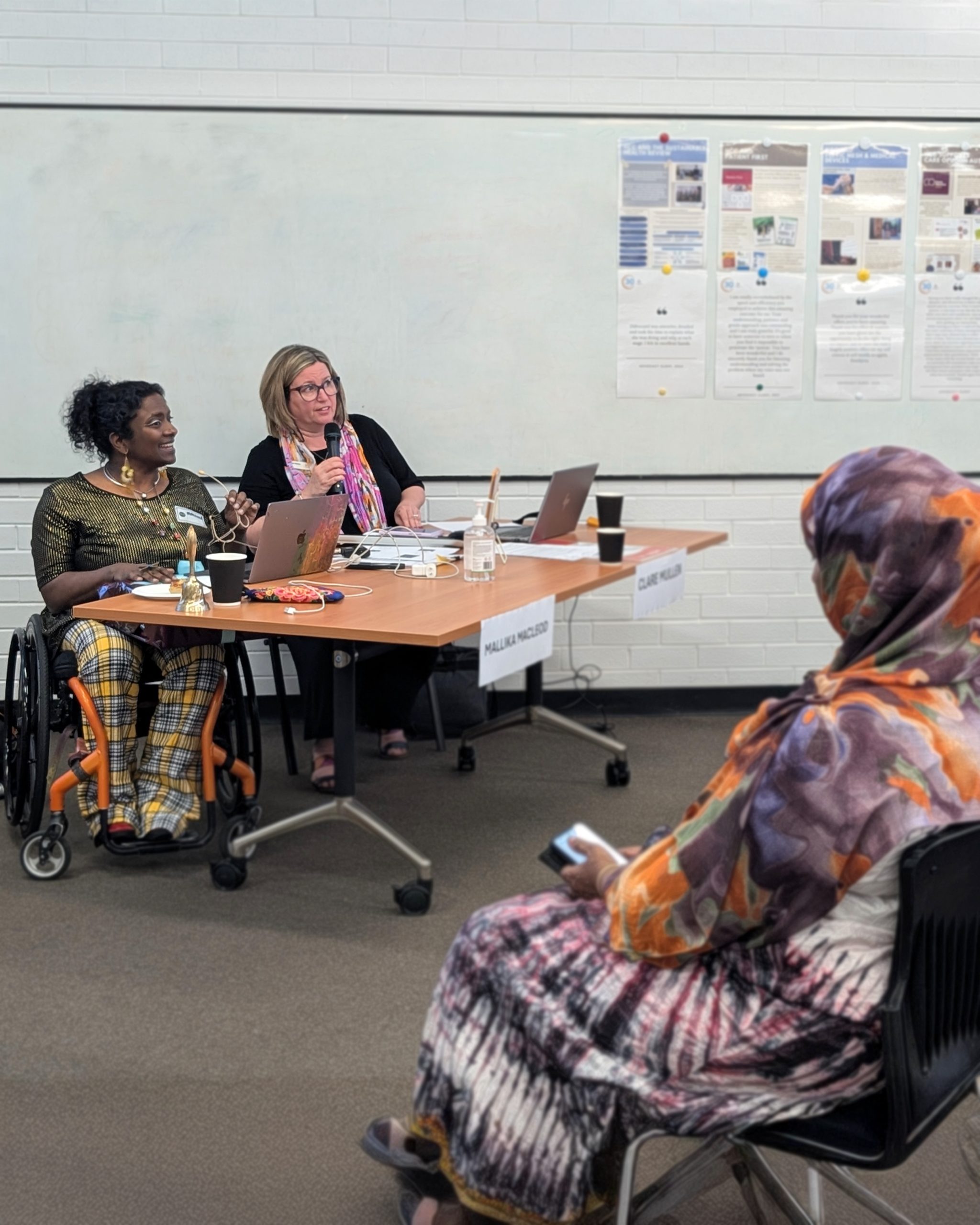
Clare Mullen speaking with HCCWA members

Why the 2025 elections matter for healthcare policy, and how patients and consumers can influence change.

The Impact of the WA State Election 2025 and Federal Election on Healthcare

You might have noticed we’re in the run up to two elections. The WA State election on Saturday 8 March 2025, and the Federal election at some point in the next few months. Not only that, but the Productivity Commission and Cleanbill both published reports this month about healthcare in Australia pointing out what is very clear to anyone trying to access healthcare – there’s a lot of pressure on the hospital system and good luck trying to find a bulk billed GP appointment. And so the airwaves are alive with announcements and soundbites calling for action. And many of these will talk about the need for more hospital beds and hospital infrastructure.

Policy Priorities for Better Healthcare in WA and Australia

Here’s what we’d like to see from a patient and health consumer point of view:

  • increased investment in primary care across the state
    • the Cleanbill report found there are fewer than 40 GP clinics in WA where someone who’s not on a concession card can be bulk-billed – with the cost of living pressures being experienced by many people we know this means people are thinking twice about accessing care
    • the increase in urgent cares is great, but it’s not the same as good primary care
  • urgently increase the investment in preventative health measures
  • a continued focus on improving the efficiency and capacity of the hospital system
    • while retaining a focus on delivering compassionate person-centred care
  • improving access to healthcare in the community
    • one of the reasons for long waits in the Emergency Department is because there are people in hospital who are well enough to leave hospital, but not well enough to return home – we need more access to more community-based options, for example people looking for residential aged care
    • one study into a Compassionate Communities Community Connector model in WA’s South West found that the model led to a 63% reduction in hospital admissions – imagine if we were able to roll this kind of approach out across the state?

You can hear me talking about some of these points with Nadia Mitsopoulis on ABC Perth Mornings this month at this link. The whole item is from 4m45s and our comment is from 16m25s until 20m45s.

Long-term solutions: addressing the root causes of healthcare challenges

Change is not a quick fix

Despite what you’ll read in the coming weeks, there are no quick fixes to the current pressures. WA is not alone in facing these pressures on our healthcare system. And these pressures haven’t come out of nowhere.

The very powerful commercial interests of the food, alcohol and entertainment sectors have created a world over the last five decades where we are increasingly and strongly nudged towards unhealthy behaviours such as eating high levels of ultra-processed foods; spending increased time on electronic devices, including social media; and prioritising paid work over social and community connections.

Add to this the recovery from the turbulence of the COVID pandemic, and healthcare systems around the world are facing similar challenges.

The role of vested interests in shaping healthcare policies

Patient and consumer voices can cut through vested interests

There are many vested interests in the healthcare space. Powerful clinical groups and commercial interests are able to spend significant sums of money putting forward the interests of their members and stakeholders.

And in Australia, we have three levels of government who all have a role in health and healthcare. And unfortunately, getting different parts of government to work well together has never been easy.

Why consumer advocacy is essential for better healthcare policies

Only consumer advocates have the interests of patients, consumers and the community as their sole focus

It has never been more important that there are strong, informed, and connected patient, consumer and community voices in every discussion informing decisions about health and healthcare.

By Clare Mullen, Executive Director
Job – Development Manager, closing date 2 December 8am

Development Manager, part-time (3 days), fixed term for 12 months initially

SCHADS Level 6-7 depending on experience, $53.84-$58.23 plus super

We are seeking someone with a knack for attracting resources and generating revenue to join our team and help us enable more people in the WA community to have their voices heard in health.

This new role aligns with our refreshed strategic priority of diversifying and increasing our revenue, so that we can extend our impact. Reporting to the Executive Director, you have the opportunity to make your mark by helping us raise additional funds from Government grants, philanthropic bodies and by helping to shape our social enterprising activities.

The role offers:

  • The opportunity to contribute to strategic and operational development, helping to identify priorities and opportunities for growth
  • The opportunity to be part of a consumer-first organisation with a focus on improving health equity and championing health rights
  • A welcoming and inclusive workplace where everyone is encouraged to bring all of themselves to work
  • A competitive not-for-profit salary with salary packaging
  • Flexible working with the opportunity to work from home regularly when settled in to the role
  • Additional leave entitlements

About you:

  • You’re looking for a role where you can apply your fundraising, development and social entrepreneurial skills to advance social justice
  • You’re interested in the health system and care about people’s experiences of it
  • You’re comfortable pitching a compelling case for significant funding to senior decision makers – and just as happy to roll your sleeves up and tidy up after an event along with your colleagues

Position overview

The Development Manager leads our organisation’s income generation strategy, securing sustainable funding through diverse revenue streams including grants, individual giving, corporate partnerships, and social enterprise activities, to support achievement of HCC’s strategic and operational objectives, purpose and vision.

A typical week might see you doing a range of activities:

  • Working with the leadership team to develop an impact reporting system for key initiatives
  • Identifying grant opportunities from published sources
  • Relationship building meetings with key decision makers
  • Writing large and small grant submissions
  • Developing a business model for a new social enterprise initiative including income projections and investment requirements

Click here to see the job description for a full outline of responsibilities for the role.

Selection criteria

Essential

  • 5+ years of experience in fundraising or income generation, preferably in the healthcare or charity sector
  • Proven track record of securing diverse funding streams including philanthropic grants, project funding, and social enterprising activities
  • Experience in grant writing and managing donor relationships
  • Knowledge of contemporary approaches to outcome and impact measurement
  • Strong financial acumen and budget management skills
  • Entrepreneurial mindset and experience
  • Excellent communication and interpersonal skills
  • Project management experience
  • Sound knowledge of the operational requirements of a growing NGO working in a volatile, uncertain, complex and ambiguous context
  • Able to manage multiple projects and influence people without formal authority
  • Willing and able to work flexibly in a small team and “muck in” as required
  • Comfortable working in an agile environment and willing to work collaboratively within and external to HCC

Desirable

  • Sound knowledge of the theory and practice of contemporary approaches to organisational and system change, including stakeholder engagement

Diversity and inclusion

At Health Consumers’ Council we know that strength comes from diverse perspectives being at the table. We particularly encourage applications from Aboriginal and Torres Strait Islander people, people from culturally diverse backgrounds and identities, people with disability and LGBTIQA+ community members.

To apply for the position

Send a cover letter of no more than two pages addressing the selection criteria, along with a current resume outlining your work experience, skills and any relevant education or training to Fiona Leece our recruitment partner at jobs@capitalhr.com.au clearly stating which role you’re applying for. Applications that do not address the criteria may not be considered.

  • The closing date for applications is 8am on Monday 2 December 2024

If you require any adjustments to submit your application or wish to have a confidential discussion about the role, please contact Clare Mullen, Executive Director on (08) 9221 3422 (Ext 2) or email Fiona Leece our recruitment partner at jobs@capitalhr.com.au
To see other jobs we’re advertising click here


You are your loved one’s best advocate – and Health Consumers’ Council is here as back up

“I don’t know where to turn and who to ask for help…”

This is a quote from the Seven News article about the awful experiences that Marianne Molloy had in a Perth hospital recently. Everyone at Health Consumers’ Council was horrified seeing these images and hearing about Ms Molloy’s and her family’s experiences.

While many people have very positive experiences in WA hospitals (as you can see by many of the stories on the Care Opinion website), unfortunately we know that things can go wrong in healthcare – despite all the guardrails that are in place to protect people.

We were asked to provide a comment for a TV news item – to help people understand what can families do if they feel like their concerns about loved ones in hospital are falling on deaf ears.

A very short snippet of what we said was able to be shown on the 6pm news this week (you can view what was broadcast at this link starting at roughly 3m15s into the piece) but here’s what else we said:

If you’re concerned about your loved one in hospital and you’re there in the hospital:

  • know that you have a right to speak up, so do
  • and if you don’t feel heard, ask to speak to a senior staff member
  • And if you’re still not getting anywhere but your loved one is getting sicker, call Aishwarya’s Care Call – it’s number in each hospital that you can call to speak directly to a senior clinician.

In short, be polite, but don’t take no for an answer

But unfortunately, as this story shows, and as we know from supporting thousands of people with their concerns over the last 30 years, speaking up yourself doesn’t always work. In which case:

If that doesn’t work, or if you’re not there in the hospital, call Health Consumers’ Council on 08 9221 3422

The ‘phone is staffed during office hours – currently we’re not funded to be available around the clock but if you leave a message we will get back to you as soon as we can.

We will listen to your experience and provide advice on your rights. If you want, we can help you raise your concerns with the hospital in the moment – that can include us calling the hospital on your behalf or helping you plan what you’d like to say and how you’d like to say it.

After the event – we can help you provide feedback to the health service so improvements can be made in future

We know many people don’t like to complain, but it’s important to bring these issues to the attention of hospital managers, because they really do care. And all feedback to health services is recorded and reviewed – including complaints and compliments. Another way to provide feedback is by sharing your story anonymously on the Care Opinion website – this means others will see your story, as well as the response from the hospital.

You are your loved one’s best advocate. If you’re concerned, speak up. If you need back up, call Health Consumers’ Council

By Clare Mullen, Executive Director

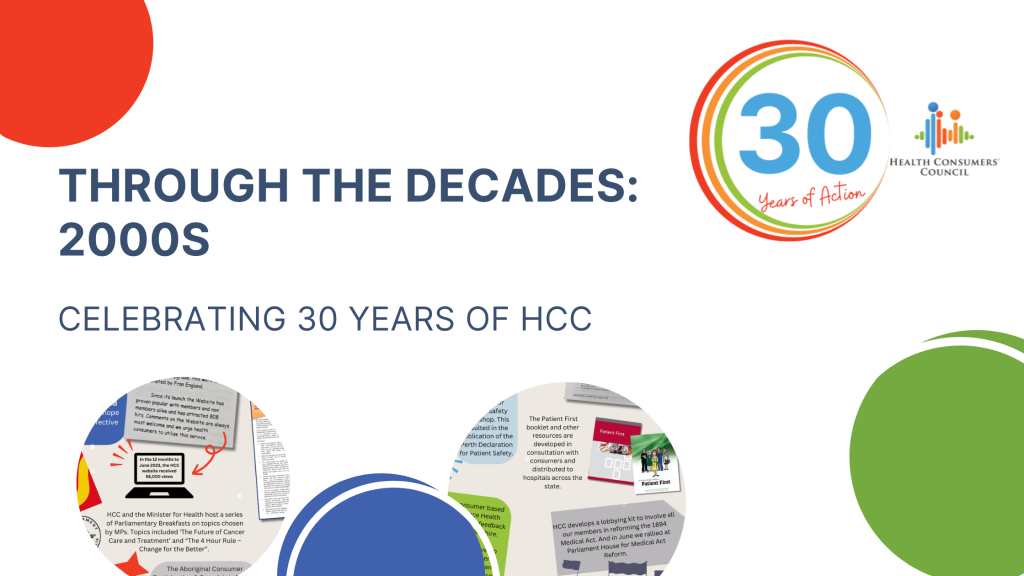
Through the Decades – 2000s

In the last 30 years, HCC has championed and supported thousands of people to assert their rights, have their say, and influence health service delivery. As we continue to celebrate our 30th anniversary this year, we’re reflecting on some of the key achievements in this space.

Here are some of the health consumer and health advocate highlights of the 2000s:

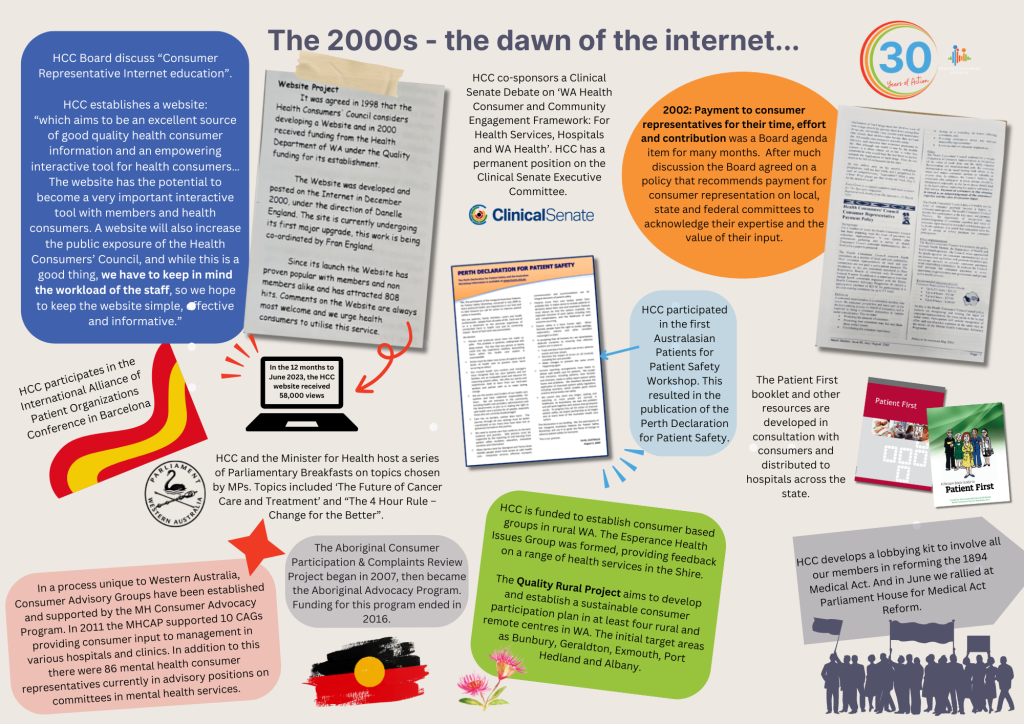
  • HCC co-sponsors a Clinical Senate Debate on ‘WA Health Consumer and Community Engagement Framework: For Health Services, Hospitals and WA Health’. HCC has a permanent position on the Clinical Senate Executive Committee.
  • HCC participates in the International Alliance of Patient Organizations Conference in Barcelona.
  • HCC participated in the first Australasian Patients for Patient Safety Workshop. This resulted in the publication of the Perth Declaration for Patient Safety.
  • The Patient First booklet and other resources are developed in consultation with consumers and distributed to hospitals across the state.
  • HCC develops a lobbying kit to involve all our members in reforming the 1894 Medical Act, and later rallied at Parliament House for Medical Act Reform.
  • HCC is funded to establish consumer based groups in rural WA. The Esperance Health Issues Group was formed, providing feedback on a range of health services in the Shire. The Quality Rural Project and establish a sustainable consumer aims to develop and establish a sustainable consumer participation plan in at least four rural and remote centres in WA. The initial target areas as Bunbury, Geraldton, Exmouth, Port Hedland and Albany.
  • The Aboriginal Consumer Participation & Complaints Review Project began in 2007, then became the Aboriginal Advocacy Program. Funding for this program ended in 2016.

Download the PDF version of the timeline image here.

Sepsis Awareness Day 2024 – Our Story

By Tania Harris – Mum, and Health Consumers’ Council Engagement Manager


Sepsis is a life-threatening condition that happens when the body’s response to an infection damages its own tissues and organs. Sepsis is preventable, but when it does happen it is a serious medical emergency that without rapid treatment can result in disability or death.

Any infection can lead to Sepsis, and anyone can get it. There is an increased risk for very young children, elderly people and people with chronic illness.

In Australia, over 55 thousand people are diagnosed with Sepsis every year, and more than 8,700 people will lose their lives to this condition.

I had been working at Health Consumers’ Council for a year when my daughter contracted Sepsis after a surgery, and since then I have been passionate about raising the awareness of this condition, in the hope that more awareness in community will mean less people losing their lives to Sepsis.

Tuesday 28th February 2017, I didn’t know anything about Sepsis, other than it was a “thing”, an over enthusiastic infection. By mid-morning Wednesday 1st March 2017 I had a horrible realisation that it might take her from us.

Lisa has Cerebral Palsy, hospitals and hospital wards were nothing new for us – she had been in and out for her whole life. Many surgeries and stays, and when she was 16 Lisa had had a feeding PEG inserted at an adult tertiary hospital in Perth. This was her (our) first experience in an adult hospital. On reading my Facebook posts on the procedure, it all went well, and I was very happy with the service we got at the hospital.  My post on the 21st February 2017 to a Facebook group of parents and people with disability says:

“So, our Lisa is in RPH [Royal Perth Hospital] getting a PEG in. First time adult hospital and only second time in a place other than PMH [Princess Margaret Hospital for Children]. Gotta say, I am impressed. They are taking really good care of her and sorted the few issues there was around me staying, really quickly. Not once has a nurse not talked to Lisa first, they are listening and investigating when I am saying she seems off, the assumption seems to be that Lisa understands and I have a clue.”

A week later I got a phone call from the nurse at Lisa’s school asking permission to give her some Panadol, she was a bit warm and unsettled. By the time I got home around 5pm she still had a temp and had started vomiting. I did what I usually would do when she was unwell, Panadol and a shower. She was very quiet, and the shower didn’t seem to make her feel any better. So, I did what so many of us do, I reached out to other mums and to nursing friends. I called the hospital where the PEG was inserted. We went through symptoms, we talked about the PEG, it looked good. But I still had this feeling it was the PEG – it didn’t make sense it was anything else.

In my experience, for people and parents of people with disability and chronic health concerns, seeking medical intervention isn’t done lightly. So, when it happens, it’s serious. I called a dial a doctor, who thankfully was on his way past to somewhere else and dropped in. Lisa’s temp was then at 39 and she was looking unwell. He called an ambulance and by the time it arrived her temp had gone up to 41 and she looked worse. Lisa doesn’t use spoken language, but she is generally not a quiet girl, but she was so quiet that night.

At some point during that night, it became clear Lisa was very unwell, but I never heard the word “Sepsis”. The PEG wasn’t identified as an issue. My sister-in-law, at the time an ED nurse in a regional hospital, asked me what certain readings were and if certain tests had been ordered, and suggested I get my husband to come in. All signs were pointing to Sepsis, but I didn’t know any of them.

It turns out the PEG was the culprit, when the doctor inserted the PEG they went through part of the colon which was in an unexpected place because Lisa is in a wheelchair and her organs aren’t always in the same place as they might be for other people. A slow leak from her colon over a week had led to Sepsis.

Lisa spent almost a year in and out of hospital with recurrent infections, feeding tube issues, general unwellness. She has a massive scar on her chest and abdomen as a result of the required bowel resection and she still hates going to RPH 7 years later, but she – and we, are one of the lucky ones.

We were able to get medical attention for Lisa fast – from the dial a doctor, to the ambulance to the ED. Most importantly, all of those medical professionals listened to me and took my concerns seriously. It isn’t hard to imagine what would have happened if they hadn’t.

On Friday 13th September 2024 (World Sepsis Day), Child and Adolescent Health Service and the Department of Health WA is hosting the inaugural WA Sepsis Grand Round. This event will highlight pediatric, adult and maternal Sepsis.

This free event is being held at Perth Children’s Hospital and online, and an event highlight is the Clinician Panel, chaired by consumers and asking questions about Sepsis that matter to patients. I am very proud to be co-chairing with Leana and Tim.

The event runs from 9:30am – 3:30pm and is being hosted from the PCH Auditorium.

WA Sepsis Grand Round Tickets, Fri, Sep 13, 2024 at 9:30 AM | Eventbrite

You can book your place at the Eventbrite link, and attend either online or in person.