

Category: HCCWA Blog

2022 Response to WA Abortion Reform Consultation

Link to a PDF copy of our response is here:

2022 Response to WA Abortion Reform Consultation

Re: Request for Submission and Sharing of the Abortion Reform Consultation Process

Health Consumers’ Council thanks you (Dr Robertson) for reaching out to us and requesting our engagement with this consultation on Abortion Legislation in WA. We agree that these laws are long overdue for revision and reform and we have shared the consultation with our networks.

The Health Consumers’ Council of WA unequivocally stands for the rights of all people to access free, decriminalised, safe, timely and compassionate abortion care as part of essential healthcare and support the removal of access to abortion from the Criminal Code.

Earlier in the year, we added our signature to the Australia position statement on the Roe v Wade decision in the US published by Children by Choice, and welcomed the WA Minister for Health speaking on reproductive rights and equitable access to abortion for women and people with uteruses across WA, and we have been welcoming of the safe access zone legislation.

We know that accessing free, high quality, comprehensive abortion care in WA is difficult for many people. Factors including someone’s suburb or town, finances, the availability of clear, accessible, and culturally appropriate health information, and the lack of public services all impact on someone’s ability to access the care they need. We also know from MSI Australia that First Nations’ peoples, trans and gender diverse peoples, members of migrant and refugee communities, people on temporary visas, and people with disabilities can face additional barriers to abortion care that are further impacted by age, economic status, stigma, and discrimination. We affirm everyone’s individual right to choose what is best for them. Access to abortion is not a moral or religious debate, it is a healthcare right that centers on choice, respect, and self-determination.

Health Consumers’ Council knows from our engagement with the WA community that all stated options in question 9 have been and continue to be barriers to accessing abortion, particularly for people who may be marginalised, who are young, who are Aboriginal, who are Culturally & Linguistically Diverse and who are part of the LGBTQIA+ community. We anticipate that even with the proposed amendments, there will continue to be barriers until more is done to address timely access to clinical assessments, medical practitioner’s conscientious objections, health literacy/accessibility of relevant, plain-language information, financial impact for anyone not able to access bulk-billed abortion services, rights around age & access, lack of service provision throughout the state and especially lack of remote/rural services. We also recognise and stand with current abortion providers who recognise the stated barriers for service provision as stated in question 12.

Health Consumers’ Council would also like to respond to and note some nuances around the remaining submission questions:

Question Thirteen – While we agree that the need for mandatory counselling should be removed for this essential healthcare service, we s also agree that every person should still be able to easily access timely, cost-effective counselling and support around abortion if they choose.

Questions Fourteen & Fifteen – In order to increase equitable access to safe abortion, we believe that, in the same way any other form of healthcare treatment or procedure is approved, only one medical practitioner should be needed for a person to access an abortion. We also believe that if a medical practitioner should conscientiously object, they should be required to refer on in a timely manner to someone confirmed to affirm abortion, with tight processes around this stated publicly. For example, a clear and publicly available procedure that people seeking abortion can easily access and follow confidently when advocating for their rights. We believe that abortion care is healthcare and as such, access to abortion is a healthcare right. Health practitioners should do everything in their power to advocate and uphold the choices of their patients wanting to access abortion, whether they agree morally or not.

Questions Sixteen & Seventeen – We support increasing the gestational age to 24 weeks, while also noting the nuances and community concern for issues like eugenics and Disabled People’s right to life. We believe that increases in gestational limits are much needed. Less than 1% of abortions occur at later pregnancy gestations, they are experienced people who face complex situations, and they need to have kind and compassionate care (MSI, 2022). As viability of a pre-term foetus is often debated, and no universal consensus has been reached, this can be an ethical consideration of many people in Australia. However, access to abortion is not equitable, and therefore extensions on gestational limits are vital to uphold the right to choose and access health care. If the pregnant person chooses an abortion at any stage, there should be no involvement from anyone besides the pregnant person and their healthcare provider/s, with appropriate consultations around specific, high-risk procedures. We strongly support the repeal of the Ministerial ‘Ethics’ Panel on abortion, and we advocate for clear processes to be implemented and publicly available for the proposed second medical practitioner consultation for late term abortion.

Question Eighteen – We believe that there should be no requirement for Ministerial approval for a health service to perform abortions, provided the health services are equipped to do so safely. Further, we believe that any suitably equipped health service receiving public funding should be required to provide timely, legal, high-quality, free, and safe access to abortions at any stage, for anyone living or residing in Western Australia. We also note that repealing the Ministerial involvement via approval and panels will hopefully increase the availability of free abortions and the prevalence of services providing this vital healthcare, and urge the WA Government to invest more into making abortion accessible in every way.

Health Consumers’ Council provide individual advocacy to consumers of healthcare across WA and will continue to advocate individually and systemically for equitable access to all healthcare, including access to timely, safe, free, and legal abortion, for everyone living in WA, especially those who have been marginalised. We will continue to advocate with community for improved access to information and access to reproductive rights, contraception, culturally competent care, and gender and sexuality affirming care.

The Health Consumers’ Council welcomes the opportunity to assist further in consulting with community and providing advice to policy makers to enable much needed change to abortion laws in WA.


We acknowledge Aboriginal and Torres Strait Islander peoples and communities as the Traditional Custodians of the land we work on, specifically the Wadjuk people of the Noongar nation, and pay our respects to Elders past, present, and emerging. We recognise that sovereignty was never ceded and commit to continuing advocacy for anti-racism in the health sector.


Supermarkets like casinos?

(by Clare Mullen, 10/11/22)

I’m really enjoying Magda Szubanski’s ABC series – Australia’s Big Health Check. She’s looking at how easy – or not – it is to be healthy in Australia.

She highlights that poor nutrition and obesity are taking over from tobacco and smoking as the leading cause of ill health and death in Australia. One of the doctors on the show comments that when it comes to our health

genes are what load the gun, but then it’s our lifestyle that pulls the trigger… the important thing here is, that you can do something about this…

What Magda goes on to show, is how determined we have to be in order to do what we can to avoid harmful foods when we’re out shopping! Dr Sandro Demaio, Chief Executive of VicHealth comments that

With the lack of natural light and no clocks, supermarkets are more like casinos than traditional markets

And shares that the prime “real estate” of the ends of aisles are sold to food companies by the supermarkets. As one of the community members in the show says

When you’re going in for a quick shop, it’s hard not to buy that end of aisle stuff…

And of course, that “end of aisle stuff” is often the low nutrition, high calorie, high sugar option.

But as Magda shows in the program – there are people fighting back. And we think WA health consumers, carers and community members can be involved in that work too.

Come along to our events this month and be part of the discussion – share your thoughts on how we can all play a part in a healthier WA!

A picture of Magda Szubanski with a blue rubber glove on one hand and a blue bandage on her forehead. The wording says Let's Fight For a Healthier Us

Rapid review of the Independent Governance Review with a consumer/lived experience/community lens 

The report of the Independent Governance Review Panel has been noted by Cabinet and was presented to Parliament on 25 October 2022. You can read the report and the public submissions online at https://ww2.health.wa.gov.au/About-us/Department-of-Health/Independent-Governance-Review-of-the-Health-Services-Act-2016

At Health Consumers’ Council we were proactive at promoting this Review as an opportunity to address some of the high-level issues experienced by consumers, people with lived experience, carers and family members. 

The report is the result of months of detailed work and will take us some time to go through in detail. We understand there will be much work required for the proposals contained in the report to be actioned. We’re sharing our rapid reflections on the report at this stage in the spirit of collaboration and shared purpose. 

Overview 

From HCC’s initial reading, we see that there is much to be welcomed in the report – and some things to question further before they progress to implementation. 

 Great to see proposed: 

  • Act to be changed to require involvement of consumers on Health Service Provider (HSP) Boards, including Aboriginal people and people with mental health experience 
  • The Minister for Health is to develop a long-term health strategy 
  • A proposal that governance should evolve so that collaboration, information sharing and networking are the norm 
  • Consumers should be recognised as partners in systemwide health strategies and development of local services 
  • Establishment of collective leadership forums (consumers involved in the “advisory” forum) 
  • That the Minister for Health will develop a legislated code for consumer engagement and partnership 
  • A stronger focus on Aboriginal health and the inclusion of the Aboriginal Health Council of WA in the collaborative leadership structures of the system 
  • Refreshed role for Clinical Senate and clinical networks 
  • Creation of three commissioning authorities (north, south and east) at arms-length from HSPs – in collaboration with other commissioning bodies, including Commonwealth, National Disability Insurance Agency and local aged care authorities 
  • All data to be shared openly and transparently across DoH and HSPs unless there is a reason not to do so 
  • Public reporting of performance dashboards but… 
  • More transparent public reporting was also proposed in the Sustainable Health Review but so far hasn’t been fully implemented from that program of work 
  • Under workforce proposals it includes the development of patient-oriented roles to work alongside clinical roles and support consumer engagement and system navigation 
  • The inclusion of consumers and Aboriginal health services in the design of emergency responses including any rapid design and mobilisation of new service models. 

 More information needed/questions to be asked 

  • It is proposed that the Department of Health (DoH) provide more clear guardrails to HSPs about where HSPs do and don’t have local discretion in regard to systemwide policies. We hope this won’t mean that policy officers in DoH – many of whom have no or little experience of working in frontline clinical settings – will develop policy that HSPs will then be required to implement. 
  • Change in role for the Mental Health Commission – from commissioning to oversight. 
  • While the report signals a shift in culture from competitive to collaborative, it is silent on the mechanisms for this to be achieved. As this isn’t something that will “just happen”, we believe it needs some focused attention and resources on how this shift will occur. 
  • The report refers to building the DoH’s capability to develop major health projects – we’d like to know that this will include senior consumer involvement. We see value in a consumer lens being applied before anything progresses to procurement and being locked into contracts. 
  • It refers to an ICT Executive Board and a Digital Health Reference Group – it refers to a range of stakeholders, but no mention of consumers yet. We’d advocate for someone with a consumer lens in these discussions, noting that they would also have to have strong technical understanding. 
  • On p23, it’s noted that more training is needed on how to engage with consumers. We note that this was also a recommendation (Rec 12) for Boards in the Hugo Mascie Taylor report into the safety and quality of the system published in July 2017, but we’re not aware of any such training having taken place. What will be different to ensure these recommendations are fully progressed, and publicly reported on? 

 Opportunity missed? 

  • The report does not seem to require that DoH involve consumers/carers at the highest level of DoH governance. This is very disappointing and at odds with references elsewhere to the importance of consumer/carer/community involvement in systemwide strategic planning and discussions. For example, the MHC has had consumers and carers involved at their highest levels of governance for some time – including sitting alongside Health Service Provider Chief Executives at the Mental Health Executive Committee – but there is no sign of this being suggested for DoH. 

We will continue to review this document in detail and will be holding a rapid consumer/carer/lived experience leader briefing session on the report on Tuesday 1 November, 12pm – 1.30pm. You can register to attend this session at https://www.eventbrite.com.au/e/independent-governance-review-report-hcc-info-session-tickets-451041014817  

We will also reach out to the Review team to see if they will be organising any targeted briefing sessions. 

Clare Mullen, 31 October 2022 

Consumer/Lived Experience Conference report – International Congress on Obesity 2022

Report by Clare Mullen, Health Consumers’ Council WA

In October 2022, over 1,000 people were in Melbourne to participate in the International Congress on Obesity.

I had the opportunity to attend as a member of the Weight Issues Network (WIN) as a Lived Experience speaker, as well as through my roles with Health Consumers’ Council WA, The WELL Collaborative and the Obesity Collective. My attendance was part funded by WIN (thanks to support from the ICO organisers) and part by HCC, through my work on the WELL Collaborative, that’s funded by WAPHA and the Department of Health.

There were three other people from WIN who attended as Lived Experience speakers. Dr Nic Kormas, also on the WIN Board as a clinician, was attending too.

There were three main streams of content:

  • Basic research[1]
  • Clinical – looking at treatment and care
  • Public health – looking primarily at prevention options

There were also a number of cross-cutting sessions – where people with perspectives from each of these streams all presented together. Apparently this is not very common – which I found surprising.


Lived Experience/consumer speakers were involved in five of the sessions, and we also ran a workshop on “So you want to engage people with lived experience of obesity?” which was attended by about 50 people. We all received positive feedback about our contributions to the discussions, and I hope we’ve paved the way for Lived Experience speakers to be involved in more of the sessions in future.

We also had a table in the exhibition hall and had people signing up to the WIN mailing list, as well as taking away a practical guide to creating weight inclusive spaces in clinical settings. (I have some of these in hard copy, so let me know if you’d like one to take along to any healthcare setting you attend regularly!)

Takeaways and personal reflections

  • If carrying extra weight is either causing you health concerns, or you’re concerned about your increased risk of future health concerns, treatments are available. These include a few different types of medications as well as surgery – and options are increasing. These clinical interventions may complement individual behaviour which could include changes to nutrition, physical activity, sleep, stress and social connections.
  • Extra weight can be a risk factor for some people for some health issues. To work out if carrying extra weight has health implications for you it’s important to speak with an informed health professional who has contemporary and detailed knowledge on obesity, overweight and health – and can help you assess your personal risk, in the context of your life, so you can work out the best treatment and care options together.
  • Currently, it’s really hard to find informed health professionals who have contemporary and detailed knowledge on obesity, overweight and health. Health Consumers’ Council is working with the WA Primary Health Alliance and the WA Department of Health to provide consumers with access to a list of health professionals who have undergone additional training on this topic as a starting point – watch this space!
  • Adolescence may be a critical time to offer person- and family-centred interventions – changes made at this point can be life-changing and long-lasting.
  • There is a critical shortage of treatment services for obesity – particularly for adolescents. (I personally find this borderline unethical.)
  • I think there needs to be a lot more discussion and review about bariatric surgery. I learned that currently, it’s believed to be difficult to work out which patients will get positive outcomes from the treatment – with outcomes varying significantly. I was also reminded that one of the possible benefits of this surgery is extended life expectancy – and that this effect may still be likely, even if someone regains weight after the surgery. (Overall, I think we need to upskill a few more consumers to learn about the technical details of this treatment and cast an informed consumer lens over the evidence and be part of the debate. I certainly don’t feel informed enough to go up against clinical experts on this subject.)
  • From a value-based healthcare point of view, I believe there could be some consideration given to funding models for bariatric surgery – for example, I wonder whether surgeons would be more invested in helping people to work out if surgery was going to be right for them, if the surgeon’s payment was impacted by the outcomes of the surgery (as assessed against patient-reported outcome measures agreed upfront). In fact, this could be applied to lots of types of treatment…
  • Weight stigma has a huge role to play in muddying the waters on healthcare in this area. I’m left wondering, how can we get to a place where everyone can distinguish between decisions we’re making based on desires we might have to look a certain way (influenced by societal pressures) versus decisions we’re making that could improve our health – and so make a really informed decision about what actions to take?
  • I think we also need more deliberative discussions as a community about how we navigate the various aims of a) dismantling the obesogenic environment[2] we live in, b) creating the conditions where people are able to more easily do things that have a positive impact on health (and broaden this beyond nutrition and physical activity), and c) ensuring personalised care and treatment is available to people whose health is impacted by carrying extra weight. Unfortunately, the public health narrative still too often contributes to weight stigma.

Clare Mullen, October 2022

p.s. as well as the serious work, it was great to meet and connect in person with the people involved in this work that I’ve been meeting online for the last couple of years.

[1] Basic research, also called pure research or fundamental research, is a type of scientific research with the aim of improving scientific theories for better understanding and prediction of natural or other phenomena, https://en.wikipedia.org/wiki/Basic_research#cite_ref-Research2014avg_1-0

[2] “The term ‘obesogenic environment’ is used to describe an environment that promotes obesity”, https://www.aihw.gov.au/reports/overweight-obesity/overweight-and-obesity/contents/causes-of-overweight-and-obesity

The time is now!

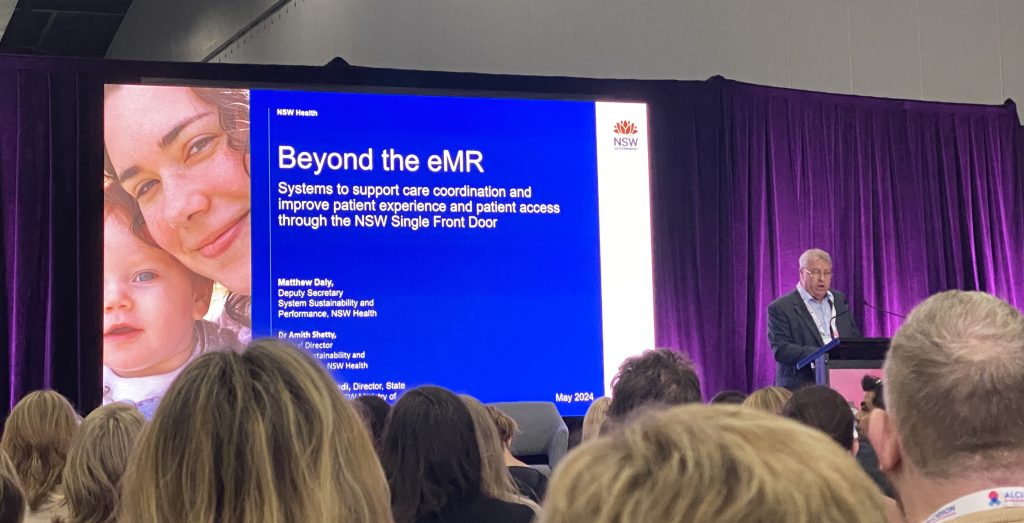
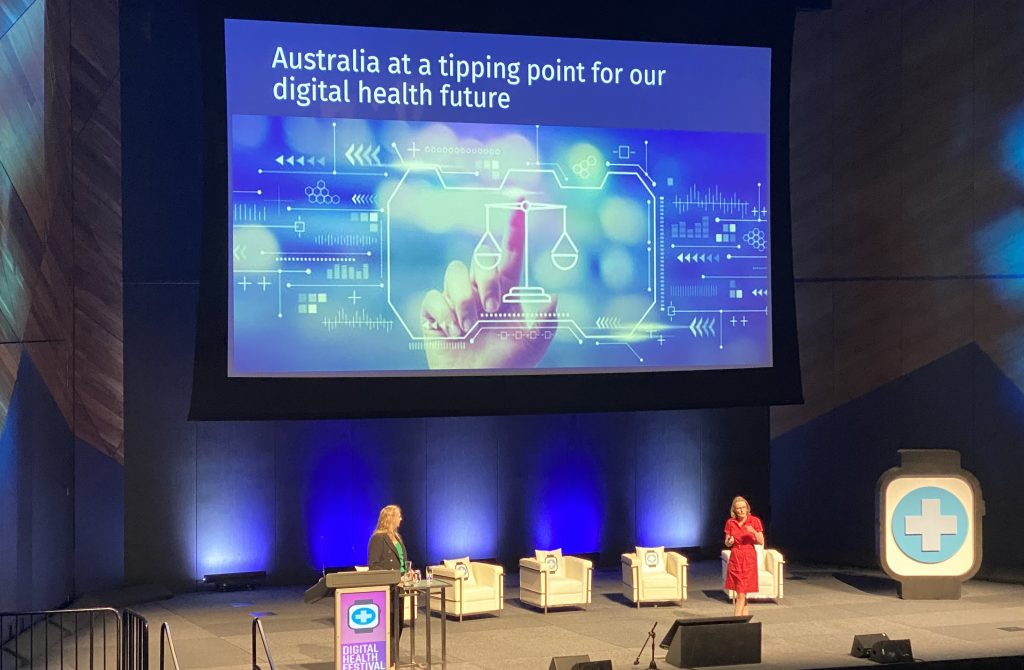
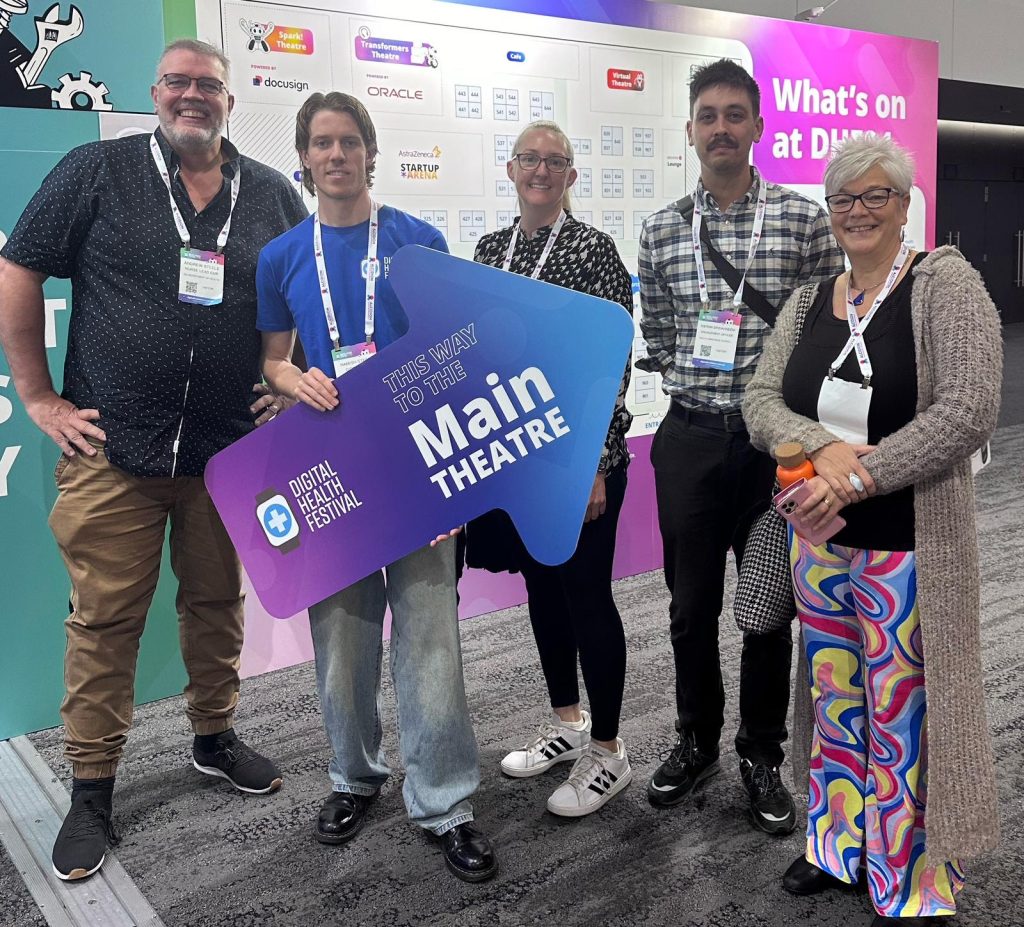
Last week I was lucky to be able to travel to Melbourne and participate as a consumer/Lived Experience representative in a couple of conferences.

The prompt for my trip was to attend the International Congress on Obesity (ICO) – I was part of a group of Lived Experience advocates, including some of the team from the national Weight Issues Network. This is a large conference – around 1,000 people from all over the world – that takes place every two years. This was the first year that people with lived experience were explicitly included.

As I was going to be in Melbourne anyway, I also went along to the Wild Health Digital Health summit. I was alerted to that by regular posts from someone I’m connected with on LinkedIn.

It was a massive week of learning, reflection, observation, and ideas sparking. It’ll take a while for me to make sense of everything – but here are some initial cross-cutting reflections from the two events. Some of these are reiterations of things I’ve known, others are new.

I think it’s time for a revolution in how we think about consumer, carer and lived experience input.

  • Having a consumer/lived experience perspective in the room changes the nature of the discussion
  • Speaking up when I’m the only, or one of very few, people with a consumer/lived experience perspective requires extra energy from me – I need to prepare for that and factor in recharge time
  • We need to move away from the idea that it’s ok to only have a handful of people with consumer/carer/lived experience perspectives in a room when there are hundreds of other people with professional/learned experience perspectives
  • There must be consumer perspectives at every table where decisions that impact us are being made – this includes at the highest levels of government: for example, when health service funding models are being conceived and developed
  • This mean organisations need to step up their level of investment in building capacity of people with consumer/carer/lived experience perspectives to also become “learned experience” experts – particularly in technical areas – while retaining a consumer/carer/lived experience lens.

Speaking truth to power

In many of the discussions I was in last week, I very much felt a responsibility to speak consumer and lived experience perspectives into the room.

There is currently no democratic forum in Australia where consumers, carers, and community members can hold our elected representatives to account for the state of our health and social care system.

We are required to talk to our State representatives on State-funded issues and our Federal representatives on Commonwealth-funded issues. I believe this is a massive contributor to the ongoing tolerance of a highly fragmented health and social care system. It is essential that consumer and lived experience perspectives are spoken into every discussion that impacts our health and social wellbeing – so that people can move away from “meh, what are you going to do?” to “right, what are we going to do?!”.

Time to “professionalise” the consumer/lived experience voice?

I am hugely privileged in that I have a paid job in consumer/lived experience systemic advocacy and engagement. This means I have time to connect with a wide range of people with diverse consumer, carer and lived experience perspectives, and I also have time to read (some of!) the tsunami of government and academic papers that are churned out relentlessly about how to improve our health and wellbeing, as well as the systems that support them. Reading these with a consumer lens can result in quite a different interpretation than some other lenses.

But at a very rough calculation, I’m probably one of approximately 200 people[1] across Australia who have that privilege. Compare this with 642,000 health practitioners working in their registered professions[2] in 2020 and a further 588,000 people[3] working in welfare roles. And that doesn’t take into account people working in health and social care policy/government roles.

So even if everyone of those 200 people in paid systemic advocacy roles are superstars (which I’m sure many of them are), there is no way they can be in every high level policy/agenda setting discussion where a consumer/lived experience perspective is required!

As an example: one of the speakers at the Wild Digital Health Summit commented how positive it was that there were now 32 Chief Nursing and Midwifery Information Officers across Australia. It occurred to me,

…what might it be like if we had 32 Chief Consumer Information Officers across Australia?

Building consumer leadership capacity and technical knowledge – while staying grounded in lived experience

When I was at the Wild Health Summit, I was very aware of my lack of technical knowledge of the subject. (At one point, the fabulous Heather Grain was introduced on a panel as being an expert in “fire” – which I thought was interesting, but not that relevant. I have subsequently learned that they said FHIR which stands for Fast Healthcare Interoperability Resources!)

So I’m left thinking – how do we ensure that there are enough people with both a strongly grounded consumer/lived experience focus and the technical knowledge to be able to add real value in some of these more technical discussions?

I wouldn’t start from here…

Another area that I think urgently needs more people with a grounded consumer/lived experience lens and technical expertise is that of health and social care system funding models.

At both the Wild Health Summit and the ICO event, the consequences of our current funding models for health and social care came up. Both the fee for service/Medicare funded primary care system, and the activity-based funding model in hospital services, incentivise clinicians and healthcare organisations to “do more things”.

How can we have a system that is focused on prevention of ill-health, and promotion of health and well-being, when we’re incentivising the system to deliver more healthcare?

The time is now

At a recent consumer/lived experience representative network event in WA, we discussed the need for a consumer/lived experience/community-led summit on health and social care.

If we as a community don’t take the lead on outlining our requirements for a system that truly focuses on the health and wellbeing of the people in the community, we will see the consequences of a health and social care system that is designed to meet the many and varied vested interests of people and organisations who are tasked with delivering that care, rather than the people who experience it.

Now that I’m back to my day job, I’m going to be thinking about how I can play my part in building this social movement for change.

Clare Mullen, October 2022

[1] Based on 6 states and 1 territory with a peak health consumer body, plus 3 other organisations, with an average workforce of 5 people focused on systemic advocacy; plus a Council of Social Services in each state and territory; plus national consumer/lived experience bodies

[2] https://www.aihw.gov.au/reports/workforce/health-workforce

[3] https://www.aihw.gov.au/reports/australias-welfare/welfare-workforce

[4] https://www.ipaa.org.au/latest-abs-public-sector-employment-figures-now-available/


What the HCC Engagement team have been up to in Djilba (August-September) 2022

It’s been a busy few weeks for our team – here’s a selection of some of the meetings and events we’ve been part of…

  • Meeting with the WA Council of Social Services to discuss work happening on partnership in relation to the WA Sustainable Health Review (SHR)
  • Meeting with Helping Minds to discuss shared interests
  • Promoting consumer perspectives as part of the East Metropolitan Health Service Obesity Prevention Strategy Implementation Committee
  • Meeting with East Metropolitan Health Service to discuss ways of getting consumer input to inform plans for a weight management clinic
  • Promoting consumer perspectives as part of the East Metropolitan Health Service Weight Management Clinic model of care project reference group
  • Hosting a community conversation about the WA consultation on Assisted Reproductive Technology and Surrogacy Acts to inform HCC’s submission on this topic
  • Meeting with the consumer organisations in other states and territories to discuss how we can have more of a state consumer voice on national issues – such as primary care reform
  • Meeting with the Department of Health to discuss our new contract arrangements (which will kick in from 1 January 2023)
  • Meeting with the Department of Health to understand the state position on Long COVID
  • Attending the launch of the Consumers of Mental Health WA launch of their new individual advocacy service for people with psycho-social disability
  • Call with Cancer Council WA about running consumer focus groups
  • Taking part in cultural responsiveness training
  • Hosting two consumer forums – funded by the WA Department of Health – on the experience of multicultural men and multicultural people living regionally in relation to cancer care and information
  • Taking part in the Care Opinion national advisory group
  • Meeting with the team at the National Justice Project about the next steps with the Aboriginal Patient Advocacy Training
  • Promoting consumer perspectives at the Emergency Access Reform Program Control Group
  • Delivering our first fully virtual consumer representative training workshop
  • Meeting with the Department of Health to discuss the work on SHR Recommendation 23 in relation to clinical and consumer leadership
  • Meeting with the WA Primary Health Alliance to support consumer involvement in the development of a model of care for chronic heart failure
  • Meeting with the WA Country Health Service to help them access consumer-facing materials about engaging with health services
  • Meeting with the Department of Health about sexual health and blood borne viruses
  • Meeting with Consumer and Community Involvement Program (CCIP) and a consumer leader to discuss opportunities to connect consumers, carers and community members with lived experience of cancer – planning a community conversation in October
  • Meeting with the Department of Health to discuss communities of practice
  • Taking part in an online forum on COVID Antivirals
  • Attending the launch of the refreshed Live Lighter campaign
  • Promoting consumer perspectives in a meeting with the WA Enrolled Nurses Cooperative hosted by Community Skills WA
  • Hosting a community conversation about the reality of “living with COVID” with Professor Grant Waterer
  • Meeting with the Department of Health about their plans to involve consumers in the development of a WA Safety and Quality strategy.
  • Meeting with Community Legal WA and the WA Financial Counsellors Association to discuss shared interests and possible collaboration opportunities
  • Meeting with People With disability WA to discuss the Empowering Health Consumers With Disability training we are running together
  • Attending Clinical Services Redesign Methodology training with other people involved in the Emergency Access Reform program across WA Health
  • Meeting with Asthma Australia to discuss shared interests
  • Hosting a cultural sensitivity training with a private hospital
  • Hosting an online workshop on Acknowledging Country (find out more about these workshops and sign up at https://www.eventbrite.com.au/e/acknowledging-country-tickets-414587019937
  • Presenting – alongside two consumers – on the lived experience of overweight and obesity to 3rd year medical students at Curtin University
  • Meeting with the Department of Health and the WA Primary Health Alliance about the work on the WELL Collaborative (WELL = Weight Education and Lifestyle Leadership)
  • Talking on the ABC Perth morning show about the implications for consumers of the one-off public holidays on 22 September

This is only part of the work HCC does. At the same time, our Advocacy team have been responding to individual consumer enquiries every day providing both “in the moment” support, and also longer term support and advice to consumers who’s enquiries require involvement over a longer period of time.


Engagement Officer, L4 – full-time

Can you help us build a social movement in health?

At Health Consumers’ Council, we believe in people power. Through our engagement and partnerships work, we are building a social movement in health – where the people who use health and healthcare services, and the people who work in them, can work together to identify priorities for improvement and make positive and lasting change.

We’re looking for a can-do person to join our team and help us extend our reach to more people in the community who use health and social care services, as well as reaching more of the people who work in them.

Health Consumers’ Council WA

The Health Consumers’ Council of WA (HCC) is an independent community-based organisation which was established in 1994, representing the consumer’s voice in health policy, planning, research, and service delivery. We stand for equitable, person-centred, quality healthcare for all West Australians.

Three people sitting at a desk looking towards the front of the room. In the background is an Aboriginal flag and a Torres Strait Islander Flag, and a whiteboard with post-it notes

About the Role

This role is based in the Engagement team and is for an initial period of up to 2 years with the possibility of extension. As well as managing your own projects and activities, you will also provide support to other members of the Engagement team including the Aboriginal Engagement Coordinator, the Cultural Diversity Engagement Coordinator, the Marketing and Communications Coordinator and the Deputy Director.

This is a full-time role based between our offices in Mount Lawley and your home. For the right person, we may consider part-time options, but ideally we’re looking for someone who can be available to work 5 days/week.

What We Offer

  •  A friendly and supportive team that’s making a tangible difference in the community
  • A competitive not-for-profit annual base salary – Level 4 Social Community Home care and Disability Award ($39.26/hour + super)
  • Salary sacrifices up to $15,900 per annum
  • An engaging and flexible working environment
  • The opportunity to work on a wide range of projects and to learn practical skills on the job.

What you’ll be doing

This is a mixed role with lots of variety so you’ll get the chance to work on a range of projects and activities within the Engagement team’s portfolio including:

  • Delivering training and presentations to a range of groups including consumers, carers, community members, people with lived experience and staff working in government, health care and social care
  • Planning, organising and delivering events and workshops – including virtual, face-to-face and hybrid (both virtual and face-to-face)
  • Analysing feedback from events and workshops and creating reports to share this information with a range of stakeholders
  • General engagement project coordination including
  • preparing, monitoring and reporting on project plans
  • liaising with project stakeholders to ensure tasks and deliverables are achieved in line with project plans
  • monitoring and reporting on project budgets
  • responding to enquiries from a wide range of stakeholders about engagement and partnership practices and programs, including providing advice
  • creating and distributing engaging content for a range of platforms including social media, website, email, MS Teams and publications
  • helping to recruit and support volunteers to support HCC’s activities.

What you’ll need to succeed in this role:

  • Excellent literacy and writing skills and strong communication and interpersonal skills
  • Experience in a people-facing role such as customer service or stakeholder engagement and a love of connecting with people
  • Experience in organising meetings, workshops or events
  • Collaborative working style with an ability and willingness to muck in with other team activities as required
  • Be able to work autonomously and within deadlines, including managing a number of projects at the same time
  • Proactive, reliable and flexible attitude and comfortable working in a fast-paced adaptive environment
  • Highly proficient general office IT skills for day to day office activities including the ability to quickly learn to become very comfortable using MS Word, MS Teams and MS Powerpoint – and using MS Excel for organising and sorting data – and comfortable learning new IT skills quickly and with minimal input as required

If you’ve had experience of stakeholder engagement or working with volunteers that would be great. And if you have other skills and experience that you think makes you a great fit for this role, please tell about those too!

Diversity and inclusion

At Health Consumers’ Council we know that strength comes from diverse perspectives being at the table. If you require any adjustments to submit your application, we invite you to get in touch with Clare Mullen via email clare.mullen@hconc.org.au or call reception on 08 9221 3422.

Please read the attached position description for more details – please refer to the criteria in your application.

To apply for this role, please send us an email (to info@hconc.org.au) and a copy of your resume and tell us:

  • What is it about your professional or life experience that makes you a good fit for this role? (Please make it clear how these relate to the tasks and criteria in the position description in your response.)
  • Why do you want this position?
  • How do you see yourself helping Health Consumers’ Council to deliver on our plans?
  • What do you look for in a working environment that can help you thrive?

Next Steps

To be considered for this opportunity please email applications to info@hconc.org.au by no later than 9am on Tuesday 27 September 2022.

Consumer update on Sustainable Health Review workforce recommendations

Sustainable Health Review – update on health workforce issues

The Sustainable Health Review is a wide reaching and ambitious reform program. After an extensive consultation process the Review was published in 2019 and includes 30 recommendations, organised into eight enduring strategies.

Some of the work was paused as the health system responded to the COVID pandemic, but as we move towards living with COVID we’re starting to see action and progress on a number of the recommendations. You can see more about HCC’s involvement in this work at https://www.hconc.org.au/what-we-do/policy-development/sustainable-health-review-consumer-view/

Issues relating to the workforce and culture of the health system were included in the Review, and there are five recommendations that cover these issues.

Find out more about health workforce issues

Health Consumers’ Council hosted a consumer information session to share what we know about work that is happening as part of the Sustainable Health Review on workforce issues.

  • Click here to see the slides from that information session
  • Click here to view the Zoom recording of that information session

Consumers have their say

Health Consumers’ Council hosted two consumer consultations for the Department of Health on one of the recommendations on this topic on 26 July 2022.

Recommendation 26 – Build capability in workforce planning and formally partner with universities, vocational training institutes and professional colleges to shape the skills and curriculum to develop the health and social care workforce of the future.

You can view the post-its that were created as part of these online discussions

Session 1 – focus on regional perspectives

Click the links below to see the dot points for these topics


Session 2 – focus on metro perspectives

Click the links below to see the dot points for these topics


To be added to a mailing list to be kept informed about this work, contact Clare Mullen clare.mullen@hconc.org.au

(Last updated 29/07/22)


Position statement – Roe vs Wade decision in the US

The Health Consumers’ Council of WA unequivocally stands for the rights of all people to access legal, safe, timely and compassionate abortion care as essential healthcare.

Today we join many people and organisations across Australia and add our signature to the Australia position statement on the Roe v Wade decision in the US published by Children by Choice.

We welcome the statement by the WA Minister for Health in support of reproductive rights and equitable access to abortion for women and people with uteruses across Australia. We support the WA safe access zone legislation that protects the rights of people accessing abortions to do so safely and free from harassment or intimidation.

However, we know that accessing free, high quality, comprehensive abortion care in WA can be difficult for some people. Factors including where someone lives, their financial situation, the availability of clear, accessible and culturally appropriate health information, and the availability and affordability of healthcare, can all impact on someone’s ability to access the care they need. We also know from MSI Australia that First Nations’ peoples, trans and gender diverse peoples, members of migrant and refugee communities, people on temporary visas, and people with disabilities can face additional barriers to abortion care that are further impacted by age, economic status, stigma and discrimination.

We will continue to speak up – alongside our partners in WA – for improved, ongoing, timely and affordable access to these vital health services for all.

Health Consumers’ Council WA provides advocacy support to people accessing health services in WA. See https://www.hconc.org.au/individual-advocacy/


Health Services Act – Independent Governance Review

How does the way the WA Health system is managed impact consumers, carers and the community?

The Health Services Act 2016 introduced a new governance structure (how the health system is run and managed) to the WA Health system. The East, North, South, Country and Child and Adolescent Health Services (HSPs) as well as PathWest were created. An Independent Review into that governance structure started in April 2022.

Click here to look at a PowerPoint we put together on the Review Click here to watch the presentation with the slides

Report published

The Report of the Review was tabled in Parliament on 25 October 2022. You can read HCC’s take on the Report after a rapid review at this post https://www.hconc.org.au/rapid-review-of-the-independent-governance-review-with-a-consumer-lived-experience-community-lens/

You can review the report, and the submissions received at https://ww2.health.wa.gov.au/About-us/Department-of-Health/Independent-Governance-Review-of-the-Health-Services-Act-2016

We will continue to review this document in detail. We’re holding a rapid consumer/carer/lived experience leader briefing session on the report on Tuesday 1 November, 12pm – 1.30pm. You can register to attend this session at https://www.eventbrite.com.au/e/independent-governance-review-report-hcc-info-session-tickets-451041014817  

Consumer involvement in the consultation

Members of the Independent Review joined two consultation sessions held online and in person on Wednesday 4th May. At the sessions we focused the feedback sessions on the following:

  • consumer involvement
  • patient experience
  • emergency management
  • prevention and care in the community
Click here to read the report from the consumer workshops with the Review Panel

We also used that to inform our submission.

Click here to read HCC’s submission to the Review

The public consultation closed on 20 May. We know a number of people made their own submissions to the Review. We look forward to being able to share next steps with you as we find out about them.