



November 27, 2025
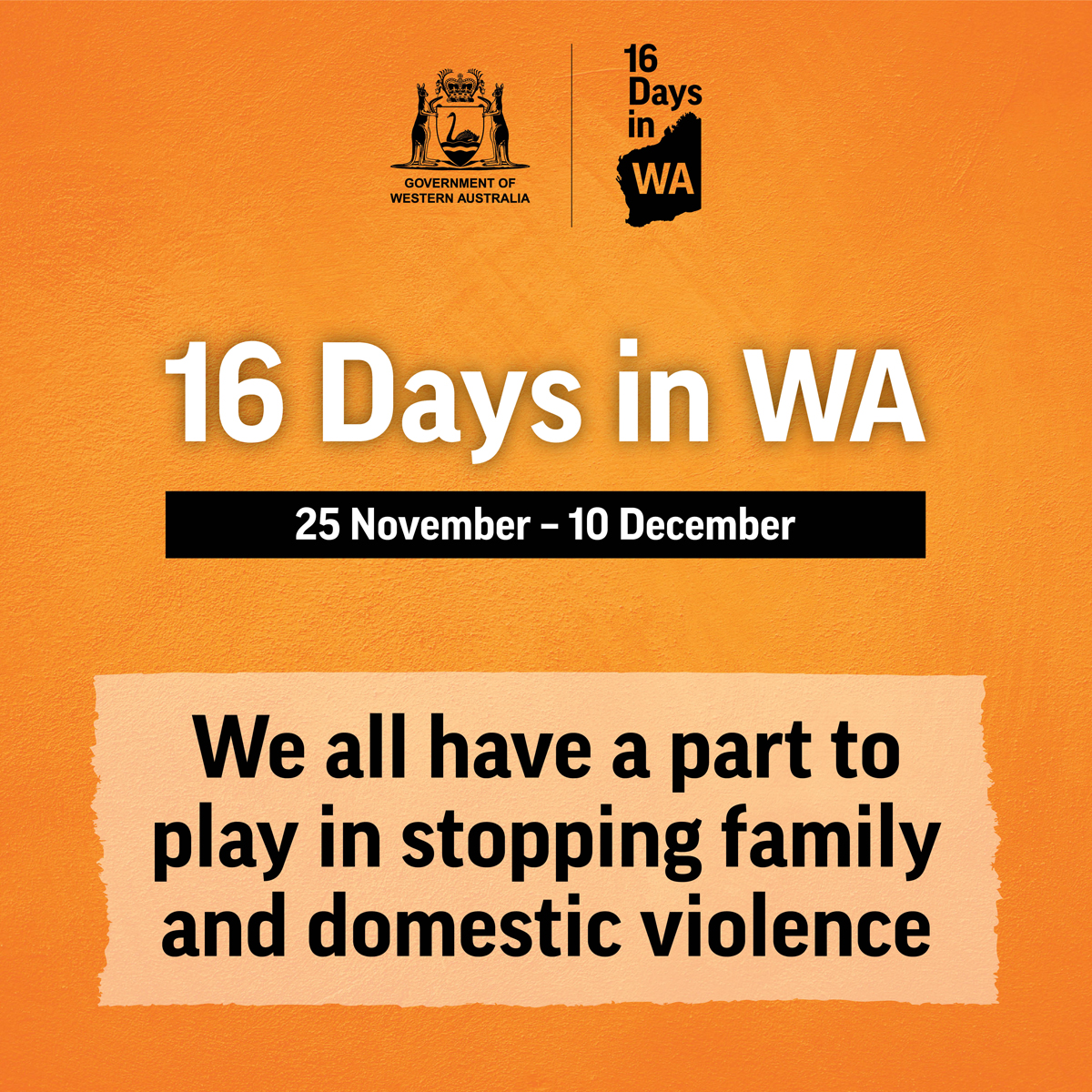
We are currently in the middle of 16 Days in WA 16 Days in WA – an event that runs from between the International Day for the Elimination of Violence against Women on 25 November to World Human Rights Day on 10 December. Family and Domestic Violence is a key Social Determinant of Health, and the majority of people who experience this violence are women, with 2 in 5 women experiencing violence since the age of 15 and one women killed every 9 days by a current or former partner.
The gendered drivers of violence that create the conditions for Family and Domestic Violence to occur have been identified by Our Watch https://www.ourwatch.org.au/link-between-gender-inequality-and-violence and include :
- condoning of violence against women
- men’s control of decision-making and limits to women’s independence
- rigid gender stereotyping
- cultures of masculinity that emphasise aggression, dominance and control
The impact of gendered violence is devastating and far reaching. As well as being a leading cause of homelessness for women, intimate partner violence contributes to more death, disability and illness in women aged 25 to 44 than any other preventable risk factor.
The impact of violence against women is seen in workplaces as it affects staff retention, absenteeism, productivity and morale. Violence against women in Australia is believed to cost Australia $21.7 billion each year.
We can all play our part in helping stop violence against women. The 16 Days in WA website has shared some here 16 Days in WA – 16 ways to play your part in stopping family and domestic violence.
When we attended the WA Health Awards on 25 November, we were thrilled to see the recognition given to the program at North Metropolitan Health Service for Clinical Awareness and Response Enhancement for Family and Domestic Violence. This initiative was co-designed with victim-survivors and introduced ED-specific clinical pathways, confidential disclosure processes, and a multidisciplinary education program. This has led to a 68% increase in victim-survivors engaging with safety planning and social work. It also improved medical documentation and enhanced the overall care experience for those affected by Family and Domestic Violence.
At HCCWA we are committed to anything that improves the health and wellbeing of our community. Tackling the gendered drivers of violence, and addressing violence against women are key steps to contribute to a safer, healthier community.