



As we head into Homelessness Week, we are all acutely aware of the housing crisis in Western Australia.
Recent research from Curtin University shows the depths of this crisis, with increasing numbers of people finding it hard to afford a home and over 40% of people who live in unaffordable housing experiencing poor physical or mental health. The report also tells us that homelessness in WA has risen 8% since 2016 and that the waiting list for social housing has grown to over 20 000. There are 6300 people who are considered to be of the highest priority of needs waiting for a home.
Sometimes we assume that all people experiencing homelessness are street present or “rough sleepers”. In fact, this is often not the case with many people (particularly women) who experience homelessness choosing to stay with family or friends, sleeping in their cars or staying in short term accommodation, which means they are often not visible and also underrepresented in data.
There is no debate that homelessness causes poor health with people who experience homeless experiencing much higher rates of mental health issues, stress and suicide. In addition to this, people who do not have a home tend not to access preventative health care, so their health needs are not addressed early and rapidly become more serious health concerns.
What often happens is that people who experience homelessness seek care at emergency departments of tertiary hospitals and their stay is often longer at these hospitals because there is no safe place for them to go upon discharge. The cost to the health system in treating and accommodating people who experience homelessness is considerable. In a recent study in Western Australia it was identified that over $400 000 was saved in the health system in 12 months by just three patients being placed in appropriate, safe, permanent accommodation. Hospital attendance and hospital admissions reduce significantly once housing needs are met, particularly if those housing needs include wrap around services such as integrated primary health care providers.
Of course we believe that safe, secure and permanent housing should be provided to everyone simply because it’s the right thing to do, for their physical and emotional wellbeing. However, we are aware that often times there needs to be an economic argument as well as a compassionate one, and well-designed social housing using Housing First principles seems to us to tick both boxes.
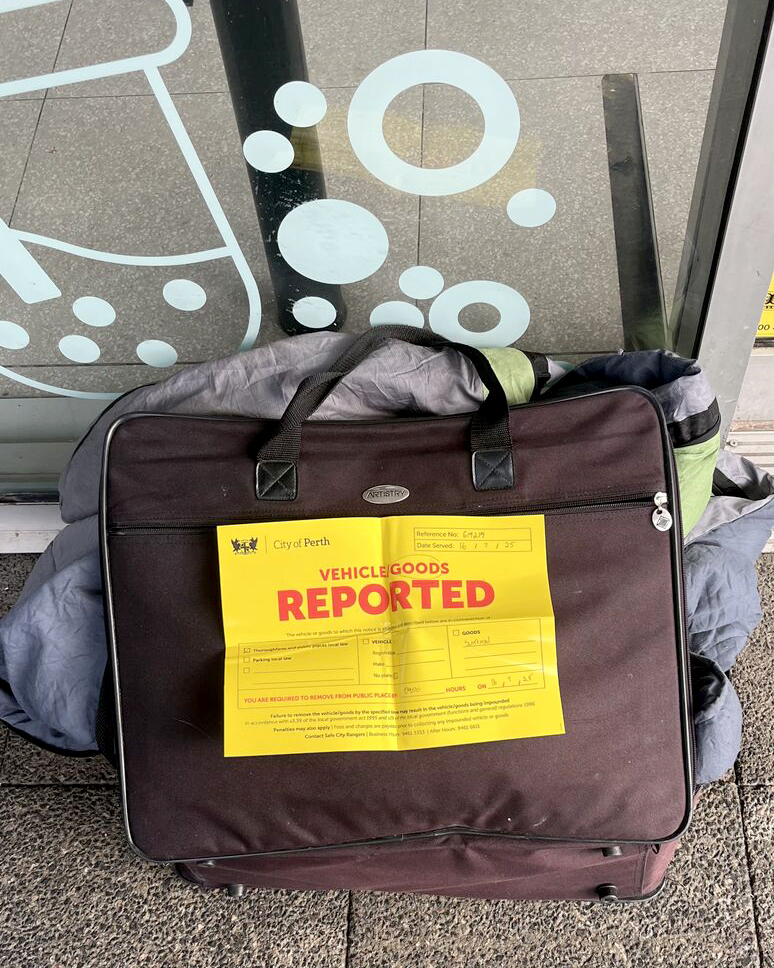
Photo by Gary Steadman of a reported bag from his LinkedIn post: “Thank you for bringing my living room to my attention.”
Housing First projects argue that housing should be provided first, rather than requiring people to meet a set of criteria before being provided with accommodation. This is a key change in the way homelessness is understood and managed, as it recognises that once someone has a home and appropriate support services nearby, it is much easier to transition into a situation where people may be able to seek work or otherwise make changes that allow less social isolation. Housing First principles make provision of housing a priority, while allowing the clients to access support services without conditions attached. The principles also eliminate the complexity of deciding who is more “worthy” of public housing, and rather just understands that housing is a human right and a health issue.
We are pleased to see some Housing First project progressing in the inner city of Perth and in Mandurah and some funding in the budget for further projects. While these projects are being built, however, we still see many street present people in our neighbourhoods, and this cold, wet weather makes us all acutely aware of how challenging and distressing this must be. We welcome initiatives like the Orange Sky mobile laundry and the Brollie Brigade who provide free mobile hot showers, haircuts and hygiene services, along with Street doctor services. These organisations work tirelessly on the front line of service provision for street present people.
We are still heartbroken though to hear stories of local government rangers removing or threatening to remove the possessions of street present people, as was highlighted recently on LinkedIn or the callous approach some local governments take to move on people who are sleeping in their vehicles or on the streets.
We consider homelessness to be a health issue, as well as a social one, and we welcome the appointment of a Minister for Preventative Health. We hope this preventative health lens takes a wide look at the social determinants of health, including housing, to ensure that housing programs continue to be a high priority for this government.
Bronwyn Ife | Systemic Advocacy and Engagement Lead
Media enquiries: 0488 701 839 | info@hconc.org.au