

Month: January 2026

Systemic Advocacy Report

Western Australia Health Systemic Advocacy October to December 2025

We acknowledge Aboriginal and Torres Strait Islander peoples and communities as the Traditional Custodians of the land we work on, specifically the Whadjuk people of the Noongar nation, and pay our respects to Elders past, present, and emerging. Australia always was and always will be Aboriginal land.

Health Consumers’ Council acknowledges the unique insights and strength of those who navigate the complexities of the health system as consumers and thank them for sharing their lived experience and wisdom to help make healthcare fair for everyone.

Contents

Introduction.. 4

Key meetings to promote consumer interests. 4

Submissions. 5

Land Development Inquiry.. 5

Private Health Consultations for Prison Patients. 6

Pregnancy Testing, Management of Pregnancy and Care of Residential Children Policy.. 6

Deaths in Custody Policy.. 7

Presentations. 8

Committees and forums we’ve attended this period.. 9

Key media.. 9

Introduction

Since 1994, Health Consumers’ Council WA has been advocating for the interests of the WA community, health consumers, patients carers, and families when it comes to health and healthcare. That work involves maintaining productive relationships with a wide range of people across health and social care so that consumer interests influence every level of decision making. Much of this work is done on a daily basis behind the scenes. We want to provide our members, friends and stakeholders with a regular update on how we’re amplifying and championing diverse consumer interests to help drive positive change.

This is a new publication for us, and we’d welcome feedback – what is helpful/interesting? What is not?! Let us know by emailing us at engagement@hconc.org.au

Key meetings to promote consumer interests

  • Met with the Network of Consumer Representatives across WA Health Services and discussed the systemic advocacy program with them
  • Attended the launch of the WA Council of Social Services (WACOSS) budget submission and AGM
  • Attended the launch of the Justice Through Our Eyes, 100 Voices for Change report
  • Met with WA Health Department staff to discuss consumer involvement in health infrastructure projects
  • Discussions with WA Health Senior staff on increasing access to individual advocacy
  • Met with WA Health to discuss the contracts in place around hospital parking costs
  • Discussed the refreshed Outpatients Strategy with Department of Health Staff
  • Attended the launch of the St John Ambulance Impact report
  • Attended two meetings with the team from Care Opinion while they were in Perth, and discussed an upcoming event
  • Met with Frank Paolino, member for Mt Lawley, to introduce HCCWA and our work
  • Met with Dan Bull, member for Bayswater, to introduce HCCWA and our work
  • Attended the Behind Bars Beyond Care panel event hosted by the WA Justice Association to hear stories of the prison health system and how it impacts the lives of incarcerated people
  • Attended the Joint Commissioning statewide forum, hosted by the Commonwealth Department of Health, WA Primary Health Alliance, the State Department of Health and the Aboriginal Health Council of WA to discuss opportunities for collaborative commissioning projects across the health sector
  • Quarterly meeting with the Director General of the Department of Health
  • Met with staff from the Department of Health to discuss progress on the consumer involvement on the new Women’s and Babies’ hospital. Raised the issue of affordable parking access among other things.
  • Met with the DOH staff member involved in the management of the state dialysis services contract to discuss contract KPIs and consumer concerns
  • Met with the CEO of the RRR Network – network of Regional, Rural and Remote women, to discuss shared interests and ensure they know how to promote regional interests through HCCWA’s work.

Submissions

Land Development Inquiry

WA Parliament

While this inquiry was initially inspired by the public response to building the motor racing track at Burswood Park, the Terms of Reference were broad and included the ability to discuss planning laws broadly. We’re always on the lookout for opportunities to raise community concerns with key decision-makers, so we grabbed this chance to talk about Fast Food restaurants in planning laws.

We shared the following:

  • Currently there is no consistency in planning laws around the classification of fast food restaurants. Some Local Governments classify them as a “restaurant” while others classify them as “takeaway facility with drive through”.
  • Having a separate category for fast food/junk food venues would allow Local Governments to prevent fast food vendors from operating in certain areas, such as near primary schools.
  • The current categorisation as “restaurant” means that in some locations there are fast food establishments close to schools and close to other restaurants that offer fresh and healthier food options that may be more expensive than fast food.
  • This contributes to children being exposed to fast food advertising, and research tells us that children are heavily influenced in this way, and that exposure to fast food establishments and advertising contribute to unhealthy eating and rising obesity rates.
  • Having a category in planning law specifically for fast food establishments would provide Local Governments with the statutory framework they need to ensure that these establishments are only approved in more appropriate areas, away from schools and away from healthier food options.

Private Health Consultations for Prison Patients

Department of Justice

The Department of Justice Clinical Governance Advisory Group considers policies within the justice system that relate to health care. This policy allows for prisoners to make private Medicare appointments in some circumstances where the services that they require are not available to them in the prison system. The policy focused heavily on the practicalities of making appointments and transporting patients to and from those appointments. We felt that there were some gaps in the policy that needed to be clearer.

We shared the following:

  • There was no indication of what criteria are used when approving requests for private appointments. We recommended that these be clearly stated.
  • There was no clarity around the sort of appointments that might be sought by patients. For example, there might be circumstances where an appointment is available in the justice system but the patient would prefer a specific practitioner, and is able to pay for such an appointment. We asked that the policy make it clear on whether these private appointments do allow patient choice or if they are only to be used for services that are clinically necessary but unavailable in the justice system.
  • We also asked for clarity on what happens when a patient needs treatment that is not available in the justice system but is unable to afford a private appointment.
  • There was no information in the policy about patients appealing a decision made under that policy. We argued that this should be included.

Pregnancy Testing, Management of Pregnancy and Care of Residential Children Policy

Department of Justice

This matter came to our attention when we attended a forum on healthcare in the prison system. We heard a social worker speak who told us that when women who are in the justice system deliver babies who are either pre term or need special care for other reason, they are then separated from those babies for extended periods of time once the mother is well enough to be discharged. The baby remains in the care of the hospital while the mother returns to the prison system and the capacity for the baby and mother to spend time together is heavily restricted. This is a human rights issue, and also surprising in the context of the recent focus on the first 1000 days of the life of a baby.  This policy was not yet scheduled for review by the committee, but we asked to provide some thoughts.

We shared:

  • The current policy that covers pregnancy is missing any information on what happens immediately after the birth of the baby
  • The policy seems to assume that the baby will be well enough to be discharged at the same time as the mother, but even then there is no information given about the expected procedures to follow with where the mother and baby will be accommodated.
  • We asked what arrangements are able to be made and what policy considerations can be put in place for a mother and baby to spend crucial time together when the mother is well enough to be discharged but the baby is not.
  • There are studies that confirm that women in the prison system are more likely to give birth to pre term babies, due to a combination of factors. Given that pre term birth is a specific risk for the population served by this policy, it is important that the policy addressed those circumstances.
  • We also noted that the policy is silent on high risk pregnancies, such as those where a mother needs to on extended bed rest or is at an elevated risk of pre eclampsia.

Deaths in Custody Policy

Department of Justice

The Department of Justice shared their Deaths in Custody policy for feedback. This policy was mostly focused on managing the scene following a death in custody.

We shared:

  • That such a policy should also include information about informing and supporting families following a death in custody
  • We asked if the partner policy which applied to Youth Detention Centres, which we had not viewed, was the policy that covered Unit 18 at Casuarina Prison as well.
  • The policy has a section on what occurs when a patient dies outside of a custodial facility. We asked if this section could also include information about how it is determined if the patient’s status as a prisoner had contributed to their death – for example were restraints used that may have meant that their experience was different to the experience of a patient who is not a prisoner.
  • The policy did not elaborate on the training, resources, capacity and medication available to staff to undertake a full resuscitation, so we were unable to learn from the policy if staff are able to resuscitate a patient or rather continue to provide CPR until an ambulance arrives.

Presentations

The McCusker Centre for Citizenship at UWA runs a program where students undertake internships with organisations as part of a their university studies. We have hosted a number of McCusker interns who have undertaken a variety of projects for us. We were invited to sit on a panel at a McCusker Alumni event to talk about the health system in WA. This was a great opportunity to speak to students who were mostly studying degrees in health and to help them understand the health sector through a consumer lens. We discussed workforce issues in rural and remote areas, health rights, preventative health and programs that help people stay well, in their communities and out of hospital. We talked about how your postcode can influence how healthy you are and how long you live. For some of these students this was a whole new experience and a new lens through which to understand their chosen field of study.

Committees and forums we’ve attended this period

  • Monthly meetings with Systemic Health Advisory Collective – a group of systemic health and policy staff from WA Based consumer organisations in the Mental Health space.
  • Monthly Fair Food WA https://www.wacoss.org.au/projects/fair-food-wa/
  • Dental Workforce working group
  • Goals of patient care working group
  • State Oral Health Advisory Group
  • Consumer Health Forum members policy network
  • Collaborative Commissioning Project – looking at opportunities to connect commissioning between Federal and State Governments
  • Patient Related Outcome Measures (PROMs) and Patient Related Experience Measures (PREMs) working group
  • Attended the Preventative Health and Positive Ageing Summit
  • WA Peaks Forum
  • WA Clinical Senate
  • The Australian New Zealand Obesity Society Conference
  • Workshop on General Practice Provision in Rural and Remote areas
  • WA Health Safety and Quality Summit
  • International Forum on Quality and Safety in Healthcare
  • WA Aged Care Collaboration Group     

Key media

  • Interview with Seven West media about the HaDSCO Annual Report data – highlighting the limitations of the health complaints process, and the role that independent advocates play to support consumers
  • Interview with Choice Magazine on issues around early release of superannuation and upfront payments for costly dental treatment
  • ABC Perth Radio and ABC news – interview on the State Government’s $1.5 billion investment in hospital infrastructure, welcoming the investment and reiterating the need for investment in preventative health.

For further information about this report please contact Health Consumers Council WA on 08 9221 3422 or info@hconc.og.au

Why our office stays open on Australia Day

We will, as we have for many years, keep our office open on the Australia Day public holiday.

The current date of Australia Day carries different meanings for different people. For many Aboriginal and Torres Strait Islander peoples, January 26 marks invasion, dispossession, and ongoing harm. That harm still shapes health outcomes, trust in systems, and lived experience today. We recognise this reality and we choose to act in this small way and work on January 26.

On the Australia Day public holiday, our office remains open. Staff can choose to work and take another day off, or take the public holiday if they prefer. This approach has been in place for several years and staff feedback has been positive.

We make this choice as an act of solidarity.

We acknowledge Australia’s achievements; we count ourselves lucky to live, work and play here.

And so we know that two things can be true at once: gratitude for all there is to celebrate about Australia, including being the home of the world’s oldest living culture. And recognising the pain of being expected to celebrate on a day that marks dispossession and colonisation.

Our role as healthcare advocates
As advocates for health consumers and a fair healthcare system across Western Australia, we see every day the discrimination and exclusion that Aboriginal people experience in our health system. As an organisation that was established to provide a voice for the community on all aspects of health, we take our responsibility to support Aboriginal leadership and to listen and amplify Aboriginal voices on an issue that impacts the health and wellbeing of Aboriginal people.

Our decision about January 26 reflects our broader commitment to equity, cultural safety, and truth telling. It aligns with the work we do every day.

Why we talk about this publicly
We share this decision to encourage reflection and discussion. We believe organisations – particularly organisations grounded in lived experience can help to shape culture through everyday choices and actions.

This small act does not replace deeper action but sits alongside our advocacy, partnerships, and support for Aboriginal health consumers throughout the year.

Key dates and concepts for context

  • Aboriginal and Torres Strait Islander peoples have lived on this continent for more than 65,000 years supported by current archaeological evidence.
  • 1606. Dutch explorers recorded the first known European landfall.
  • 1788. The British flag was raised at Sydney Cove on January 26.
  • 1938. Aboriginal leaders marked January 26 as a Day of Mourning to protest dispossession and exclusion.
  • 1988. Large-scale protests during the Bicentenary drew national attention to Aboriginal rights and land justice.
  • 1994. January 26 became a national public holiday across all states and territories.

Something to think about on Australia day, wherever you may be, however you choose to mark the day, it always was, always will be Aboriginal land.

Expression of Interest – Consumer Representative pool for the WA Health EMR Program

Help shape how care works across WA

WA Health is introducing a new Electronic Medical Record (EMR) across public hospitals and health services in Western Australia.

This is the largest clinical and digital transformation WA Health has ever undertaken, and a once-in-a-generation opportunity to improve how care is delivered across the state.

An EMR is a secure digital version of your health record. It brings together information about your care in WA public hospitals – such as test results, medicines and treatment plans – so clinicians can access the information they need to support your care, when they need it. It also includes smart clinical features, such as alerts for allergies or medicine interactions, that help support safer care.

The EMR will also include a portal for patients. The intent is to provide a secure online tool that could, over time, offer access to selected health information (such as parts of a health record, appointments and results) and support people to be more involved in their care and in supporting their family members. Final features and timing will be determined as the program progresses.

What this means for consumers and carers

For consumers and carers, the EMR is intended to support care that feels more joined-up and consistent across WA. It can reduce the need to repeat your story, help avoid delays caused by missing information and support safer care by helping clinicians spot important information sooner. It will also make it easier to access your own health information.

Why we’re asking for consumer input now

The EMR Program has been working closely with the Health Consumers’ Council and the EMR Program Consumer Reference Group for some time to establish strong foundations for consumer input into the Program. This work has helped shape how consumers are involved and has informed key principles around safety, equity, privacy and trust, including the development of the EMR Program’s Consumer Charter.
As the Program moves into more detailed decision-making, it is now important to broaden consumer involvement and build a large, diverse pool of consumers who can contribute across different areas of care. This helps ensure decisions reflect the experiences of people with different health needs, backgrounds and interactions with the WA health system.
The EMR Program is currently working through important decisions about how care is delivered across WA, including where it makes sense for things to be done in the same way everywhere.
To support this, the Program is setting up a number of Clinical Advisory Groups, working groups and committees. These are groups of clinicians and other experts who look at specific areas of care and help guide decisions about how the EMR should support safe, high-quality care across the system.
Many of the topics these groups consider affect how people experience care in real life – for example, how care teams work together, and what it’s like to move between hospitals and services. Because these decisions will shape how care works for many years to come, it’s important they are informed by the experiences of patients, carers and families.
Your input helps ensure decisions are grounded in what actually works well, what’s difficult, and what could be improved, so care can be delivered more consistently and in ways that better support people across WA.

About the Expression of Interest

We are seeking Expressions of Interest (EOI) from individuals who are experienced in representing consumer perspectives to join a pool for the following roles:

  • Standing member of an EMR Clinical Advisory Group (CAG), or other relevant committee or working group
  • Participation in short-term or topic-specific meetings, where your lived experience or expertise is particularly relevant.

The Expression of Interest Form highlights the different clinical focus areas we may need input on, and you can nominate up to five.

Who we’re looking to hear from

We are seeking people of different ages, cultural backgrounds and life experiences, people living in metropolitan, regional and remote areas, carers and family members, and people with experience of different health services and conditions. Having a wide range of perspectives helps ensure the EMR works well for the many different people who use WA Health services.

You don’t need any technical knowledge. What matters is your experience of care as a patient, carer or family member, and your willingness to share that experience in a way that helps improve care for others.

Time Commitment: Some people may be invited to join a Clinical Advisory Group with a regular (likely monthly) commitment, while others may be invited to take part in short-term or topic-specific discussions where their experience is particularly relevant. The Program is still evolving, so topics, timing and levels of involvement will vary. Commitment expectations will be discussed in advance of your appointment.

Support: Consumers can elect to receive additional support before, after and between meetings. This may include pre- and post-meeting briefings and cross-committee meetings to access peer support and learning. The Program will consider reasonable adjustments to support accessibility, communication and participation needs, and encourages consumers to discuss any barriers or support needs with the HCC team.

Online/ in-person attendance: Most meetings will be held online and are designed to be accessible using common devices. If access to technology or confidence using online tools may affect your ability to participate, please contact HCC to discuss available support or reasonable adjustments.

Consumer participation payment: Participation is paid in line with agreed consumer payment arrangements ($75/hour for consumer advisory roles and $37.50/hour for consumer representative roles), with details provided before any involvement is confirmed.

What happens after you submit an EOI

  • Everyone who submits an EOI will receive an acknowledgement. EOIs will be reviewed to identify people whose experience and interests best match current and upcoming opportunities.
  • Some applicants will be invited to a short, informal conversation so we can better understand their experience, availability and any support needs. These conversations are not formal interviews – they’re about getting to know you and working out how and when involvement might be a good fit.
  • Not everyone who submits an EOI will be invited to a conversation at this stage. This doesn’t reflect the value of your experience – it simply reflects current Program needs and timing.

There will be further waves of recruitment as the EMR Program continues, and people who are not contacted in this round may be considered for future opportunities.

How to apply

If you would like to submit an EOI, please complete the online form using the link below. Please allow 15-20 minutes to complete the form.

If you need any assistance or support to complete this EOI, please contact HCCWA on 08 9221 3422 or emr@hconc.org.au

Please complete the EOI at your earliest convenience. The first round of committee appointments is expected to occur February and March 2026.

Employment Opportunity | Systemic Advocacy Engagement Lead

Part-time to Dec 2026 with possible extension

Can you help us build a social movement in health?

Are you passionate about improving equity and participation in health? Do you love all types of data – including first person stories, other qualitative information and quantitative data – and are skilled at weaving these together to craft compelling cases for change that prompt action? Then this might be your perfect role.

Systemic Advocacy Engagement Lead, part-time (4 days/week), fixed term to December 2026 with the possibility of extension

At Health Consumers’ Council, we believe in people power. Through our engagement and partnerships work, we are building a social movement in health – where the people who use health and healthcare services, and the people who work in them, can work together to identify priorities for improvement and make positive and lasting change.

Health Consumers’ Council WA

Health Consumers’ Council WA (HCCWA) is an independent community-based organisation which was established in 1994, representing the consumer’s voice in health policy, planning, research, and service delivery. We stand for equitable, person-centred, quality healthcare and improved health outcomes and experiences for everyone in Western Australia.

About the role

This role reports to the Executive Director. You will work with people across the HCCWA team who work on Aboriginal engagement, cultural diversity engagement, consumer representation and consultation, and individual advocacy.

This role is 0.8 FTE (4 days or 22.5 hours/week) based in our offices in Mount Lawley with the possibility of working from home for up to 50% of the time.

The role is initially offered to the end of December 2026, with the possibility of extension subject to funding.

The role offers

  • The opportunity to ensure diverse consumer perspectives are represented at the highest levels of decision making in health
  • The opportunity to work on a wide range of projects and with people from a wide range of backgrounds
  • The opportunity to be part of a consumer-first organisation with a focus on improving health equity and championing health rights
  • A friendly and supportive team that’s making a tangible difference in the community
  • A competitive not-for-profit annual base salary – Level 6 Social Community Home care and Disability Award $55.72/hour + super
  • Salary packaging up to $15,900 per annum
  • Flexible working with the opportunity to work from home up to 50% of the time when settled in to the role

About you

  • You’re looking for a role where you can apply your strong analysis and writing skills to advance social justice
  • You’re interested in the health system and care about people’s experiences of it
  • You’re comfortable advocating for diverse consumer perspectives to senior decision makers – and just as happy to roll your sleeves up and tidy up after an event along with your colleagues

What you’ll be doing

This position synthesises consumer insights and other literature and evidence to write submissions to public consultations and respond to opportunities to promote HCC’s systemic advocacy agenda as they arise. You will gather insights from health consumers, carers, community members and people with lived experience to inform and create submissions and engaging informative content that is distributed across a number of platforms including social media, email, web and online and hard copy publications and materials. You will also participate in a number of high level committees across WA Health representing diverse consumer views.

A typical week might see you:

  • Hosting a focus group with consumers on a specific topic to inform HCC’s submission to a national consultation
  • Preparing a submission to a Parliamentary enquiry
  • Attending a number of Project Control Group meetings for high profile systemwide reform programs ensuring that diverse consumer perspectives are represented and understood
  • Collecting and reviewing a wide range of information – including first person stories, government policies and publications, social media content, data relating to HCC’s individual advocacy and engagement activities – and using this to produce reports using everyday language, for consumers and community members
  • Updating the HCC website to inform our members and others about our systemic advocacy activities
  • Staying across current issues relating to health and social care, ensuring timely and evidence-based position papers and information is available as needed
  • Meeting with counterparts in other health consumer advocacy groups to collaborate for maximum impact

See the job description for a full outline of responsibilities for the role.

What you’ll need to succeed in this role

Essential 

  1. 3+ years’ experience in a similar role
  2. Well-developed analytical skills including the ability to work with and analyse quantitative and qualitative data and present these in a format that is accessible to non-expert audiences
  3. Excellent English literacy, writing, editing and proofing skills, able to succinctly and quickly synthesise and present a wide range of information on systemic advocacy issues for a range of audiences including formal policy submissions
  4. Ability to quickly synthesise information from a range of sources into accessible engaging content for a range of media including but not limited to social media, media releases, blogs, briefings and articles
  5. Knowledge of the Australian health and health system context including the levers for change
  6. A belief in the importance of the role of health consumers as partners in the planning, design, monitoring and evaluation of health services
  7. Able to confidently and effectively express a diverse range of consumer perspectives in a range of settings including in meetings with senior decision makers, public forums and in written form
  8. Able to use a range of software programs including (but not limited to) WordPress, Canva (or other graphic design program), Survey Monkey, Mailchimp, Zoom and Microsoft Office (or the ability to quickly become proficient in these)
  9. Experience in organising meetings, workshops or events to gather feedback and insights from consumers and other stakeholders
  10. Collaborative working style with an ability and willingness to muck in with other team activities as required
  11. The ability to work autonomously and within deadlines, including managing a number of projects at the same time
  12. Proactive, reliable and flexible attitude and comfortable working in a fast-paced adaptive environment

 Desirable

  1. Strong networks in political circles
  2. Experience in campaigning on social issues

But if you have other skills and experience that you think makes you a great fit for this role, please tell about those too!

Diversity and inclusion

At Health Consumers’ Council we know that strength comes from diverse perspectives being at the table. We particularly encourage applications from Aboriginal and Torres Strait Islander people, people from culturally diverse backgrounds and identities, and people with disability.

To apply for the position

Send a cover letter of no more than two pages addressing the selection criteria in the job description, along with a current resume outlining your work experience, skills and any relevant education or training to jobs@hconc.org.au. Applications that do not address the criteria may not be considered.

  • The closing date for applications is 8am on Thursday 29 January 2026

But, we will be assessing applications as they come in and reserve the right to appoint before this deadline, so if this is your dream job, submit your application promptly

If you require any adjustments to submit your application or wish to have a confidential discussion about the role, please contact Clare Mullen, Executive Director on (08) 9221 3422 or email ceo@hconc.org.au

Job: Executive Assistant, part-time, to Dec 2026 with possible extension

Love organising? Eagle-eyed proof-reader? Like to be at the centre of the action?

We are passionate about the power of health consumer and lived experience voices to improve health outcomes and experiences for everyone in WA. We’re looking for someone who shares our vision to join our small but mighty team.

Executive Assistant, part-time, fixed term (to December 2026 with the possibility of extension)

We are seeking a highly organised Executive Assistant who loves people and being in a fast-paced environment with lots of variety. This is a pivotal role in an agile and growing organisation and helps ensure our Executive operations run smoothly and effectively.

The role is available for 25 hours/week to be worked across Monday – Friday.

The role offers:

  • A high degree of variety – working with the Executive Director on a wide range of activities and liaising with diverse community members and staff at all levels in the health and social care system
  • The opportunity to be part of a consumer-first organisation with a focus on improving health equity and championing health rights
  • A welcoming and inclusive workplace where everyone is encouraged to bring all of themselves to work
  • The opportunity to implement and streamline administrative processes to help us make the most of the limited funding we receive
  • A competitive not-for-profit annual base salary with salary packaging – Level 3.1 Social Community Home care and Disability Award $38.65/hour + super
  • Salary packaging up to $15,900 per annum

About you:

  • You’re looking for a role where you can apply your executive assistance and administration skills to do work that you care about
  • You’re highly organised and enjoy working in an agile and responsive environment
  • You’re interested in the health system and care about people’s experiences of it
  • You’re happy to muck in and enjoy working on a range of different projects and with different teams simultaneously

Position overview

This position provides expert administrative and governance support to the Executive Director and the HCC Board. This includes diary and travel management, secretariat support for Board committees, policy development and co-ordination, general office administration, and covering reception as required.  We’re looking for someone who will be proactive and work collaboratively with colleagues to support our work which has the consumer experience and voice at its heart.

A typical week might see you doing a range of tasks:

  • Coordinating the Executive Director’s busy diary in liaison with senior stakeholders across the WA health system
  • Organising the Executive Director’s email inbox ensuring that priority emails are identified and actioned
  • Following up on actions as directed by the Executive Director and senior staff
  • Assisting with planning and delivering a range of events, workshops and activities by organising attendee lists, logistics and catering and consumer payments and enquiries
  • Drafting, coordinating and proof-reading papers for upcoming Board meetings
  • Attending workshops and events when required to – this may include occasional after hours working
  • Greeting visitors to our offices, responding to our reception phone calls, and responding to emails through our main inbox
  • Managing the training room and equipment register
  • Monitoring and updating organisational policies, procedures and registers
  • Scheduling meetings, preparing agendas and recording minutes
  • Managing stakeholder contact details through our Customer Relationship Management (CRM) system
  • General office admin including organising travel and accommodation
  • Generating simple reports and analysis from existing systems including data entry

See the job description for a full outline of responsibilities for the role.

Selection criteria

Essential

  1. A minimum of 2 years’ experience in a similar Executive Assistant role with a deep understanding of the requirements for attention to detail and confidentiality
  2. Well-developed interpersonal and verbal skills, with a demonstrated understanding of the sensitivity and empathy needed when communicating with vulnerable community members and senior stakeholders
  3. Well-developed written communication skills, with the ability to write clearly and concisely for internal and external use
  4. Excellent organisational skills, with high attention to detail and the ability to manage and prioritise deadlines and own workload with limited supervision
  5. Demonstrated ability to use initiative and solve problems within own area of responsibility
  6. Be adept, or be able to quickly become adept in, a range of office software programs including Microsoft Office 365 Suite, project management software, and accounting software

 Desirable

  1. A demonstrated interest in the aims and purpose of HCC, for example, experience as a health consumer representative or volunteering in a similar advocacy organisation
  2. Experience working in community services and not for profit sector
  3. Ability to develop and maintain productive relationships with diverse internal and external stakeholders, and navigate difficult conversations when required


To apply for the position

Read the job description and send a cover letter of no more than two pages addressing the selection criteria, along with a current resume outlining your work experience, skills and any relevant education or training to jobs@hconc.org.au.

Please submit your application no later than 8am on Tuesday 27 January. 

However, note that applications will be considered as received and we reserve the right to progress recruitment before the closing date – so get your application in early.

Applications that do not address the criteria may not be considered.

If you require any adjustments to submit your application or wish to have a confidential discussion about the role, please contact Clare Mullen, Executive Director on (08) 9221 3422

Health Consumers’ Council WA calls for urgent action to address GP access and affordability in WA

MEDIA RELEASE
12 January 2026

Health Consumers’ Council WA calls for urgent action to address GP access and affordability in WA

The latest Cleanbill Blue Report reveals a mixed picture for Western Australians seeking GP care. While the national rate of fully bulk billing clinics has doubled to 40.2%, Western Australia lags far behind at just 19.8%, the second-lowest rate in the country. At the same time, out-of-pocket costs for those not bulk billed have risen to an average of $46.63, up nearly 10% from last year.

Health Consumers’ Council WA Executive Director Clare Mullen said these figures highlight a growing equity gap in primary care access across the state.

“Western Australians deserve timely, affordable healthcare, yet these findings show that too many people are still facing significant barriers. Bulk billing remains the exception rather than the norm in WA, and rising costs risk pushing care out of reach for those who need it most.”

The report also notes a national trend of GP clinic closures and consolidations, raising concerns about future availability of services in regional and remote WA.

“Consumers tell us every day about the stress and hardship caused by limited access to GPs. We need urgent, coordinated action to ensure that incentives translate into real improvements for WA communities—not just on paper.”

Health Consumers’ Council WA is calling for:

  • Greater transparency on GP pricing and availability.
  • Targeted support for clinics in WA to adopt bulk billing practices.
  • Consumer voices at the centre of policy decisions to ensure reforms meet community needs.

As an independent organisation advocating for health equity, HCCWA will continue to amplify consumer experiences and push for solutions that make healthcare accessible for all Western Australians.

ENDS

Media enquiries: 0488 701 839 | info@hconc.org.au

Bronwyn Ife  |  Systemic Advocacy and Engagement Lead

Clare Mullen | Executive Director

Regional WA faces growing GP access challenges despite national bulk billing gains

MEDIA RELEASE
12 January 2026

Regional WA faces growing GP access challenges despite national bulk billing gains

The Cleanbill Blue Report shows that while bulk billing rates have improved nationally, Western Australia remains among the lowest at 19.8%, and regional communities are feeling the greatest strain. Rising out-of-pocket costs—now averaging $46.63 for non-bulk billed consultations—combined with clinic closures and consolidations, risk leaving rural and remote residents without timely care.

Health Consumers’ Council WA Executive Director Clare Mullen said:

“For people in regional WA, seeing a GP is already harder than it should be. We know that for many people it can take weeks to even get an appointment.”

HCCWA welcomes the fact that while incentives have encouraged some clinics to bulk bill, but unfortunately the benefits are uneven. Regional areas often lack the workforce and infrastructure to take advantage of these reforms. And we know that many local governments are already subsidising the cost for their residents to access primary care – in a way that is not sustainable.

“We need targeted solutions for regional WA—investment in workforce, telehealth, and incentives that actually improve access for rural patients. Consumers in these communities must have a voice in shaping these policies.”

Health Consumers’ Council WA is calling for:

  • Dedicated funding to support GP services in regional and remote WA.
  • Expansion of telehealth and outreach programs to reduce travel burdens.
  • Consumer-led consultation to ensure reforms meet the needs of country communities.

As an independent advocacy organisation that champions the rights of health consumers, patients and the community, HCCWA will continue to champion equity in healthcare access for all Western Australians—no matter where they live.

ENDS

Media enquiries: 0488 701 839 | info@hconc.org.au

Bronwyn Ife  |  Systemic Advocacy and Engagement Lead

Clare Mullen | Executive Director

Working together to keep Western Australians healthy

From the desk of HCCWA Executive Director, Clare Mullen

HCCWA x Healthway

Today I caught up with Carina Tan-Van Baren, Executive Director of Healthway. Healthway plays a vital role in keeping Western Australians healthy by investing in prevention, community wellbeing, and health promotion.

Our conversation focused on the role of health consumers and community members in shaping Healthway’s future work. As with all parts of the health system, we discussed the importance of consumer involvement at every level of decision-making — including at board level.

We chatted about opportunities to strengthen grassroots, community-led prevention, including Compassionate Communities, “staying in place” initiatives, and other place-based approaches that support people to live well where they are. We also discussed the potential for prevention work in Western Australia to place a stronger focus on preventing and addressing the impact of adverse childhood experiences.

It was also a chance for us to share the work we’ve has been doing since 2018 — supported by WA Health and WAPHA — on The WELL Collaborative.

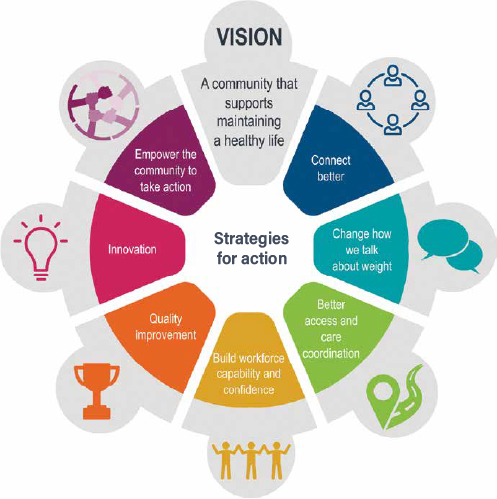
Strategies for Action from the WA Healthy Weight Action Plan: “a community that supports maintaining a healthy life”

This is WA’s innovative approach to bringing together people with lived experience with academics and health practitioners to help shape policy and system change to achieve the vision of the WA Healthy Weight Action Plan: “a community that supports maintaining a healthy life”

It was a very productive conversation about the opportunities for lived experience perspectives to be front and centre when thinking about health promotion. We’ve agreed to keep meeting regularly over the coming year — so watch this space.

MedicineWise Mobile App to Be Decommissioned

MedicineWise Logo

The Australian Commission on Safety and Quality in Health Care has announced the upcoming decommissioning of the MedicineWise mobile application. The app, originally launched by NPS MedicineWise in 2017 and transferred to the Commission in January 2023, has helped many consumers and health professionals manage medicines and access reliable health information.

The Commission recently completed a detailed review of the app, looking at user uptake, usefulness, maintenance requirements, safety and privacy considerations, and the availability of similar tools on the market.

The review found that while the app has been valued by some, overall usage and retention were low.

It also showed that maintaining the high standards required for safety, quality and privacy would require significant ongoing resources, especially when weighed against the small number of active users.

As a result, the Commission has decided to decommission the MedicineWise app at midday AEDT on Tuesday 10 February 2026. After this date, the app will no longer function fully on users’ devices.

The Commission has already contacted registered users with details on how to find alternative options, as well as instructions on how to download or remove any stored data before the transition.

We are sharing this update to ensure our community is aware of the change and has time to plan ahead.

If you need more information, please visit MedicineWise or email: QUMCustomerService@safetyandquality.gov.au.