
Category: Blog

Health consumers and two elections…

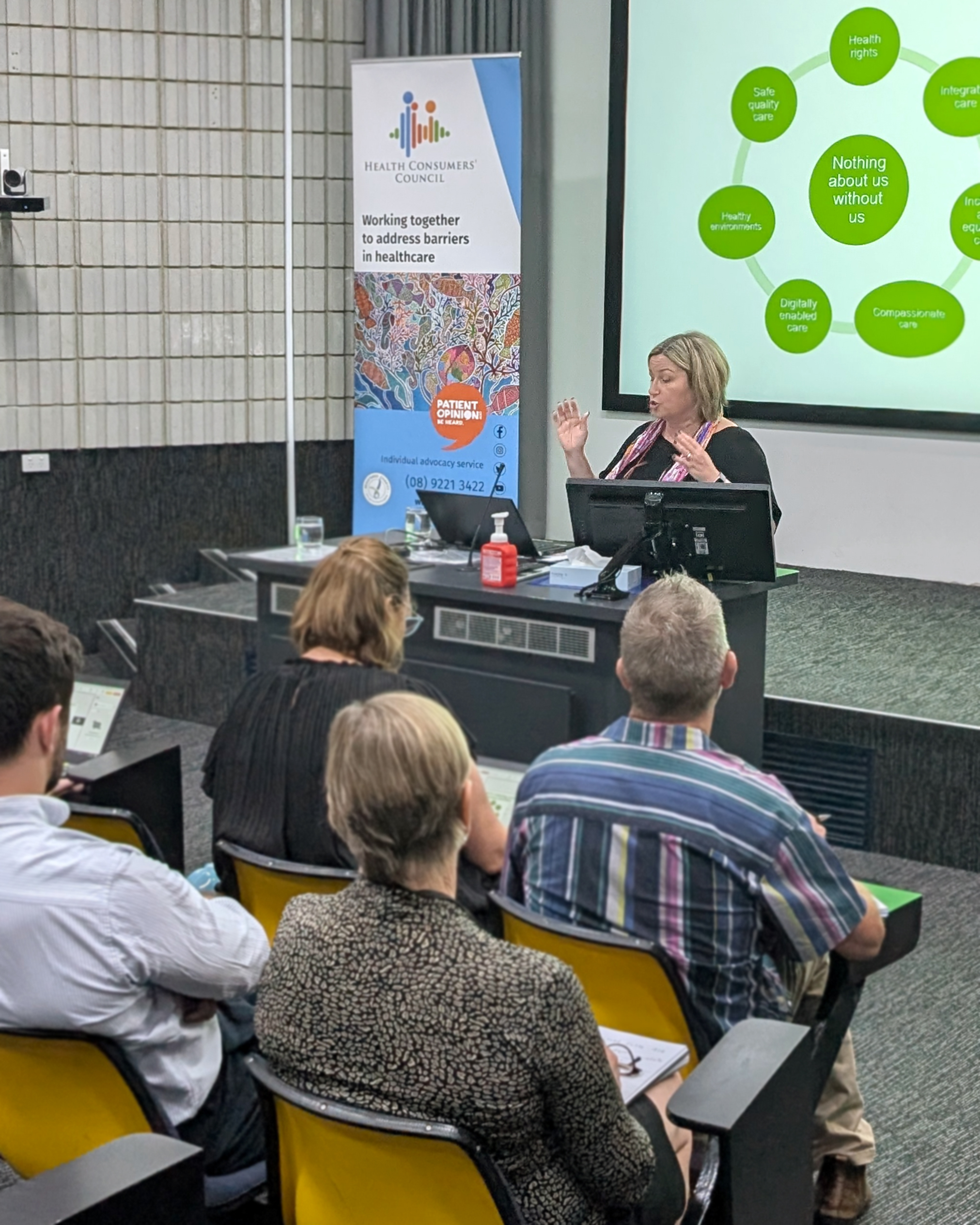
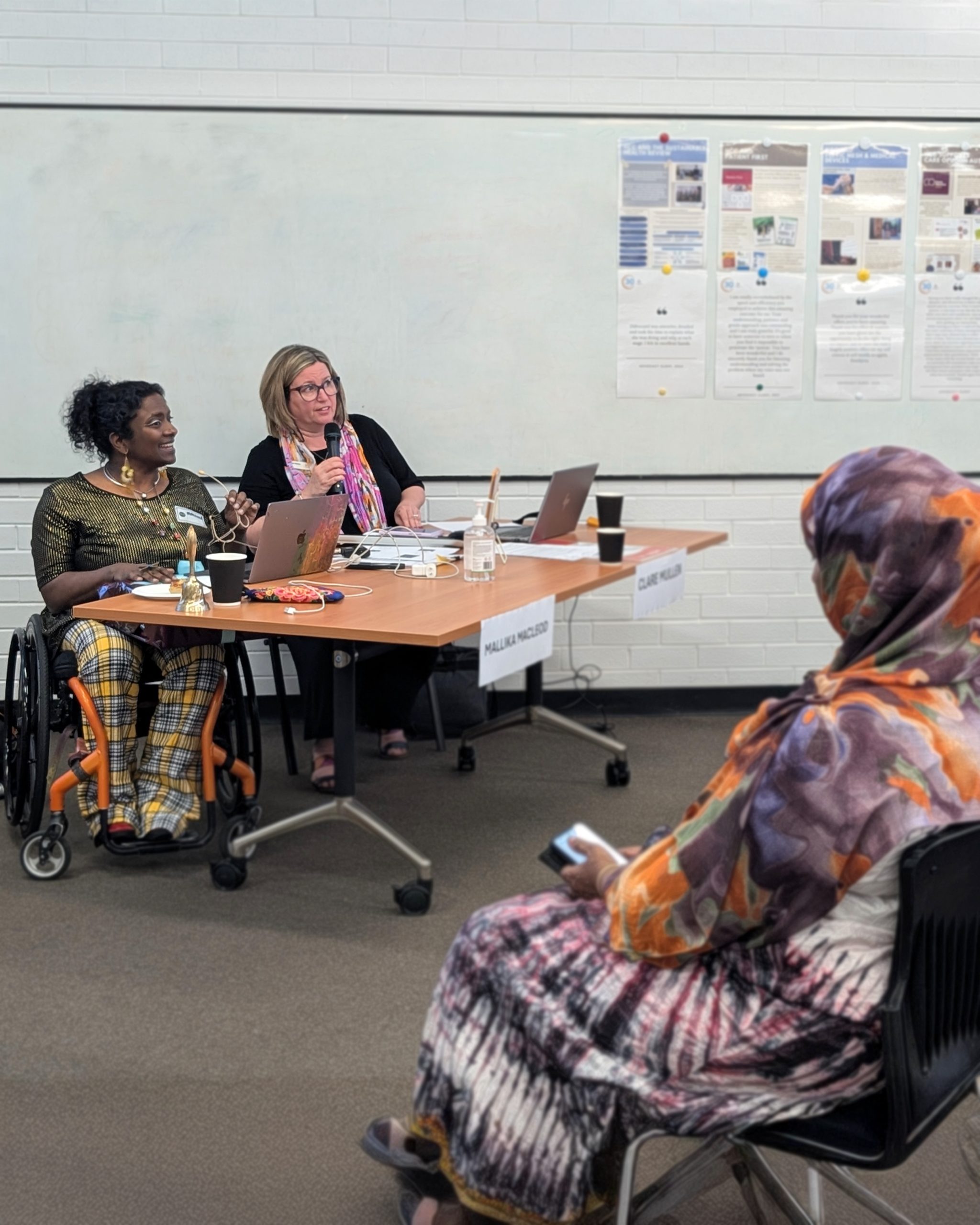
Clare Mullen speaking with HCCWA members

Why the 2025 elections matter for healthcare policy, and how patients and consumers can influence change.

The Impact of the WA State Election 2025 and Federal Election on Healthcare

You might have noticed we’re in the run up to two elections. The WA State election on Saturday 8 March 2025, and the Federal election at some point in the next few months. Not only that, but the Productivity Commission and Cleanbill both published reports this month about healthcare in Australia pointing out what is very clear to anyone trying to access healthcare – there’s a lot of pressure on the hospital system and good luck trying to find a bulk billed GP appointment. And so the airwaves are alive with announcements and soundbites calling for action. And many of these will talk about the need for more hospital beds and hospital infrastructure.

Policy Priorities for Better Healthcare in WA and Australia

Here’s what we’d like to see from a patient and health consumer point of view:

  • increased investment in primary care across the state
    • the Cleanbill report found there are fewer than 40 GP clinics in WA where someone who’s not on a concession card can be bulk-billed – with the cost of living pressures being experienced by many people we know this means people are thinking twice about accessing care
    • the increase in urgent cares is great, but it’s not the same as good primary care
  • urgently increase the investment in preventative health measures
  • a continued focus on improving the efficiency and capacity of the hospital system
    • while retaining a focus on delivering compassionate person-centred care
  • improving access to healthcare in the community
    • one of the reasons for long waits in the Emergency Department is because there are people in hospital who are well enough to leave hospital, but not well enough to return home – we need more access to more community-based options, for example people looking for residential aged care
    • one study into a Compassionate Communities Community Connector model in WA’s South West found that the model led to a 63% reduction in hospital admissions – imagine if we were able to roll this kind of approach out across the state?

You can hear me talking about some of these points with Nadia Mitsopoulis on ABC Perth Mornings this month at this link. The whole item is from 4m45s and our comment is from 16m25s until 20m45s.

Long-term solutions: addressing the root causes of healthcare challenges

Change is not a quick fix

Despite what you’ll read in the coming weeks, there are no quick fixes to the current pressures. WA is not alone in facing these pressures on our healthcare system. And these pressures haven’t come out of nowhere.

The very powerful commercial interests of the food, alcohol and entertainment sectors have created a world over the last five decades where we are increasingly and strongly nudged towards unhealthy behaviours such as eating high levels of ultra-processed foods; spending increased time on electronic devices, including social media; and prioritising paid work over social and community connections.

Add to this the recovery from the turbulence of the COVID pandemic, and healthcare systems around the world are facing similar challenges.

The role of vested interests in shaping healthcare policies

Patient and consumer voices can cut through vested interests

There are many vested interests in the healthcare space. Powerful clinical groups and commercial interests are able to spend significant sums of money putting forward the interests of their members and stakeholders.

And in Australia, we have three levels of government who all have a role in health and healthcare. And unfortunately, getting different parts of government to work well together has never been easy.

Why consumer advocacy is essential for better healthcare policies

Only consumer advocates have the interests of patients, consumers and the community as their sole focus

It has never been more important that there are strong, informed, and connected patient, consumer and community voices in every discussion informing decisions about health and healthcare.

By Clare Mullen, Executive Director

Why we choose to keep our office open on the Australia Day public holiday

Clare and Tania at a the Perth march for a voice to parliment

A simple act of empathy, support, and perspective

Australia Day holds varied meanings for Australians. However, for many Aboriginal and Torres Strait Islander peoples, it symbolises colonisation, loss, and intergenerational trauma. At Health Consumers’ Council (HCC), we believe it is vital to acknowledge this history, understand its impact, and support First Nations peoples not just on January 26 but every day.

Standing in solidarity with Aboriginal communities

As advocates for all healthcare consumers in Western Australia, we recognise the importance of listening to, and amplifying, the voices of Aboriginal peoples. For many, January 26 is a day of mourning and reflection, highlighting ongoing challenges such as significant health disparities.

On the Australia day public holiday (27 January) our office will be open

At HCC, choosing to give staff the opportunity to work on the Australia Day public holiday is an act of solidarity. This is something we have done for a couple of years now and it has been welcomed by staff. We believe there is much to celebrate about Australia, but we recognise the colonial history of the current date, and so don’t see it as a day for celebration. Our team members have the option to work on this day and take another day off instead, or to take the day off if that’s their preference.

Encouraging dialogue, empathy, and micro-activism

By sharing our decision to work on Australia Day we hope to spark reflection and conversation within organisations and communities. By reconsidering the significance of January 26, we aim to promote inclusion, equity, and a deeper understanding of its impact on Aboriginal and Torres Strait Islander peoples.

This is one of the steps we take to acknowledge the truth of our nation’s history and to play our part in fostering a more inclusive future.

This reflects our broader commitment to addressing health inequities and standing with Aboriginal communities as they continue their work to address the harm of colonisation that is still experienced by many people today.

We also work throughout the year to address health inequities experienced by other groups and you can find out more about that work on our website.

Acknowledging some key dates in Australia’s history

  • 65,000+ years ago: First peoples from Southeast Asia arrived in Australia, forming the world’s oldest continuous civilization.
  • 1606: Dutch explorers became the first Europeans to land in Australia.
  • 1788: Captain Arthur Phillip raised the British flag at what he named as Sydney Cove on January 26.
  • 1818: NSW celebrated January 26 as a public holiday to mark the 30th anniversary of the Sydney Cove landing.
  • 1901: The six colonies united to form the Commonwealth of Australia.
  • 1938: Aboriginal protests on January 26 highlighted the trauma of colonisation, calling it “A Day of Mourning.”
  • 1988: Protests during the Bicentenary included 40,000 people marching for land rights and against dispossession.
  • 1994: January 26 was officially declared a public holiday across all states and territories.

Consider joining us for our workshop Acknowledging Country.

Acknowledging Country

An Acknowledgement of Country is an important start to most meetings and professional gatherings and is an opportunity to express your and your organisations respect for Aboriginal people, Country and Culture.

This workshop is designed to help you start to think about what an Acknowledgement of Country means, the difference between and Acknowledgement and a Welcome to Country, when you should be doing an Acknowledgement and how to personalise and make your own Acknowledgement meaningful and respectful.

You will leave the workshop with some tangible tools to develop your Acknowledgement, have the opportunity to ask questions, to develop your own personalised Acknowledgement and some tips for delivering it with confidence and respect.

All profits from these workshops go directly to supporting Aboriginal health consumers in WA in various ways including but not limited to, funding training opportunities for Aboriginal health consumers and occasionally Aboriginal workers, funding Aboriginal consumer payments to ensure Aboriginal perspectives are heard where they may not be. Please contact Tania to discuss this further.

See more workshops we offer below, or register for our next Acknowledging Country workshop now.


Addressing inequities in WA Healthcare: building a fairer system for all

Clare Mullen speaks about the Healthcare Consumers' Council

Addressing inequities in WA Healthcare: building a fairer system for all

Adjusting the picture

The issue of public hospital TV fees in WA has sparked widespread debate, with discussions featured on ABC, 6PR, and SkyNews. On Wednesday, I was invited on to 6PR’s Perth Live with Oliver Peterson to share the Health Consumers’ Council of WA’s (HCCWA) perspective on healthcare equity in Western Australia, and the cost of watching free-to-air TV in public hospitals around WA.

The strong public response to the issue of free TV services reveals that many West Australians believe that everyone should be able to access basic amenities, such as free-to-air TV, in public hospitals. HCCWA works to amplify the voices of people who use healthcare providers in WA, or those caring for someone else who does. And let’s face it, that’s pretty much all Western Australians.

Changing the channel – it’s more than a call for free TV in our hospitals

Healthcare equity is a complex issue, and community feedback reflects a range of perspectives. Patients can pay up to $14 per day or $54 weekly for access to basic television services which are outsourced by hospitals to external providers. These costs can disproportionately affect long-term patients especially elderly people, and people on low-incomes.

Some argue against taxpayer funding of ‘patient entertainment’, while others share heartbreaking stories of loved ones unable to afford basic comforts during their recovery. As I shared with the ABC earlier this week:

Being in hospital can be overwhelming. Patients face the stress of medical procedures, waiting for results, and being away from home—all while feeling unwell. Mental health is critical to physical recovery, and free access to TV provides a soothing escape. In a state as wealthy as WA, we can surely find ways to ensure everyone can enjoy small comforts like summer sport while they heal.”

At HCCWA, we believe everyone should have the same access to the seemingly small things which can have a big impact on someone’s wellbeing.

Turning up the volume on fairness

This debate highlights deeper systemic challenges in our healthcare system. When basic amenities like television become a financial burden for those already struggling, and other out-of-pocket healthcare costs, it raises important questions about equity in healthcare. As financial pressures on West Australians increase, should a person’s ability to have a good experience in hospital depend on their bank balance? We don’t think so. So we’re adding this to the list of things we’re looking at to see what can be done about it.

Broader advocacy for healthcare equity

While TV access for people on low incomes might seem like an insignificant issue, it’s just one aspect of healthcare equity and access to healthcare in Western Australia. As we approach both state and federal elections, we’ll be putting forward a patient and health consumer lens on critical issues like access to bulk billing GPs, mental health treatment affordability, affordability of ambulance services, and community-based care options. We’ll also be commenting on maternity care, women’s health, suicide prevention, and the health impacts of racism on First Nations peoples and other communities and other health disparities in Western Australia.

A great health system – for all

We know many West Aussies have a great experience in WA health services. We’re here to speak up for the people who don’t and advocate for health policy reforms. We’ll continue to advocate for fair access for all by amplifying people’s experiences where they are struggling with our healthcare system. Whether we’re talking about keeping your mind occupied in hospital or broader systemic issues, our commitment remains the same: championing fairness, equity, safety, and empowered consumers in healthcare.

Join the conversation

We’re about building a healthcare system that treats everyone with dignity, regardless of their financial situation. We believe that no one should face additional barriers to access, comfort and wellbeing simply because they’re doing it tough financially.

Join us in our community-led mission to shape our healthcare system so that it meets the needs of all Western Australians. Sign up for our newsletter, follow us on Facebook, Instagram or LinkedIn or check out the resources on our website. Together, we can create a healthcare system that’s fair for all.


You are your loved one’s best advocate – and Health Consumers’ Council is here as back up

“I don’t know where to turn and who to ask for help…”

This is a quote from the Seven News article about the awful experiences that Marianne Molloy had in a Perth hospital recently. Everyone at Health Consumers’ Council was horrified seeing these images and hearing about Ms Molloy’s and her family’s experiences.

While many people have very positive experiences in WA hospitals (as you can see by many of the stories on the Care Opinion website), unfortunately we know that things can go wrong in healthcare – despite all the guardrails that are in place to protect people.

We were asked to provide a comment for a TV news item – to help people understand what can families do if they feel like their concerns about loved ones in hospital are falling on deaf ears.

A very short snippet of what we said was able to be shown on the 6pm news this week (you can view what was broadcast at this link starting at roughly 3m15s into the piece) but here’s what else we said:

If you’re concerned about your loved one in hospital and you’re there in the hospital:

  • know that you have a right to speak up, so do
  • and if you don’t feel heard, ask to speak to a senior staff member
  • And if you’re still not getting anywhere but your loved one is getting sicker, call Aishwarya’s Care Call – it’s number in each hospital that you can call to speak directly to a senior clinician.

In short, be polite, but don’t take no for an answer

But unfortunately, as this story shows, and as we know from supporting thousands of people with their concerns over the last 30 years, speaking up yourself doesn’t always work. In which case:

If that doesn’t work, or if you’re not there in the hospital, call Health Consumers’ Council on 08 9221 3422

The ‘phone is staffed during office hours – currently we’re not funded to be available around the clock but if you leave a message we will get back to you as soon as we can.

We will listen to your experience and provide advice on your rights. If you want, we can help you raise your concerns with the hospital in the moment – that can include us calling the hospital on your behalf or helping you plan what you’d like to say and how you’d like to say it.

After the event – we can help you provide feedback to the health service so improvements can be made in future

We know many people don’t like to complain, but it’s important to bring these issues to the attention of hospital managers, because they really do care. And all feedback to health services is recorded and reviewed – including complaints and compliments. Another way to provide feedback is by sharing your story anonymously on the Care Opinion website – this means others will see your story, as well as the response from the hospital.

You are your loved one’s best advocate. If you’re concerned, speak up. If you need back up, call Health Consumers’ Council

By Clare Mullen, Executive Director

Through the Decades – 2000s

In the last 30 years, HCC has championed and supported thousands of people to assert their rights, have their say, and influence health service delivery. As we continue to celebrate our 30th anniversary this year, we’re reflecting on some of the key achievements in this space.

Here are some of the health consumer and health advocate highlights of the 2000s:

  • HCC co-sponsors a Clinical Senate Debate on ‘WA Health Consumer and Community Engagement Framework: For Health Services, Hospitals and WA Health’. HCC has a permanent position on the Clinical Senate Executive Committee.
  • HCC participates in the International Alliance of Patient Organizations Conference in Barcelona.
  • HCC participated in the first Australasian Patients for Patient Safety Workshop. This resulted in the publication of the Perth Declaration for Patient Safety.
  • The Patient First booklet and other resources are developed in consultation with consumers and distributed to hospitals across the state.
  • HCC develops a lobbying kit to involve all our members in reforming the 1894 Medical Act, and later rallied at Parliament House for Medical Act Reform.
  • HCC is funded to establish consumer based groups in rural WA. The Esperance Health Issues Group was formed, providing feedback on a range of health services in the Shire. The Quality Rural Project and establish a sustainable consumer aims to develop and establish a sustainable consumer participation plan in at least four rural and remote centres in WA. The initial target areas as Bunbury, Geraldton, Exmouth, Port Hedland and Albany.
  • The Aboriginal Consumer Participation & Complaints Review Project began in 2007, then became the Aboriginal Advocacy Program. Funding for this program ended in 2016.

Download the PDF version of the timeline image here.

Sepsis Awareness Day 2024 – Our Story

By Tania Harris – Mum, and Health Consumers’ Council Engagement Manager


Sepsis is a life-threatening condition that happens when the body’s response to an infection damages its own tissues and organs. Sepsis is preventable, but when it does happen it is a serious medical emergency that without rapid treatment can result in disability or death.

Any infection can lead to Sepsis, and anyone can get it. There is an increased risk for very young children, elderly people and people with chronic illness.

In Australia, over 55 thousand people are diagnosed with Sepsis every year, and more than 8,700 people will lose their lives to this condition.

I had been working at Health Consumers’ Council for a year when my daughter contracted Sepsis after a surgery, and since then I have been passionate about raising the awareness of this condition, in the hope that more awareness in community will mean less people losing their lives to Sepsis.

Tuesday 28th February 2017, I didn’t know anything about Sepsis, other than it was a “thing”, an over enthusiastic infection. By mid-morning Wednesday 1st March 2017 I had a horrible realisation that it might take her from us.

Lisa has Cerebral Palsy, hospitals and hospital wards were nothing new for us – she had been in and out for her whole life. Many surgeries and stays, and when she was 16 Lisa had had a feeding PEG inserted at an adult tertiary hospital in Perth. This was her (our) first experience in an adult hospital. On reading my Facebook posts on the procedure, it all went well, and I was very happy with the service we got at the hospital.  My post on the 21st February 2017 to a Facebook group of parents and people with disability says:

“So, our Lisa is in RPH [Royal Perth Hospital] getting a PEG in. First time adult hospital and only second time in a place other than PMH [Princess Margaret Hospital for Children]. Gotta say, I am impressed. They are taking really good care of her and sorted the few issues there was around me staying, really quickly. Not once has a nurse not talked to Lisa first, they are listening and investigating when I am saying she seems off, the assumption seems to be that Lisa understands and I have a clue.”

A week later I got a phone call from the nurse at Lisa’s school asking permission to give her some Panadol, she was a bit warm and unsettled. By the time I got home around 5pm she still had a temp and had started vomiting. I did what I usually would do when she was unwell, Panadol and a shower. She was very quiet, and the shower didn’t seem to make her feel any better. So, I did what so many of us do, I reached out to other mums and to nursing friends. I called the hospital where the PEG was inserted. We went through symptoms, we talked about the PEG, it looked good. But I still had this feeling it was the PEG – it didn’t make sense it was anything else.

In my experience, for people and parents of people with disability and chronic health concerns, seeking medical intervention isn’t done lightly. So, when it happens, it’s serious. I called a dial a doctor, who thankfully was on his way past to somewhere else and dropped in. Lisa’s temp was then at 39 and she was looking unwell. He called an ambulance and by the time it arrived her temp had gone up to 41 and she looked worse. Lisa doesn’t use spoken language, but she is generally not a quiet girl, but she was so quiet that night.

At some point during that night, it became clear Lisa was very unwell, but I never heard the word “Sepsis”. The PEG wasn’t identified as an issue. My sister-in-law, at the time an ED nurse in a regional hospital, asked me what certain readings were and if certain tests had been ordered, and suggested I get my husband to come in. All signs were pointing to Sepsis, but I didn’t know any of them.

It turns out the PEG was the culprit, when the doctor inserted the PEG they went through part of the colon which was in an unexpected place because Lisa is in a wheelchair and her organs aren’t always in the same place as they might be for other people. A slow leak from her colon over a week had led to Sepsis.

Lisa spent almost a year in and out of hospital with recurrent infections, feeding tube issues, general unwellness. She has a massive scar on her chest and abdomen as a result of the required bowel resection and she still hates going to RPH 7 years later, but she – and we, are one of the lucky ones.

We were able to get medical attention for Lisa fast – from the dial a doctor, to the ambulance to the ED. Most importantly, all of those medical professionals listened to me and took my concerns seriously. It isn’t hard to imagine what would have happened if they hadn’t.

On Friday 13th September 2024 (World Sepsis Day), Child and Adolescent Health Service and the Department of Health WA is hosting the inaugural WA Sepsis Grand Round. This event will highlight pediatric, adult and maternal Sepsis.

This free event is being held at Perth Children’s Hospital and online, and an event highlight is the Clinician Panel, chaired by consumers and asking questions about Sepsis that matter to patients. I am very proud to be co-chairing with Leana and Tim.

The event runs from 9:30am – 3:30pm and is being hosted from the PCH Auditorium.

WA Sepsis Grand Round Tickets, Fri, Sep 13, 2024 at 9:30 AM | Eventbrite

You can book your place at the Eventbrite link, and attend either online or in person.

Crafting a Meaningful Acknowledgment of Country

By Tania Harris, Engagement Manager, Aboriginal and Disability Engagement Lead

The Art of Respectful Recognition

An Acknowledgement of Country is a gesture of deep respect that reflects the oldest continuous culture in the world. When crafted thoughtfully, it becomes a profound statement of recognition and respect for Aboriginal and Torres Strait Islander peoples’ connection to their land.

  • It is essential to acknowledge the Traditional Owners of the land and to pay respect to their Elders past and present.
  • While short, a meaningful Acknowledgment of Country can be powerful, reminding us of the rich cultural heritage that predates modern Australia.

Guidelines for an Authentic Acknowledgement

Crafting an Acknowledgement of Country that is both respectful and personalised will allow for a moment of reflection and connection.

Start with the basic acknowledgment of the Traditional Owners and Elders. Build upon this foundation to include recognition of the significance of the land and the ongoing cultural connection.

Creativity in Acknowledging Country

Acknowledgements can be delivered creatively while still maintaining the essence of respect and recognition. Whether recorded as a video or expressed through an art project, these gestures can be personalised and shared in various settings.

  • At home, record or share a photo or video expressing your Acknowledgment, perhaps with family or friends.
  • In the workplace, create video messages or photo displays that represent your organisation’s commitment to respecting Country.

The Pitfalls of Tokenism

A meaningful Acknowledgement of Country should be more than a checkbox exercise. It should not feel tokenistic, nor should it be used to overshadow the essential work of self-reflection, truth-telling, anti-racism, genuine partnership, and inclusion.

  • Ensure that the acknowledgment is given the time and space it deserves, rather than being rushed through.
  • Reflect on the deeper meaning behind the words and allow for a moment of consideration for the audience and yourself.

Beyond the Basics: Personalising Your Acknowledgement

There are many ways to craft an Acknowledgement of Country but personalising it to your context can make it more impactful.

Consider beginning with the traditional Acknowledgment and adding a personal reflection or commitment related to reconciliation and respect.

Tailor the language to suit your audience, whether they are healthcare professionals, community members, or corporate stakeholders.

Acknowledgment as a Commitment

An Acknowledgment of Country is a clear expression of your commitment to recognising the importance of Aboriginal and Torres Strait Islander cultures. It’s a commitment that should be carried out with deliberation and sincerity.

Embrace Cultural Protocols: Acknowledging Country Workshops

Every day we live, work, and dream on Aboriginal and Torres Strait Islander lands. Take a moment to acknowledge this connection by crafting a meaningful Acknowledgement of Country. Join one of our Acknowledging Country workshops to deepen your understanding and respect for these cultural protocols.

Think about how you can incorporate a thoughtful and respectful Acknowledgment of Country into your daily practices and events. Reflect on the cultural significance of the lands you inhabit and take the next step to honour this heritage by attending a workshop that will enrich your acknowledgment practices.

Through the Decades: 1990s

In the last 30 years, HCC has championed and supported thousands of people to assert their rights, have their say, and influence health service delivery. As we continue to celebrate our 30th anniversary this year, we’re reflecting on some of the key achievements in this space.

Here are some of the health consumer and health advocate highlights of the 1990s:

  • HCC launched on World Health Day (7 April) 1994 as the independent “voice” on health policy, planning and decision making.
  • HCC campaigned strongly for the passing of the Health Services (Conciliation and Review) Bill 1994. This included circulating a lobbying kit to all HCC members encouraging them to make contact with and discuss the Bill with their local Member of Parliament. The Bill sought to establish an independent Health Complaints `Unit – which HCC was a strong supporter of. The Bill was passed in 1995 and This included the establishment of the Office of Health Review – which later became the Health and Disability Services Complaints Office as it’s known today.
  • Community Advisory Councils are established in the Perth metropolitan area to encourage consumer participation and improve the customer service/patient focus of the hospital/health service.
  • Prompted by the HCC Executive Director Michele Kosky, Professor D’Arcy Holman appoints the first consumer rep to UWA data linkage project.
  • With a $50k grant from DoHWA, HCC organised the first WA complaints conference. The “For Crying Out Loud” conference took place in August 1999 and was attended by about 200 people.
  • HCC and the Cystic Fibrosis Association establish the Chronic Illness Alliance “to identify critical issues impacting on the lives of people with chronic illness and to work together to respond to chronic illness issues”.

Download the PDF version of the timeline image here.

An exciting opportunity to join the HCC Board – seeking Expressions of Interest for two Management Committee (Board) vacancies


We are now seeking Expressions of Interest for two Management Committee (Board) vacancies.

Health Consumers’ Council was launched by the Minister for Health in 1994 as an independent voice for the community on health policy, planning and decision making and to provide a recognised presence for health consumers. Since then, we have championed and supported thousands of people to assert their rights and have their say on health.

In 2024, our 30th anniversary year, we are renewing our commitment to ensuring a strong presence for consumers and community members in all decisions relating to the health of Western Australians. To do this, we will need to increase the resources available to us so that we can build more capacity in the community and extend our support to more people across WA.

We are a member-led organisation governed by a Management Committee (also known as a Board). Our members share our goals and support our purpose of:

  • amplifying and championing the voices of WA health consumers
  • to drive positive outcomes in health and healthcare
  • and achieve equitable, person-centred, quality healthcare and improved health outcomes and experiences for everyone in Western Australia.

HCC is a registered charity with responsibilities to the Australian Charities and Not-for-profits Commission as well as under the WA Associations Incorporation Act 2015. As such, Management Committee members play an important role in ensuring we meet these responsibilities and comply with all governance requirements. Management Committee members are also responsible for the overall strategy of HCC.

This year we have two Management Committee vacancies. These are voluntary positions – with any expenses reimbursed – and require attendance at bi-monthly meetings (usually online), along with representation on one sub-committee (usually monthly meetings).

We are interested to hear from people who bring any of the following perspectives or experience:

  • Aboriginal people
  • People with disability
  • People from the LGBTIQA+ community
  • People aged 18-24
  • People with lived experience and/or networks and connections to people managing health and other related challenges
  • People with experience of managing or working in a growth-stage organisation
  • People with connections in philanthropy and/or community foundation networks
  • People with connections/involvement in health/medical or other human research
  • People with regional experience and/or connections
  • People with skills and experience in social enterprise/fee for service work
  • People with experience in IT strategy planning and development in the non-profit sector
  • Previous NFP Board experience highly desirable but not essential

To be eligible to be a Management Committee member, you need to be a HCC member already, or be willing to become a member (free for individuals).

Want to know more?

On 29 August HCC will be hosting an online information session for people interested to learn more about the role of Management Committee members. In session you’ll have the chance to meet with three current members of the Management Committee, hear more about the role and HCC’s strategy, and find out why nominating to join the HCC Management Committee might be the right option for you.

Register to attend the information session

Submit your EOI by 23 September

Please prepare a brief cover letter outlining your answers to the following questions:

  • Why would you like to become a member of the HCC Management Committee?
  • How will your skills and experience add to the effectiveness of both the HCC Management Committee and HCC?
  • What has been your experience as a health consumer or a health consumer representative?
  • What do you see as being the key strategic issues facing HCC over the next five years?

Submit your letter, along with a current CV, to:

Rebecca Smith, Head of Strategic Projects via Rebecca.smith@hconc.org.au

What happens next?

Shortlisting by the Nominations and Governance Committee will take place on 1 October. We may invite potential nominees to meet with Board members and the final list of nominees will be approved by the Management Committee by the end of October. If there are more than two nominees, a vote by members will occur at the Annual General Meeting in early December.

Digital Health Series – Interoperability

At the time of this post, WA Health has been funded for the next three years to write the specifications and choose a vendor to develop an Electronic Medical Record, or EMR. This will be a statewide EMR for WA Health’s public hospitals and health services. From January to June 2024 HCC has been working with our EMR Consumer Reference Group to up-skill ourselves on all things digital, so we are able to provide the consumer voice into this part of the process. In March 2024 we convened a webinar entitled Can the EMR stitch up our health system? This blog has links to the replay, transcripts and summary and provides insights into what consumers need to think about. Consumer involvement in WA’s EMR is being funded by WA Health to ensure a strong consumer voice. WA has been leading the nation in the level of consumer involvement in this important initiative.

This blog series has been written by Pip Brennan who is working for HCC on the project, co-located in the Health Department.

Interoperability is just a fancy word for your health information following you, from GP to hospital, allied provider to pharmacist to specialist and back again. In 2021, HCC co-designed an Electronic Medical Record Consumer Charter which has this to say about interoperability:

  • Accuracy: My health records are complete, accurate and up to date.
  • Equitable care: My health records are available to my treating clinicians regardless of where I am being treated.
  • Transparency, Choice and Control:  I have access to my real-time health information at no cost to me or my family.

I’m just pausing for a moment to remind people of the difference between an Electronic Medical Record and My Health Record. The dot points from the Charter above refer to WA’s future Electronic Medical Record. The Electronic Medical Record and My Health Record are different as per the image below. An Electronic Medical Record is based within a hospital or health service. My Health Record contains federally based information such as GP care and immunisation records. We want the two to talk to each other. That is interoperability.

Image highlighting the difference between My Health Record (federal, GP and scripts etc) and Electronic Medical Record (state-based, everything that happens within the hospital walls

Australia is doing a significant amount of work on interoperability at a national level. We now have a National Healthcare Interoperability Plan, and this potentially offers WA an opportunity to have a more joined-up EMR than other states and territories who developed their EMRs prior to this policy coming into being.

There’s a change in the air that as if to say everyone recognises that we have an opportunity, probably a once in not just a single generation, but multi generation opportunity to fundamentally transform the way our health system works

Harry Iles Mann

Webinar – Can an EMR stitch up our health system?

Because of all the work happening nationally, we invited National Consumer Leader and Digital Health Expert Harry Iles Mann to talk with WA’s Chief Clinical Information Officer Dr Peter Sprivulis about WA’s Electronic Medical Record and how that could connect up our health care.

You can read the whole transcript, or highlights here, or watch the whole replay here.

Key messages about interoperability:

  • It’s all about culture. The technology is the easy bit. It’s the culture that is the difficult aspect to digital health transformation.
  • Get workflows right. Ensure that the words mean the same on each side of the transaction – that GPs and hospital staff mean the same thing. e.g. allergies.
  • Legal and regulatory levels. There is potential for the My Health Record Act to be broadened to become My Health Information Act. This will provide a safety for health consumers, and puts very clear obligations on health services to share data appropriately. This is a long term reform.
  • Financial and cultural piece – we need to deal with perverse incentives to make the right thing the easy thing for clinicians. For example, currently if a GP speaks to a specialist about a patient, neither is compensated, even though this could expedite care for a patient and avoid unnecessary, inconvenient, costly consultations. There needs to be a joined-up conversation with private, public, state and federal health to sort this out.
  • My Health Record is still key – There is ongoing investment in the My Health Record as a platform to facilitate interoperability and consumer access to their information. Yes, My Health Record has its issues – but a key reason for the ongoing investment is that regardless of what states and territories or different vendors do in developing EMRs, there will be something that is sitting within the custodianship of government that is a point of access for you and your health information.
  • We’ve made a start – WA has digitised parts of the Electronic Medical Records in WA’s hospitals, but this will see us take a bit leap forward. An EMR is all about the bedside workflows – this is where all the risk sits.
  • Patient portals can really assist with ensuring you have access to your EMR health information and can participate more actively in your own care.
  • The OpenNotes approach might be possible through WA’s EMR Project. (Google it. It’s very exciting!) This is quite aspirational though and may not be on the table, depending which vendor is chosen. OpenNotes will help clinicians think carefully about what they write about people, and will support the accuracy of information.

Importance of EMR Consumer Involvement

There are three levels of consumer input into training clinicians, and driving culture change:

1. Telling stories about what’s working, and what isn’t – this is effective with policy makers. Consumer stories are much more effective than clinicians providing feedback about what isn’t working for them as clinicians. Consumer stories can drive digital investment.

2. Co-designing solutions – so that the workflows centre around the patient, not the clinician. Information isn’t captured and shared for free. It always takes time and resources to share data.

3. Change management initiatives need consumers present, to make sure the tools are used in the way that helps consumers. Harry’s example of the test results not being available in the ED – it’s likely there is a portal that would allow the clinician access, but they don’t know how to use it. Consumers need to provide motivation for busy clinical staff to learn how to use the packages effectively.

Being a Digital Health Consumer/ Carer Rep:

  • You know more about digital health than you think you know.
  • You don’t need to understand every last technical detail – it’s important to ask naïve questions. This can prompt important critical thinking in digital health project.
  • There are no stupid questions – sharing your experience is more valuable than learning “geek language”  “Insist on answers in plain English. If the geeks can’t explain to you what they’re trying to do in plain English, then then you’ve probably got a program that’s not really set up for success anyway.”
  • We need to think of ourselves as allies with clinicians for change, working collaboratively together. “we’re not two different actors, trying to find common ground from across the chasm, we’re actually allies working towards a common goal.”

Feeling the need to geek out? All the federal initiatives for you to google are listed below:

There’s a change in the air that as if to say everyone recognises that we have an opportunity, probably a once in not just a single generation, but multi generation opportunity to fundamentally transform the way our health system works

Harry Iles Mann

Want to stay in touch with the project? Just fill in The EMR Consumer Network form or email p.brennan@hconc.org.au