
Category: Blog

Exploring healthcare across WA – East Kimberley


By Clare Mullen, Executive Director 

As I write this in Perth we are deep in the Noongar season of Makuru which is the coldest and wettest time of the year in the south west of WA. It’s hard to believe that only a week ago I was waking to warmth and sun as I spent a few days in and around Kununurra on the land of the Mirriwoong and Gajerrong people in the East Kimberley. It was my first visit to the region, but it won’t be my last!

I was there because I’ve set myself a goal of visiting more of this beautiful state because through this job I’m often in the situation where I’m representing the whole of the WA community. Early in my time in WA, I had the opportunity to travel to Meekatharra, Wiluna, and Geraldton to learn about people’s experiences of accessing maternity care. This was my first exposure to the WA country and what I saw and learned then has stayed with me since. I’m keen to deepen my understanding of the reality of people’s experiences accessing healthcare and achieving their health goals across this vast landmass.

HCC doesn’t yet have a budget for these kind of exploratory trips, and so I’m incorporating a few work-related meetings into my holiday. (I’m a big fan of community events like Agricultural Shows so if you know of any community activities that are happening that I could coincide a trip with in your region, please let me know!)

I’ve returned from the East Kimberley re-energised to continue to champion and amplify the voices of consumers and community members living in that region, as well as with a new appreciation of the reality of delivering healthcare in that regional setting.
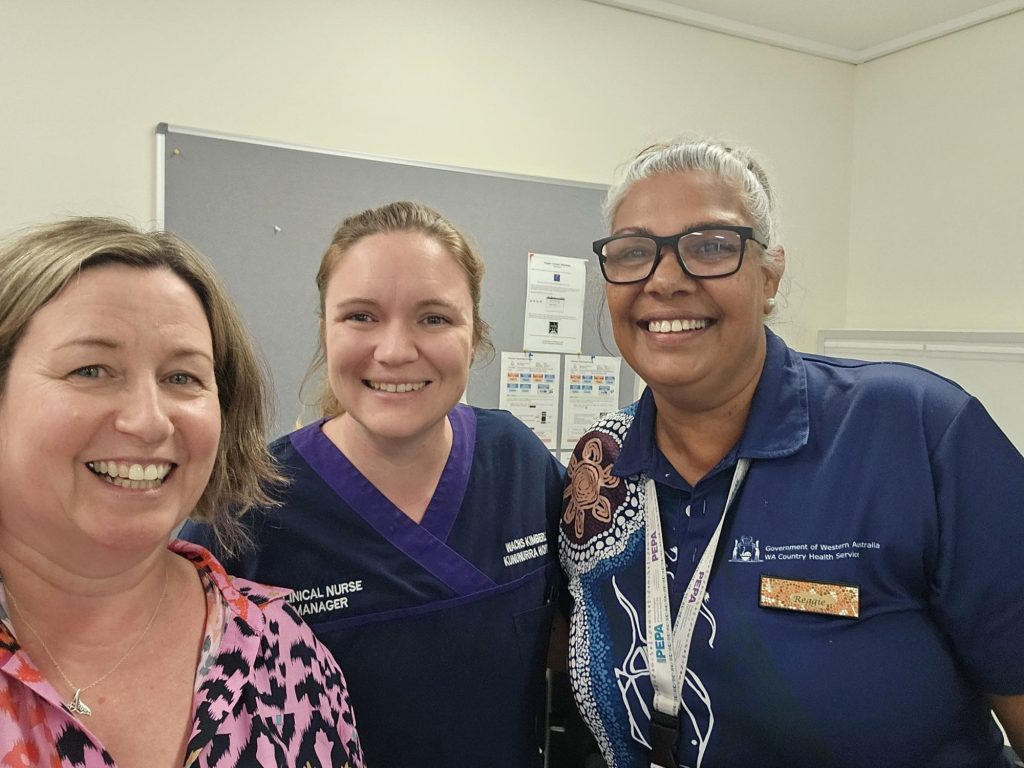
Clare, Rose and Reggie at the Kununurra Hospital

When I was there I met with Maxine, the Chair of the District Health Advisory Council (DHACs are the consumer committees in the WA Country Health Service) and I learned a bit about some of the local health issues. Maxine also volunteers at the Wyndham Museum, so I took the opportunity to visit and drove there from Kununurra – a 2 hour round trip which many people in Wyndham need to do if they need inpatient care, which is accessed at Kununurra Hospital. I learned a bit about the reality of accessing healthcare in a community with a relatively small population – there are just under 1,000 residents in Wyndham – and the practical challenges faced by people who may be trying to access healthcare 100km away from home with no public transport. And that’s not even talking about when people have to travel to the metro area for specialist care!

Still in Wyndham, I met with James Gibson, CEO of the Ngnowar Aerwah Aboriginal Corporation. As well as convincing me that I need to visit the region in the wet season to really appreciate its beauty, James outlined the experiences of Aboriginal people in Wyndham and the surrounding areas when trying to access culturally safe healthcare. We also discussed the broader issue of culturally safe care across all health services, including the importance of individual advocacy. Ngnowar Aerwah already do a lot of advocacy for the people who use their services, and HCC is keen to extend the availability of our Individual Advocacy to more parts of the state, so there may be opportunities for us to work together.

Back in Kununurra, I met with Maria and Kylie at the Majarlin Kimberley Centre for Remote Health, Mary at the Ord Valley Aboriginal Health Service, and Dale, Jo and the team at WA Country Health Service – East Kimberley.
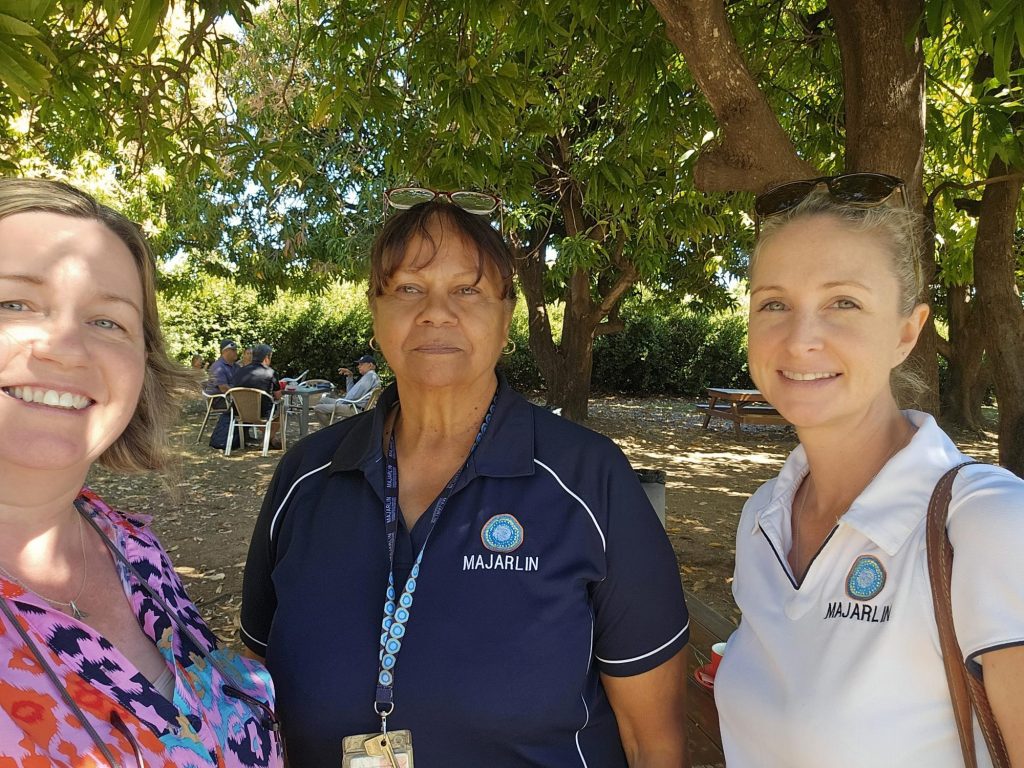
Clare, Maria and Kylie

From these discussions I’ve come away with a better sense of some of the local health issues, including:

  • The fierce passion and commitment that everyone working in the region has to delivering great care for the people of the East Kimberley
  • The practical challenges of navigating the Patient Assisted Travel Scheme (PATS) and how the logistics of travelling to the metro area can impact negatively on people’s experience of healthcare
  • The challenges of providing palliative care across a huge geographical area with a small population
  • The pressures on volunteers and community leaders in a small community where multiple demands can make it difficult for people to be involved in every opportunity that comes up
  • The importance of ensuring a variety of mechanisms for gathering and responding to consumer feedback that enable people who may not respond to “standard” approaches to still have a say in health.

I had timed my trip to coincide with the Kununurra Agricultural Show and on the flight up to Kununurra I had the good fortune to be seated next to Owen from Regional Men’s Health. He was heading to Kununurra as they had a stand at the show, something they do regularly in the East Kimberley and elsewhere.

In amongst these work meetings I also had plenty of down time – including swimming in the vast waters of Lake Argyle, taking in the awesome (in the true meaning of the word) landscapes, and just sitting in the peace of Mirima National Park, surrounded by the spectacular rock formations while listening to the birds.

I feel very privileged to live and work in WA and I’m looking forward to exploring more of it.
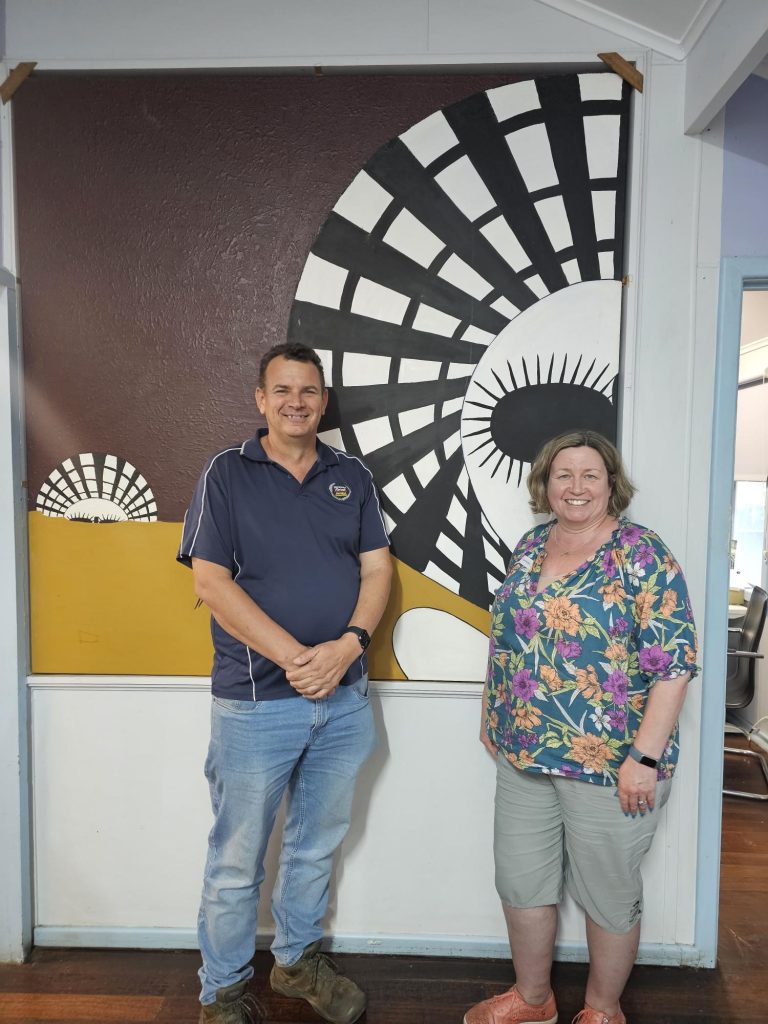
Clare and James Gibson
 

Acknowledging Country: Where Workshop Proceeds Go


By Tania Harris, Engagement Manager, Aboriginal and Disability Engagement Lead

A Gesture That Gives Back

When professionals and organisations take part in Health Consumers’ Council’s Acknowledging Country workshops, they’re not just learning to honour the traditional custodians of the land. They’re also contributing to a bigger cause that supports Aboriginal health consumers in Western Australia.

  • Proceeds from these workshops are quarantined and used solely for supporting Aboriginal health consumer initiatives.
  • The funds go towards training scholarships for Aboriginal consumer representatives, covering participation payments, and establishing an Aboriginal Consumer and Community Advisory Committee for Health Consumers’ Council.

Empowering Through Education

The Acknowledging Country workshops are intentionally kept to small numbers to allow for an immersive and personalised experience. This approach ensures that participants can practice delivering an Acknowledgement of Country, receive immediate feedback, and have something meaningful they can use right away.

  • Beyond the workshop, participants are provided with resources for a continuous learning journey.
  • HCC is committed to using the proceeds to further the cause of Aboriginal health consumers, fostering a cycle of empowerment and respect.

An Ongoing Commitment to Aboriginal Health

By attending the workshops, you’re making a tangible contribution to the health and wellbeing of Aboriginal people and communities.

  • The funds contribute to initiatives where Aboriginal perspectives are needed but may not be otherwise funded.
  • By investing in the continuous learning of Aboriginal consumer representatives, we’re ensuring their crucial voices are heard in healthcare decisions.

A Workshop That Makes a Difference

The Acknowledging Country workshops go beyond cultural training; they’re an investment in the future of Aboriginal health and a step towards closing the gap in health outcomes between Indigenous and non-Indigenous Australians.

Make an Impact

Booking an Acknowledging Country workshop is not just a step towards reconciliation, but also a constructive way to give back to the communities we serve.

Book now for one of our available dates, or make an enquiry about a group booking for your organisation, and make a commitment to both your personal growth and the health equity of Aboriginal communities.

Learning from the past, looking to the future – will you join us?

By Clare Mullen, Executive Director

One of the first tasks I was given by our Management Committee when I took on the role of Executive Director just over 12 months ago was to refresh HCC’s strategy. I was also keen to learn from HCC’s proud history as an independent voice for the community since we were established in 1994 as we prepared to mark our anniversary in April 2024.

It was great that these two tasks aligned as I was able to be thinking about our future, while learning about our achievements in the past. We met with and gathered feedback from members, consumer leaders and representatives, health leaders and decision makers across WA health services, fellow advocacy organisations and HCC’s founders and elders.

Some things we heard and learned:

  • Health Consumers’ Council “emerged” from within the WA Department of Health and an earlier iteration – the Health Consumer Network – was chaired by Janet Holmes A Court. Consumer leaders and forward thinking public servants at the time recognised the need for the consumer voice to be independent of government and the public service – and so Health Consumers’ Council was born as an independent not-for-profit organisation
  • Many of the ideas that the team and I kick around today have already been tested in the past
  • WA is a leader both nationally and internationally by having the state peak health consumer body provide individual advocacy service that is free at the point of delivery for the WA community – something that’s not available in any other state or territory and…
    • …there’s much more need for this service that is currently available
  • HCC has a solid reputation with health leaders and decision makers and…
    • …many of our members and people in the health consumer community would like to see us have a more visible presence in the community and be careful to guard our independence
  • There is a pressing need to continue growing the number, capacity and connectedness of WA consumers who are confident, capable and willing to fulfil a range of consumer representative and advocacy roles at a time of significant reforms in health and social care and…
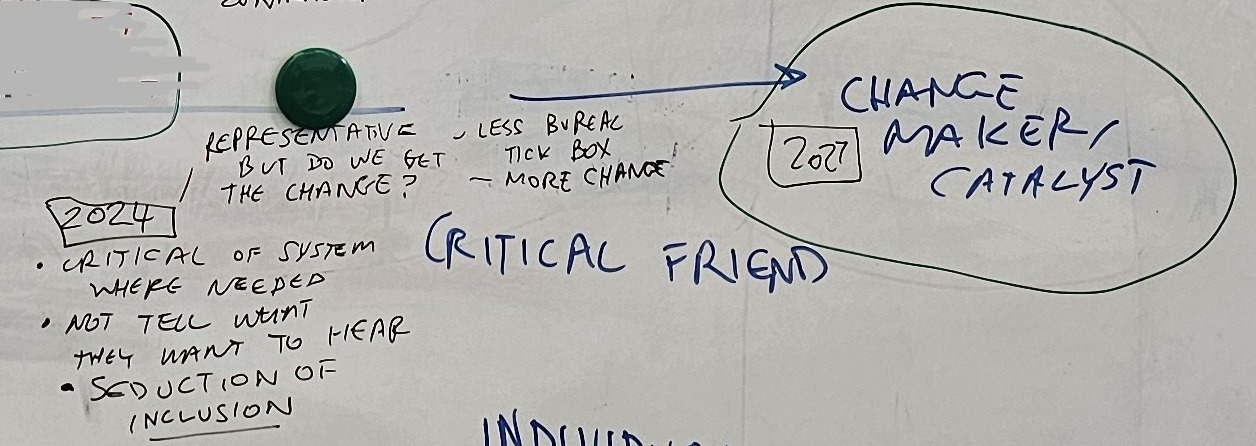
    • …we need to go beyond being a critical friend to being catalysts for change

As we were immersed in all this history and feedback, a couple of us had the opportunity to participate in training for advocates, campaigners, activists and changemakers run by Australian Progress. That too was great timing as we’ve been able to apply some of the ideas and tools we’ve learned as we think about what next.

Health rights are met | People power is rallied | Consumers drive positive change | HCC finances are sustainable | HCC is strong and agile

These are the outcomes we’ll be working towards over the coming months and years. They blend our enduring priorities with an invitation to our members, the health consumer network and people in the community because we are stronger together.

We’ll be sharing our refreshed strategic plan at a briefing and get together for members, health consumers and stakeholders on Wed 26 July at 4pm – 6.30pm.

Read about our new strategy here https://www.hconc.org.au/about-us/strategic-direction/

Celebrating 30 years of Health Consumers’ Council

Health Consumers’ Council was launched on World Health Day (7 April) in 1994 as the independent “voice” on health policy, planning and decision making.

The mission statement at this time stated that HCC would:

  • contribute to the health of all people of WA by providing a “voice” and recognised presence for health consumers
  • contribute to the planning, development, provision and evaluation of health services
  • facilitate an exchange of views on matters of concern affecting the health of consumers.

Since then, we have championed and supported thousands of people to assert their rights, have their say, and influence health service delivery.

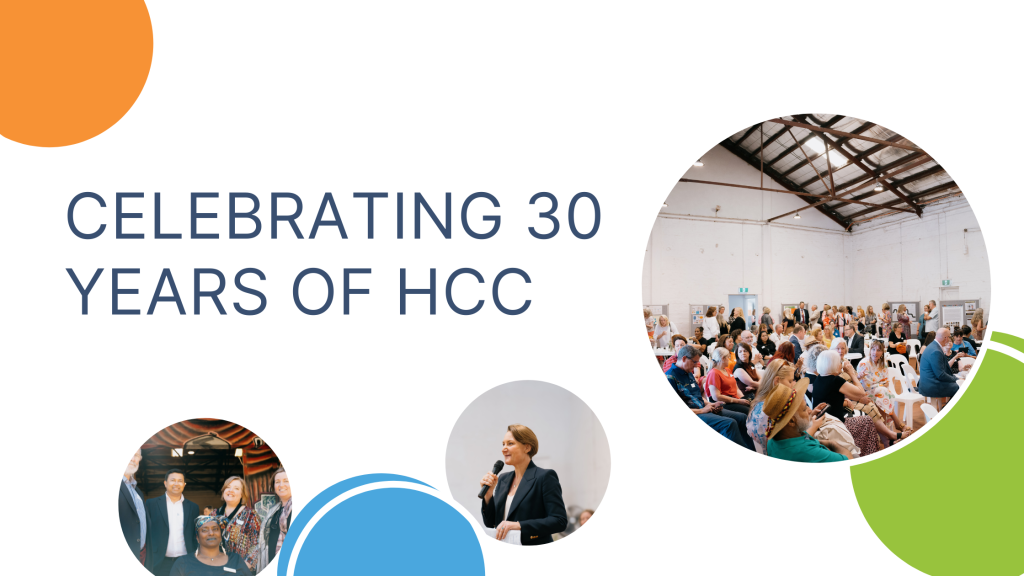
On 8 April 2024, we celebrated 30 years of the Health Consumers’ Council together with members, staff and stakeholders.

It was a beautiful day for a celebration at Perth City Farm, where guests were able to move between the indoor and outdoor displays and activities, and catch up with colleagues and old friends.

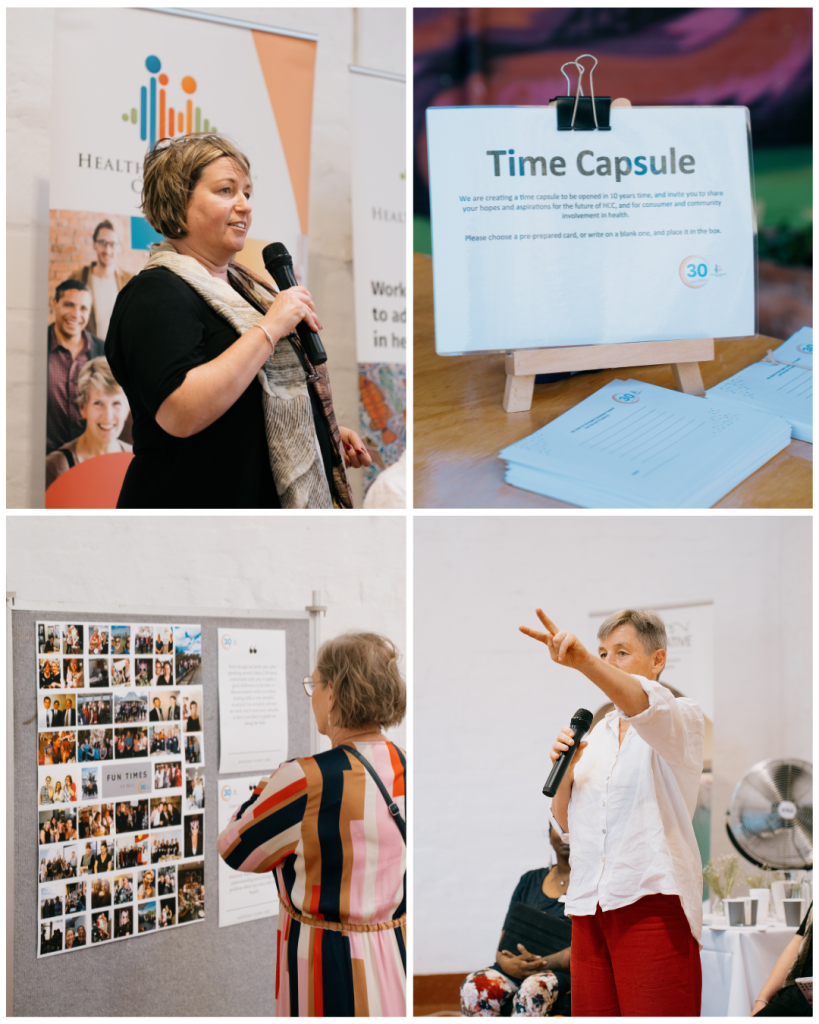
Noongar Elder Auntie Cheryl Taylor opened the event with a Welcome to Country and reflection, and then we heard from HCC’s founding Chairperson, Ann White, and founding Advocate, Maxine Drake. Our special guest for the event was the Minister for Health, Hon. Amber-Jade Sanderson. We also heard from HCC’s current Chair, Mallika Macleod, and our current Executive Director, Clare Mullen.

The speeches were followed by a video in which keys figures from HCC’s past and present shared their reflections and wishes for our anniversary. You can watch the full-length version here (approx. 25 minutes) or view the highlights reel here (approx. 7 minutes).

You can also watch a recording of the formalities and speeches from the event.

Our guests had the opportunity to take part in activities that included sharing their hopes and aspirations for consumer and community involvement in health in a time capsule to be opened in 2034. We invited people to share a pledge about their role in creating that future, which were used to create a pledge tree. There will be opportunities to contribute to these activities throughout the year as we continue our celebrations, so please keep an eye out for them.

Throughout the venue we had displays exploring HCC’s work over the years, including timelines, important moments in our history, key projects, copies of old Health Matters magazines and annual reports, and a look towards the future. We will be sharing some of these with you on our social media soon.

It was a wonderful opportunity to connect with our community and colleagues, and we look forward to continuing to celebrate you in various ways over the rest of the year.

Photos by Juno Shean

Digital Health Series – Patient Portals

By Pip Brennan, Electronic Medical Record Consumer Reference Group Convenor

The Health Consumers’ Council was funded by the WA Health Electronic Medical Record (EMR) Program to convene three consumer webinars and four Consumer Reference Group meetings between January and June 2024. The purpose of this work is to build on the EMR Consumer Charter that was co-designed developed in 2021.

In this interim period prior to developing a tender for a statewide EMR, HCC aims to upskill a group of supported, networked consumers and empower us to deliberate on key aspects of the EMR. We have also created several videos on key topics. We are sharing the learnings from this work as widely as we can, as WA continues its progress towards obtaining EMR in around three years’ time.

Patient Portals – what do consumers need to know?

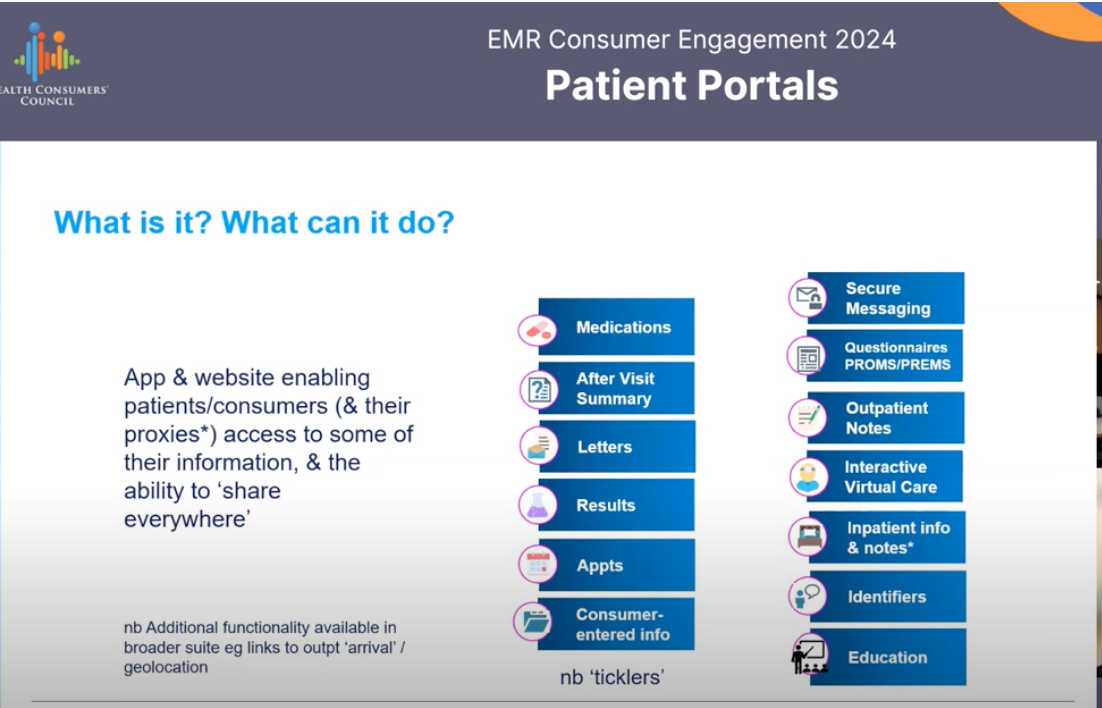
The Patient Portal is the part of an Electronic Medical Record that we can see and interact with.

It was the focus of the EMR Consumer Reference Group meeting in February 2024. Prior to the meeting, a list of patient portal resources were provided for the Group to look at:

At the meeting, we interviewed Liz Cashill and Consumer Representative Mary Oti from Royal Melbourne Hospital. They began implementing their patient portal in their EMR in 2020 and share key insights about what a patient portal is, how it works in practice, and what we need to think about as consumer representatives. You can watch the video replay below or read the transcript here.

WA’s Consumer priorities for a Patient Portal

After the presentation, the EMR Consumer Reference Group discussed our priorities for the future WA Health EMR Patient Portal. This is a summary which was provided to the WA Health EMR Program:

Consumer involvement: Consumers are partners throughout all stages of scoping, procurement, development and rollout of a patient portal.

Consumer centred: Base the design around us as consumers, as we move all across the system and want to be able to use one entry point for all our care. It must integrate and connect with adjunct and related systems; it needs to work in harmony with My Health Record. A priority for consumer centred care includes recording of preferred pronouns, name etc as part of the patient portal.

Consumer empowerment: The portal must support partnering with our health care team to achieve the best possible health outcomes. Specifically this includes two-way communication with an ability to view,  edit, download and print information about us. We need to be linked to knowledge and resources to navigate our care journey, with easy and intuitive navigation features.

Transparency, Choice and Control: this would look like there being controls for sharing of information need to be in place as they are for My Health Record, and understanding

Equity of access: we need to be supported to use the patient portal if we wish, but to receive the same standard of care if we don’t choose to use it. We would also like to see system flags to support equitable care,. e.g. when someone is travelling from the country. Other examples include a flag if there is a Disability Care Plan so staff are supported to provide safe care to someone who for example isn’t verbal. Flags to support trauma informed care are also key. A key consideration too is a patient portal available in languages other than English.

Proxy access is important with protections and permissions. For example, accessing health care for an adult child with a disability in the absence of guardianship –e.g. NDIS offer “common sense” choices – where people don’t need to get Guardianship to access their adult child’s records. We can sometimes have a bias towards the presumption of abuse e.g. in carers for people with disability, people who are frail aged.

Check the Digital Health page for the full series of webinars and information sessions on the WA Electronic Medical Record.

Reflections on the Digital Health Festival 2024

By Pip Brennan, Electronic Medical Record Consumer Reference Group Convenor

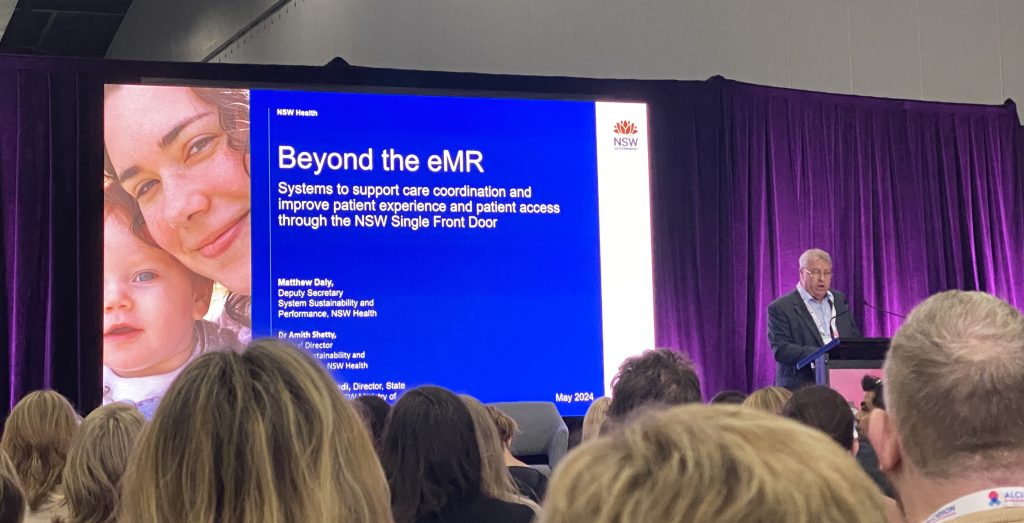
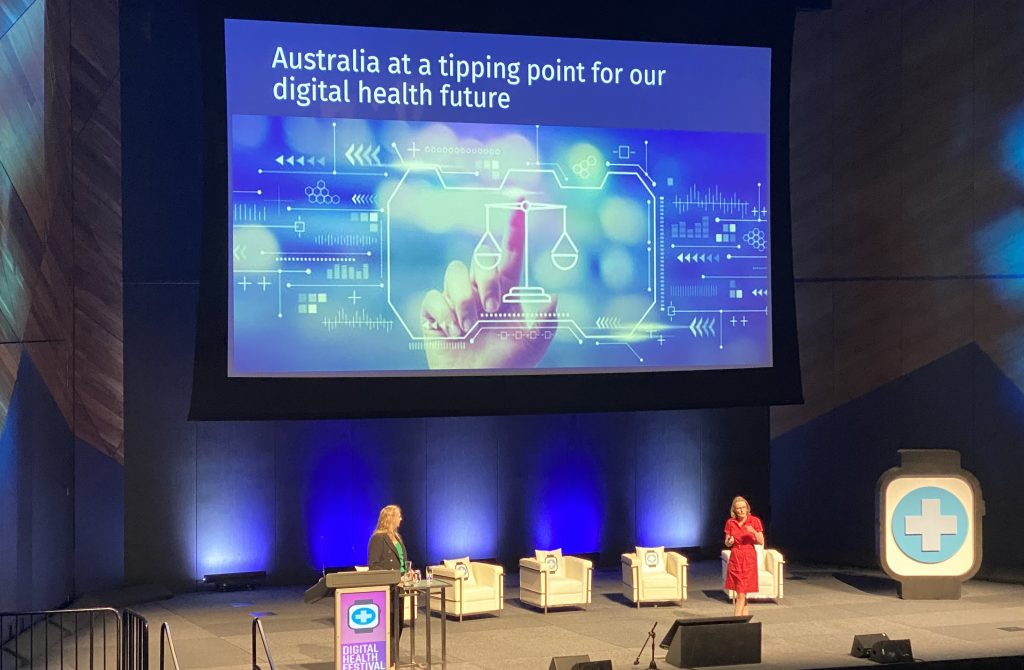
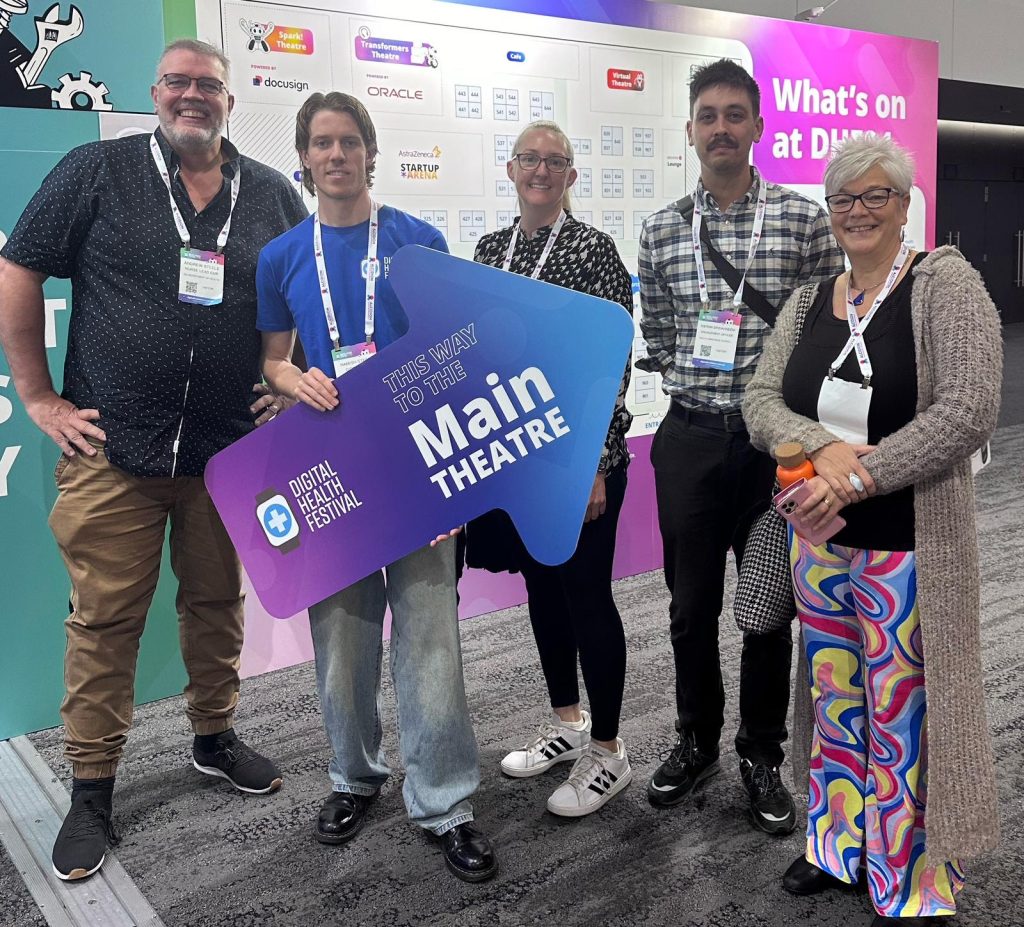
I was lucky enough to attend the Digital Health Festival 2024 in Melbourne, with WA consumer and health professional colleagues. The Health Consumers’ Council in WA negotiated to obtain three free consumer passes, and WA Health’s Electronic Medical Record (EMR) Program Team funded travel for myself and HCC Engagement Coordinator Kieran Bindahneem. We met Ricki Spencer in Melbourne, they are a member of the EMR Consumer Reference Group and split their time between WA and Victoria.

With eight concurrent streams and mostly 30-45 minute presentations, the Digital Health Festival was definitely overwhelming. Some of the concurrent presentations offered headphones, and these were by far the easiest presentations to stay focused in.

At the entrance was the stand where I took the opportunity to include a message about the importance of consumer involvement. #NothingAboutUsWithoutUs. It was not a common idea, and presentations mentioning co-design usually meant different health and government professionals collaborating. The wrap up report for the Digital Health Festival doesn’t mention the word “consumer” or “patient” anywhere – we sit somewhere in the “Other” category in the pie charts and tables. I have been approached to speak at the Digital Health Festival in 2025.

What has stayed with me

  • Dr Wonchul Cha’s keynote presentation about the Samsung Medical Centre in Korea, especially how the Patient Reported Outcomes surveys, which are integrated into their electronic medical record, achieve an 80%-90% response rate. They are a seamless part of the clinical appointment, and keep patient wellbeing right on top of the agenda.
  • Meeting up with consumer advocates including Mehmet Kavlakoglou, Harry Iles-Mann, and Ricky Spencer. Some quiet times talking outside the hub-bub of the Festival were restorative and insightful.
  • Talking to Healthcare Information and Management Systems Society (HIMSS) staff and filling in a missing piece of the PROMS puzzle in my mind – how they need to be integrated into an EMR and used as part of care to get the return rate that really tracks patient outcomes (see Samsung example above).
  • Listening to a CSIRO presentation on the work they’re doing regarding consent processes and how to have ongoing consent facilitated when our data is used for research – consumers aren’t actively involved yet, but hoping they will be soon.
  • Panel discussion on how AI is supporting clinical decision making where one speaker suggested that over time, clinical trials may not be approved unless they have already gone through AI as this will reduce potential harm to patients.
  • I don’t need to feel total despair that each state and territory is doing its own thing regarding electronic medical records. Interoperability is still going to be technically possible. It is the number one consumer priority! The key challenges we have in relation to digital health are actually cultural – but the interoperability work at the federal level mandating interoperability is helpful.


Some reflections

  • What would it be like to have a consumer-co-led digital health festival with a focus on research translation, rather than research commercialisation? Some presentations were very sales-y.
  • Most states and territories have implemented their EMRs without significant or meaningful consultation with consumers, and even in some cases clinicians. Not so in WA! And after the conference the WA Budget announcement confirmed that WA will be funded for the next three years to develop a tender and appoint a supplier for WA’s EMR.
  • We have an EMR Consumer Charter in WA and a Consumer Reference Group working with the WA Health Team. We are upskilling ourselves and reflecting on what are key consumer priorities for an EMR. See our web page for all updates.

Strengthening Reconciliation Post-The Voice Referendum: RAP and Acknowledgment of Country

By Tania Harris, Engagement Manager, Aboriginal and Disability Engagement Lead

Reconciliation in the Wake of The Voice Referendum

In the historical context shaped by The Voice referendum – a pivotal event proposing constitutional recognition and a parliamentary voice for Aboriginal and Torres Strait Islander peoples – an organisation’s Reconciliation Action Plan (RAP) takes on an even greater significance.

  • The Voice referendum has brought the aspirations and needs of Indigenous Australians to the forefront of the national conversation.
  • As Australia reflects on the outcome of The Voice referendum, there’s an energised call for organisations to embed Indigenous perspectives into their core values.

The Role of a RAP Post-Referendum

Now, more than ever, a RAP must do justice to the momentum created by discussions around The Voice referendum. This involves not just planning but also taking action that symbolises respect, empowerment, and partnership.

  • An organisation’s RAP should go beyond ceremonial acknowledgment to lay down practical pathways for Indigenous inclusion and engagement.
  • Crafting a RAP in this climate should reflect a commitment to listening to Indigenous voices and upholding their rightful place in decision-making processes.

Crafting an Acknowledgment of Country That Resonates

An Acknowledgment of Country becomes particularly resonant in the post-referendum setting, where it’s expected to echo the progress and promises of national reconciliation efforts.

  • It is crucial to not only acknowledge the Traditional Owners of the land but to connect this acknowledgment to contemporary initiatives like The Voice referendum.
  • Organisations can demonstrate their support for The Voice by referencing the initiative in their Acknowledgments of Country, reinforcing their commitment to actionable change.

Aligning Your RAP with The Voice Aspirations

Incorporating The Voice aspirations into your RAP not only strengthens your organisation’s dedication to reconciliation but also aligns with the broader objectives of national unity and respect.

  • Ensure that your RAP reflects an understanding of the historical and cultural significance of constitutional recognition and representation.
  • Utilise the RAP as a platform to advocate for and support the ongoing dialogue around Indigenous issues sparked by The Voice referendum.

A New Era of Commitment

The post-referendum era demands a renewed dedication to Aboriginal and Torres Strait Islander rights and recognition. This commitment is tangibly expressed through a RAP, Acknowledgment of Country, and the actions that flow from these intentions.

Advance Reconciliation: Acknowledging Country Workshops

In the spirit of The Voice referendum, aspiring to a future where Aboriginal and Torres Strait Islander voices are heard and respected, we invite you to attend Health Consumers’ Council’s  Acknowledging Country workshop. Your participation not only deepens your own understanding but also contributes to Indigenous health initiatives.

Join a workshop to ensure your organisation’s practices are attuned to the aspirations of The Voice and contribute to a reconciled, informed, and inclusive Australia.

Navigating the Path Together: Insights from the Cancer Services Plan Consultation Report

Dealing with a cancer diagnosis is more than a medical journey; it can be the start of a challenging path through the complex maze of healthcare systems, at a time of physical and emotional change for both the person diagnosed and those around them. The Department of Health (DoH) recognised the need to understand the experiences of those at the heart of cancer services — patients and their carers. The Department of Health partnered with the Health Consumers’ Council (HCC) to gather insights that will help inform the future of cancer care in WA.

We are pleased to be able to share this report with you. We would like to thank the patients, consumers and carers who chose to share their stories and experiences with us so generously.

We would also like to thank Dr Susannah Morris, who provided our team with expert advice and support, and offered an invaluable consumer focused insight into this and many other cancer projects in WA and Australia. We also recognise and thank Susannah for her considerable input into this report.

The Essence of Consultation

The consultations held in March and April 2024 were vibrant discussions filled with stories, challenges, and aspirations. A diverse group of 32 individuals participated in workshops and interviews to share their experiences with cancer care pathways in WA. The feedback gathered from these sessions was insightful and is hoped to have a significant impact on the enhancement of cancer services.

Themes of Reflections

Participants were open and candid about their interactions with cancer services. They reflected on the parts of their care that were difficult, and the aspects that were handled well. This feedback is crucial in understanding the emotional and practical needs of patients as they navigate cancer treatment.

Location, Location, Location

One of the critical areas of discussion was the configuration and location of care. Though the specifics of possible configurations were not directly presented for feedback, the need for flexibility and accessibility in care locations was a recurring theme. Wherever the location was, care needed to be centred around the person and their needs. This aspect of care is not only about geographical convenience but also about the comfort and peace of mind patients have when they know support is within reach.

The Experiences That Matter

Above and beyond the technicalities of treatment, what stood out in the consultations was the need for better care navigation and a more consistent and early linking of consumers and carers with all pertinent support services, to be treated as whole people not just a disease. Better communication, flexible appointment times, a more seamless and coordinated care experience, care navigators and navigation tools were among the top suggestions from participants.

Aligning with the WA Cancer Plan

As the consultations revealed, there’s an essential need to ensure that cancer services in WA are aligned with the second goal of the WA Cancer Plan 202-2025: to ensure that consumers have the best experience of cancer care. This implies that optimal care should be person-centred, safe, high-quality, multidisciplinary, supportive, and well-coordinated. People were also concerned that they ‘lived well’ with and beyond their diagnos, in keeping with priority three of the plan. The consultations highlighted that while much has been achieved, there are still gaps that need bridging.

 Looking Ahead

The Australian Government’s Australian Cancer Plan (2023-2033) has set a new backdrop for the continuum of cancer service delivery. The findings from the WA consultations will not only contribute to refining the state’s approach but also ensure that the voices of consumers are heard in the broader national context.

The Cancer Services Plan Consultation Report provides a snapshot of current consumer experiences with cancer services in WA. It’s a living document that echoes the voices of those most affected by cancer and offers a roadmap for improvements that could significantly enhance the patient journey.

Remember that as we look toward the future, your voice and your experiences are powerful catalysts for change. If you or a loved one have navigated the cancer care system, consider sharing your story. It’s through these shared experiences that we can work together to shape a cancer service system that not only heals but also supports and empowers every step of the way. You can share your stories and experiences at  Care Opinion, a platform supported by WA Health where you can remain anonymous.

The Importance of Acknowledging Country

By Tania Harris, Engagement Manager, Aboriginal and Disability Engagement Lead

An Acknowledgement of Country is a sign of respect for Aboriginal and Torres Strait Islander peoples’ ongoing connection to their traditional lands. In healthcare settings, this practice becomes profoundly significant. Many organisations, individuals and businesses are increasingly recognising that a genuine Acknowledgement of Country can pave the way for better services and relationships with Indigenous communities.

  • An Acknowledgement of Country is not just a statement; it’s a commitment to listen, learn, and work towards equity and reconciliation.
  • It acknowledges Australia’s history, predating colonisation by tens of thousands of years.

Why Acknowledge Country?

Cultural competence and respect are crucial in providing quality care and services to all. An Acknowledgement of Country is a step towards cultural safety in services, recognising the specific place Indigenous Australians hold in our country and society.

  • It’s a reminder that every day, organisations and businesses operate on land that holds thousands of years of Indigenous history.
  • For staff and clients, the acknowledgment can foster an environment of inclusiveness, respect, and partnership.

The Impact of Acknowledgment on Indigenous Communities

While an Acknowledgement of Country is not a singular solution to inequity and racism, it is an integral part of the journey towards genuine partnership and inclusion.

  • It’s an opportunity to reflect on the impact of colonisation on Aboriginal communities and our commitment to addressing inequities.
  • It can contribute to an environment where Indigenous voices are heard and valued, especially in discussing needs and services.

How Organisations Can Offer a Meaningful Acknowledgement

Health Consumers’ Council acknowledges the need for confidence and personalisation in delivering an Acknowledgement of Country. That’s why we offer specialised training sessions.

  • It’s crucial to acknowledge the Traditional Owners of the land and pay respect to Elders, past, present, and emerging.
  • Workshops are designed to provide a safe, immersive experience with opportunities for practice and immediate feedback.
  • The training can be delivered online or in person, emphasising meaningful engagement rather than tokenistic gestures.

Offering More Than Words

The practice of giving an Acknowledgement of Country must go beyond being a part of housekeeping; it should reflect ongoing learning and action.

  • Acknowledgments should not be tokenistic but done with thought and consideration for what they represent.
  • They should inspire self-reflection, truth-telling, anti-racism efforts, and genuine partnership.
  • An Acknowledgement of Country reflects the values and commitment of your organisation to our shared history and the present-day situation.

Continuing the Journey

The journey toward true reconciliation and cultural safety is continuous. The Acknowledging Country workshops by Health Consumers’ Council are part of this journey, empowering individuals and organisations to make their Acknowledgments with confidence and sincerity.

Acknowledging Country Workshops

Does your organisation offer an Acknowledgement of Country at meetings and events? Are there ways you can make these acknowledgments more meaningful and reflective of your commitment to reconciliation? Take part in Health Consumers’ Council’s Acknowledging Country workshop to deepen your understanding and practice.

Take the next step in your reconciliation journey by booking an Acknowledging Country workshop and develop a meaningful practice that respects the traditional custodians of the land on which you live and work.

Opinion: It’s time for full transparency on who’s making money out of our healthcare

By Clare Mullen, Executive Director

So, there’s a few spats going on on social media at the moment in relation to health finance. Like on this post on LinkedIn where people representing surgeons, and people representing private health insurers, seem to me to be arguing about which one of them is going to charge the patient for the cost of surgical items.

So – it’s Saturday morning, and I have a bit of time, so I thought I’d try to see what some of these interests might be.

First up – the average salary of a surgeon

I couldn’t find any publicly funded sources of information from my quick search. But this article from Medrecruit (a medical recruitment firm) say they’ve used Australian Tax Office data to come up with an average taxable salary of $394,000 a year. The same company writes that neurosurgeons – like those who do spine surgery – can earn up to $800,000 a year.

So, between the 2023 article from Medrecruit, and a 2023 article from GlassDoor I feel comfortable reaching the conclusion that:

  • the average salary of a surgeon in Australia is around $340,000/year

Then to health insurer profits

The five biggest health insurance companies in Australia, according to the national consumer group Choice Australia are:

  • Medibank
  • Bupa
  • HCF
  • NIB
  • HBF

So I looked at the most recent annual reports (for 2023) for all of these companies. Some headlines:

  • Four of these five companies reported multi-million dollar profits last year – the exception is HBF who reported a loss of $87.7m, down from a loss last year too.
  • The average annual profit reported across the four was $344m/year.
  • Collectively, they reported profits of $1.3b.
  • Two of these five are set up as not-for-profit organisations – HCF (profit of $171.4m) and HBF

And so to the salaries of senior staff in health insurance firms…

I looked at what private health insurers pay their senior staff. (As a passing observation, if I didn’t know better I’d say that these firms don’t want you to work out what their senior staff get paid, because many of the reports make this information as opaque as possible. But I do know better. Except for HCF – they *really* don’t want you to know so they don’t publish it.)

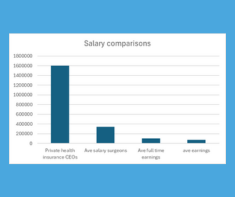
Taking out HCF (because they don’t make that information available online), the average pay for the Chief Executive of the three other health insurance firms that reported a profit (or surplus) is $1.6m a year. Graph showing the comparison between the pays of health insurance CEOs, surgeons, and average earnings in Australia

As a comparison, the average for adult full-time earnings in Australia is $101,000/year. When you do a comparison that includes all earners (i.e. including those working part-time), the average annual salary is $74,500.

(And the CEO at HBF is reported as having been paid $731k to June 2023.)

So what?

So what does this mean? Is this just me whingeing about people who work hard to earn their money?

Nope. This is me trying to reconcile the reality of healthcare in this country. Where your socio-economic status determines your health, but where we’re seeing more outrage about which bit of the health system that’s making lots of money for the companies and people involved in providing that healthcare is going to pass on the cost of that healthcare to the people needing the healthcare.

It’s time for full transparency in health finances

As an informed health consumer, I find it really frustrating how challenging it is to find out about the financial interests in health. I want to know if the person or company providing me with care is doing it for my benefit, or for theirs.

This website from the Federal Government is a good start to find out about likely out of pocket costs for treatment you might be considering – https://medicalcostsfinder.health.gov.au/

And as someone who speaks regularly to people who are battling to get access to the healthcare they need – either having to overcome financial challenges, or grapple with bureaucratic processes that seem to have been designed by people who don’t give a fig about the people trying to access healthcare (which I know isn’t true!) – I want to see a much stronger voice for consumers and the community on this issue.

So let’s have full transparency on health finances. A few ideas off the top of my head on this Saturday morning:

  • If any healthcare provider receives any public funding (like Medicare), let’s require them to publish information about profits, and any individual salaries over the average annual salary
  • If any provider negotiates financial deals – like commission to preferred providers, or incentives for particular types of treatment – let’s require this to be published, and the information be made available to the consumer when they’re making a decision about treatment options
  • Along with the Choosing Wisely questions, let’s add a question about “What are the financial implications for you – the provider – in any of the options we’re discussing?”